Morocco Strengthens Ties with Spain in the Electric Vehicle and Battery Industry
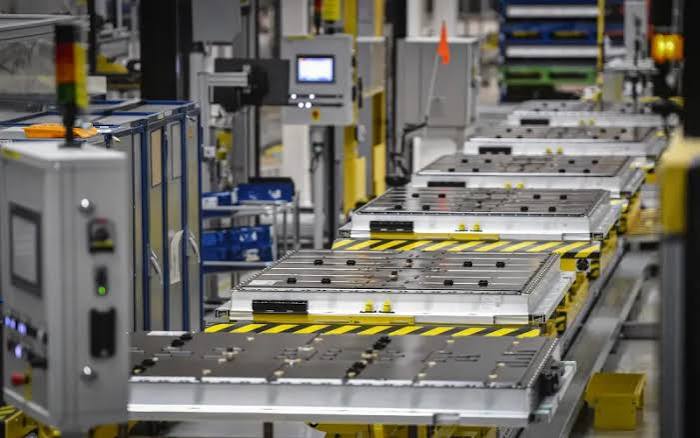
Morocco is continuing its ascent in the global automotive industry and is now looking to take a significant step forward by developing an integrated sector dedicated to electric vehicles and batteries. Fueled by an influx of foreign investment, this transformation is gradually strengthening the Kingdom’s position as an industrial and export platform close to the European market.
According to a report published by the Spanish media outlet “Rosspin,” Morocco has become an increasingly attractive destination for international groups seeking competitive production sites near Europe in recent years. The country benefits from advantageous production costs, a strategic geographic location, trade agreements, and industrial policies aimed at developing value chains related to electric mobility.
This evolution comes at a time when Spain remains one of the leading automotive powers in Europe. However, Morocco’s rise is giving rise to new regional competition, particularly in segments related to electric vehicles, components, and battery production.
Over the past decade, the Kingdom has significantly advanced its automotive industry, gradually shifting from a model primarily focused on assembly to a more integrated approach that encompasses the manufacture of components, automotive technologies, and now, electric batteries.
This momentum is supported by the influx of Chinese and European investments in the battery sector, within the context of a global acceleration toward electric vehicle adoption. Morocco’s proximity to European markets is also a major advantage for manufacturers looking to shorten their supply chains.
Among the flagship projects of this transformation is the Gotion High-Tech project in Kenitra, in partnership with the Volkswagen Group. This project, with an estimated investment of around €3.2 billion, aims to create nearly 3,000 direct jobs and is expected to contribute to the battery supply for several automotive manufacturers operating in Europe.
The development of a national battery industry represents a strategic milestone for Morocco. The battery is, in fact, one of the most significant components of an electric vehicle, both in terms of cost and added value.
Nevertheless, the appeal of the Kingdom is not solely based on its production costs. The increasing availability of renewable energy is also an asset for manufacturers, particularly those seeking to reduce the carbon footprint of their production chains and comply with the environmental standards of the European market.
Moreover, Morocco’s geographical position plays a decisive role. With its port and logistics infrastructures, notably the Tanger Med complex, the Kingdom has rapid connections to key European and African markets. This proximity facilitates the transport of vehicles and components while allowing manufacturers to optimize their supply chains.
The industrial hubs of Kenitra and Tangier thus reinforce Morocco’s role as a production and export platform, contributing to the attraction of new international equipment manufacturers and automotive producers.
Nonetheless, Spain retains significant competitive advantages. The country has extensive experience in the automotive industry, a vast network of suppliers, and a highly skilled labor force. Several major global manufacturers have industrial sites there, including Volkswagen, Stellantis, Renault, Mercedes-Benz, Ford, and Iveco.
Madrid is also seeking to strengthen its position in the new electric vehicle value chain through several major projects in the battery sector. Among these are the PowerCo factory, a subsidiary of Volkswagen, in Sagunto, and the Stellantis project in Zaragoza with the Chinese group CATL.
Thus, the competition between Morocco and Spain is no longer limited to labor costs. It now encompasses energy availability, logistical infrastructures, market proximity, supply chains, industrial incentives, and the ability to quickly attract new investments.
While Spain benefits from a solid industrial base and historical expertise, Morocco is banking on an acceleration strategy based on attracting international investments and gradually building a comprehensive ecosystem around electric mobility.
The ongoing investment in batteries, components, and electric vehicles could thus enable the Kingdom to evolve from being merely an automotive platform to a true regional hub of electric mobility, bolstering its competitiveness against major European industrial bases, particularly Spain.