Nador West Med: A $239 Million Sustainable Fuel Project
European Bank for Reconstruction and Development (EBRD) Considers $105 Million Loan for Sustainable Aviation Fuel Plant
The European Bank for Reconstruction and Development (EBRD) is considering granting a loan of up to $105 million to Green Sky Capital Holdings Ltd to finance the construction of a sustainable aviation fuel plant at the Nador West Med port complex. The total estimated cost of the project is $239 million, with an anticipated annual production capacity of up to 200,000 tons.
Publicly announced on Wednesday, October 14, 2026, this financing initiative aligns with the ongoing development of alternative fuels aimed at reducing the carbon footprint of the aviation sector. However, the financing is still subject to the requisite approval processes, with the next deadline set for November 18, 2026.
EBRD Financing of Up to $105 Million
The proposed financial support from the EBRD consists of an initial tranche of $85 million, which is included in the financial structure, along with a second optional envelope of $20 million. Up to $20 million could also be mobilized from the Green Climate Fund as part of this envelope.
The institution justifies its involvement by emphasizing the need to provide long-term financing tailored to the requirements of such a large-scale industrial project, which requires several years for ramp-up and investment recovery.
The financial structure also includes a European Union guarantee covering a portion of the initial possible losses. Additionally, it is based on a long-term purchase agreement with a private partner, whose identity and financial commitments have not yet been disclosed.
Among the shareholders of Green Sky Capital Holdings are Green Sky Capital Management, Al Mana Holding, and Vision Invest.
An 88,000 m² Plant in the Bétoya Industrial Zone
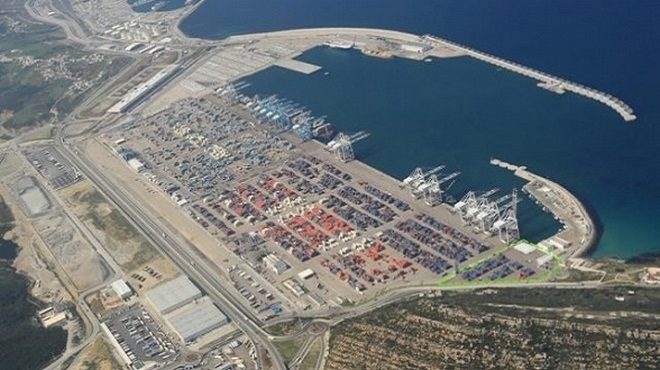
The future facility is expected to span approximately 88,000 square meters in the Bétoya industrial and logistics zone within the Nador West Med port complex.
To produce sustainable aviation fuel, the plant will utilize the Vegan technology developed by the French industrial group Axens. This process focuses on the hydrotreatment of oils and fats to convert lipid-based raw materials into aviation-compatible fuels.
The complex will house several units dedicated to the pretreatment of raw materials, their chemical transformation, hydrogen production, and storage infrastructure. The announced capacity could reach 200,000 tons of production per year.
In addition to sustainable aviation fuel, the facility is also expected to produce renewable diesel, bionaphtha, and biopropane. The fuels produced will be designed to be compatible with existing aircraft engines and airport infrastructure, subject to compliance with applicable technical and regulatory requirements.
Used Cooking Oils at the Heart of Supply Chain
The plant’s supply is expected to primarily rely on the collection of used cooking oils, fats, and other lipid residues in Morocco. Imports may supplement the available volumes when national collection efforts do not meet industrial needs.
This model aims to valorize waste materials to produce alternative fuels while gradually establishing a local collection and processing supply chain.
The project envisions the establishment of a supply network involving companies specialized in the collection of used oils and women’s cooperatives. This organization is intended to secure the necessary raw materials for the plant’s operation.
However, the actual availability of collected volumes in Morocco will be a crucial factor for the site’s supply and its operation at full capacity.
Ongoing Environmental Studies
The EBRD has classified the project under environmental category B. Studies regarding atmospheric emissions, noise disturbances, traffic impacts, and cumulative effects with other industrial facilities are ongoing.
An environmental assessment is also required as per Moroccan legislation. Planned measures include wastewater treatment, monitoring of discharges, leak detection, and installation of fire protection equipment.
At this stage, no definitive schedule for commissioning has been provided in the information released by the EBRD. The realization of the project will depend on the successful completion of approval processes and the continuation of technical and environmental steps.
Training and Local Job Opportunities Announced
The program also includes a component dedicated to skill development in the Oriental region. Green Sky Capital plans to implement training programs for maintenance technicians, plant operators, and engineers, in partnership with regional training institutions.
Moreover, the company aims to increase the proportion of women in its workforce to 10% by 2032. The supply chain will also involve women’s cooperatives and local operators responsible for collecting used cooking oils.
These initiatives are aimed at supporting industrial development through vocational training and the establishment of new economic activities around Nador West Med.
Nador West Med Continues Infrastructure Development
The sustainable aviation fuel project is part of the industrial and logistical development of Nador West Med, which is set to host production and processing activities alongside its port infrastructure.
The EBRD had previously approved, in December 2024, financing of up to €110 million for the infrastructure of the industrial and logistical zones of the complex.
If the new project comes to fruition, Green Sky Capital’s plant could contribute to the emergence of a Moroccan supply chain for alternative aviation fuels. However, its industrial impact will depend on the successful realization of financing, securing supplies, and meeting environmental and technical requirements.