Social Protection: The CMR and Three Mutual Societies Join Forces to Simplify Administrative Procedures Through Digital Means
Moroccan Retirement Fund Goes Digital: New Partnership to Streamline Social Protection Services
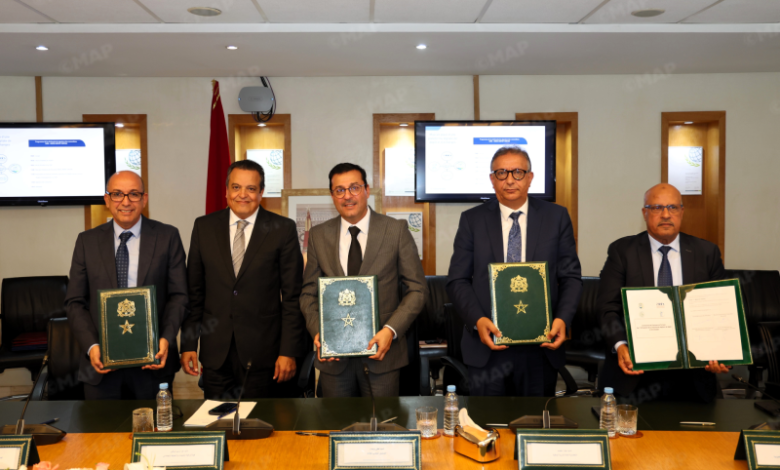
On Thursday in Rabat, the Moroccan Retirement Fund (CMR), along with the MGEN, MGPAP, and OMFAM, signed a framework agreement and two specific partnership agreements, overseen by the ACAPS (Insurance and Social Security Supervisory Authority). This cooperation aims to establish a secure digital platform for data exchange to simplify procedures, accelerate file processing, and enhance services for members and beneficiaries. The operational launch of this initiative is scheduled for March 2027.
The social welfare sector in Morocco is taking a significant step towards digital transformation. The Moroccan Retirement Fund and three mutual organizations have formed an institutional partnership designed to strengthen coordination among institutions and facilitate citizens’ access to their rights.
The framework agreement and the two specific agreements were signed between the CMR, the General Mutual Fund for National Education (MGEN), the General Mutual Fund for Public Administration Personnel (MGPAP), and the Works of Mutuality for Civil Servants and Similar Agents in Morocco (OMFAM), under the supervision of the ACAPS.
The documents were signed by Lotfi Boujendar, director of the CMR; Moulay Brahim El Othmani, chairman of the board of directors of MGPAP; Miloud Maassid, chairman of the board of directors of MGEN; and Kamal Noure-Dine, chairman of the board of directors of OMFAM.
The goal is to establish a more effective institutional cooperation based on the secure exchange of information and complementary missions, thereby improving the experience for beneficiaries who rely on both the CMR and the partner mutual organizations.
A Digital Platform to Speed Up File Processing
At the heart of this partnership is the creation of a digital platform intended to facilitate information exchange between the signatory organizations. This infrastructure is expected to reduce administrative burdens, eliminate the need for multiple trips, and accelerate the processing of files as well as the disbursement of benefits.
The agreements also outline the dematerialization of procedures related to the continuity of membership for survivor pensions, as well as the simplification of certain common benefits.
A specific focus is placed on the exchange of information regarding death situations and the processing of beneficiary files. Through direct data transmission between institutions, beneficiaries may no longer be required to present a pension certificate repeatedly.
This coordination aims to streamline the formalities imposed on users, improve institutional responsiveness, and reduce processing times.
The arrangements will be implemented in accordance with Law No. 55-19, related to the simplification of procedures and administrative formalities, as well as the legal framework governing the protection of personal data.
ACAPS Highlights the Importance of Institutional Complementarity
During the signing ceremony, the president of ACAPS, Abderrahim Chaffai, emphasized that this initiative holds particular significance for advancing social protection reforms. It aims to strengthen the capabilities of social welfare organizations in managing rights and service delivery.
He also highlighted the Authority’s role in supporting institutions, fostering dialogue, reviewing legislative projects, and ensuring compliance with the regulatory framework, with the objective of bolstering governance in the sector and safeguarding member rights.
According to Abderrahim Chaffai, the enhancement of social welfare necessarily requires improved complementarity between institutions, along with increased use of information and technological tools to facilitate access to rights.
Finally, he expressed the hope that this initiative would expand to include other components of the social protection system, while respecting the specificities and legal frameworks unique to each organization.
CMR Aims to Enhance User Experience
On his part, Lotfi Boujendar stated that these agreements primarily aim to deliver tangible benefits to citizens and affiliates, in line with Royal High Guidance and national priorities concerning administrative simplification and improving public service quality.
The director of the CMR stressed the need to allow users to complete their administrative tasks without having to make multiple trips to various institutions to provide the same information.
He noted that the partnership is based on a secure, digital exchange of data, coupled with joint procedures aimed at reducing processing times and simplifying formalities. Furthermore, the CMR plans to gradually extend this initiative to other mutual organizations over the coming months.
Mutual Organizations Call for Enhanced Cooperation
Miloud Maassid commended the support from ACAPS and its approach based on fairness, cooperation, and institutional synergy, serving the interests of members and reducing administrative paper-based procedures.
He reminded attendees that mutual aid serves as a cornerstone of the social economy and underlined the importance of having a robust mutual sector grounded in trust, member support, and effective governance.
He also described the signing as a first step that may pave the way for new partnerships to bring services closer to beneficiaries, even in the most remote areas of the Kingdom.
Operational Launch Expected in March 2027
Beyond the institutional aspect, this partnership marks another advancement in the digitalization of social protection services in Morocco. By facilitating the flow of information between the CMR and mutual organizations, this initiative aims to make benefits more accessible and processes less cumbersome.
The operational launch of the services stemming from these agreements is anticipated in March 2027. This timeline is expected to signify the transition from an institutional agreement to the tangible implementation of new data exchange mechanisms and administrative simplification.