The Major Issues Facing Fatima Ezzahra El Mansouri
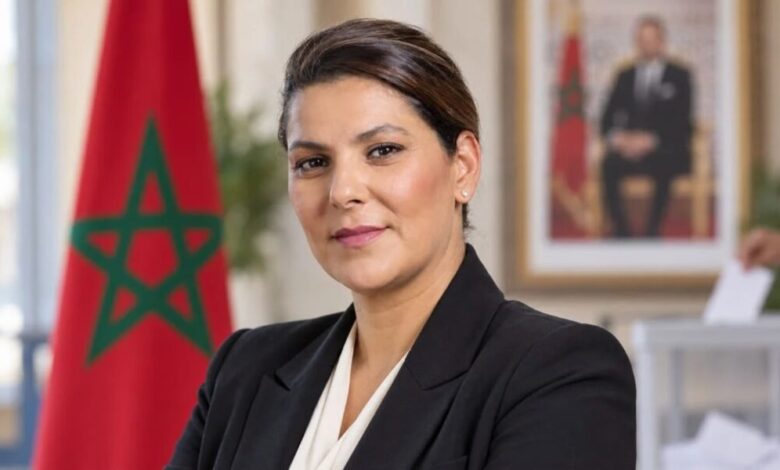
Appointed as the head of government on September 29, 2026, tasked with forming a new team, Fatima Ezzahra El Mansouri is ushering in a new political era in Morocco. Her first step will be to establish the government before implementing the economic and social priorities of this new phase.
Several ongoing issues will need to be pursued or re-evaluated. The 2027 Finance Bill, employment, private investment, public finance management, water resources, social protection, pensions, labor laws, and industrial competitiveness will be among the key projects that will shape the government’s actions.
The 2027 Finance Bill at the Core of the Agenda
The budgetary calendar will be one of the first challenges the new team will face. The preparation of the 2027 Finance Bill comes amid ongoing public investments and the necessity of maintaining the balance of public finances.
The new administration will need to align social spending, infrastructure investments, and the financing needs of the economy with the goals of budgetary control.
This equation falls within a broader trajectory of consolidating public finances. The Ministry of Economy and Finance adopted a Strategic Framework for the Reform of Public Finance Management for 2026-2032 in April 2026, which focuses on budgetary performance, sustainability, transparency, digitization, and managing budget risks.
Employment Remains a Central Issue
The issue of employment is expected to hold significant importance in this new governmental cycle. In its 2026 assessment, the IMF points out that unemployment remains a structural challenge in Morocco and emphasizes the need to enhance the dynamism of the private sector and the responsiveness of the labor market.
The Job Plan 2030, launched in 2025, is already one of the main frameworks addressing this challenge. It includes measures aimed at promoting private investment, supporting SMEs, facilitating the professional integration of youth, adapting training to companies’ needs, and rural employment.
The IMF also notes ongoing challenges regarding the alignment of available skills with the needs of businesses, along with barriers to professional integration for certain groups of youth and women.
Private Investment and Business Environment
The development of private investment will also represent a crucial challenge. The IMF specifically highlights the necessity to continue deploying the Investment Charter, strengthen the role of Regional Investment Centers, improve SMEs’ access to financing, and reduce regulatory barriers to business growth.
The private sector’s expectations also focus on competitiveness, the development of very small, small, and medium-sized enterprises (TPMEs), skills enhancement, and the internationalization of businesses. The CGEM has identified these elements among its top five priorities for the 2026 economic season, alongside the acceleration of private investment and the development of the national industrial base.
Competitiveness and Industrial Development
Industry constitutes another major area of focus for the upcoming cycle. The automotive, aerospace, battery, electronics, agro-industry, and industrial equipment sectors are now part of the value chains being developed or consolidated in Morocco.
Beyond increasing production capacity and exports, the challenge also involves enhancing local content, integrating Moroccan suppliers, and upgrading businesses.
This issue is closely linked to employment: the IMF emphasizes that the sustainable creation of jobs particularly depends on a more dynamic private sector and better alignment between skills and market needs.
Public Finance Reform Continues
The new government will also need to implement the Strategic Framework for the Reform of Public Finance Management 2026-2032. Adopted by the Ministry of Economy and Finance, this framework is based on five axes: performance, sustainability, transparency, inclusivity, and reform coordination.
It aims to enhance results-based budgeting, improve budget risk management, modernize financial information, and ensure interoperability of digital systems.
Thus, the reform is part of an ongoing process that must continue under the new administration.
Pensions and Social Protection
Pension reform also constitutes a structural issue. It should be addressed alongside the consolidation of the social state and the ongoing reform of social protection.
The challenge lies in balancing the expansion of social coverage, the financial sustainability of regimes, and the capacity of social systems to meet household needs.
The Labor Code at the Center of Social Dialogue
Modernizing the Labor Code is another area identified by the IMF. In its 2026 analysis, the institution suggests that reforms to the labor market are necessary to improve its functioning, while highlighting that the modernization of the Labor Code must accompany measures aimed at strengthening working conditions and the adaptability of businesses.
This topic will need to be part of a dialogue between the government, employers’ organizations, and unions, focusing on the evolution of employment forms and the adaptation of labor laws to economic transformations.
Water: An Economic and Territorial Challenge
The issue of water will also remain strategic. Morocco must continue to invest in mobilizing water resources, desalination, reusing wastewater, and improving irrigation efficiency.
The IMF also emphasizes the importance of enhancing the resilience of the agricultural sector against droughts and addressing constraints related to water scarcity.
The management of this resource, therefore, extends beyond purely agricultural concerns, as it also impacts city water supply, industry, and land use planning.
Major Projects Linked to 2030
Finally, the new team will need to continue monitoring the major infrastructure programs aimed at upcoming international deadlines, notably the 2030 World Cup, jointly hosted by Morocco, Spain, and Portugal.
The investments will concern railways, roads, airports, sports infrastructures, tourism, and urban facilities. Their implementation will require substantial public and private resources and must be aligned with territorial development objectives and economic competitiveness.
For Fatima Ezzahra El Mansouri and her future government, the upcoming cycle will thus be characterized by a coexistence of several ongoing projects alongside new directions yet to be defined. Employment, private investment, competitiveness, public finance management, water, and social protection are likely to remain at the heart of economic and social discussions in the coming months.