Green Generation: Morocco Launches Mid-Term Assessment to Accelerate Agricultural Sector Transformation
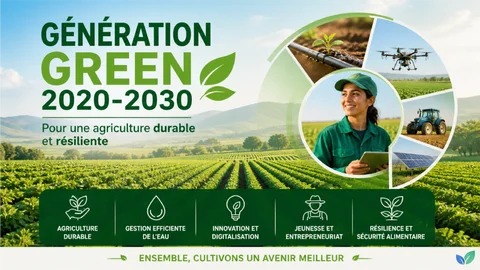
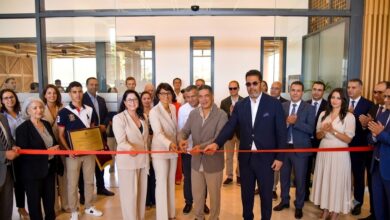
The Ministry of Agriculture, Maritime Fisheries, Rural Development, and Water and Forests has officially launched a strategic study in Rabat aimed at assessing the mid-term results of the Generation Green 2020-2030 strategy and defining priority actions to accelerate its implementation in the coming years.
Chaired by Minister Ahmed El Bouari, this initiative is part of a consultative approach involving various stakeholders in the sector to adapt public policies to new agricultural challenges and strengthen the achievements made since the launch of this national strategy.
A More Resilient Agriculture in the Face of Climate Challenges
On this occasion, Ahmed El Bouari reminded attendees that agriculture remains a crucial pillar of the Moroccan economy and a strategic lever for ensuring the Kingdom’s food sovereignty.
The minister emphasized that this evaluation will not only measure the performances since 2020 but will also lay out a long-term vision for a more competitive, innovative, and resilient agricultural sector in the face of climate change.
He noted that the initial years of the Generation Green implementation coincided with a series of droughts, the repercussions of the Covid-19 pandemic, and disruptions in international markets. Despite this challenging context, the agricultural sector has demonstrated strong adaptability thanks to the support programs set up by the government and the mobilization of professionals in the field.
Progress in Various Agricultural Sectors
According to the ministry, several positive outcomes have already been reported, particularly in the development of agricultural sectors, improved management of water resources, enhanced social protection for farmers, and better living conditions for them.
The authorities have also launched emergency programs to mitigate the effects of drought years while initiating a vast program to rebuild the national livestock to support farmers.
Professionals Call for Adaptation to New Realities
For the president of the Moroccan Confederation of Agriculture and Rural Development (COMADER), Rachid Benali, this evaluation represents a crucial step in updating the agricultural sector’s roadmap and enhancing the momentum established since the signing of the program contracts in 2023.
He believes that Moroccan agriculture must now better respond to international market demands, improve its competitiveness, optimize production costs, and anticipate changes related to agricultural labor.
In light of rising input costs, he also called for a review of investment mechanisms to maintain accessible prices for consumers while ensuring the profitability of agricultural operations.
Modernizing Agriculture and Strengthening Food Security
On his part, the president of the Federation of Agricultural Chambers of Morocco (FECAM), Lahbib Bentaleb, stressed the need to transform this study into a genuine decision-making tool.
According to him, the findings should propose concrete solutions to address the main challenges facing the sector, including rainfall deficits, securing irrigation water, modernizing marketing channels, and strengthening production capacities.
He also advocated prioritizing the supply of the national market while developing agricultural exports to new international markets.
A Roadmap to Accelerate Generation Green
The study will focus on analyzing the achievements made since the launch of the strategy, formulating an acceleration plan leading up to 2030, and defining a long-term development vision for the Moroccan agricultural sector.
The work will also identify priority actions in several strategic areas, including the development of plant and animal production, mechanization of farms, securing water resources, modernizing marketing chains, and enhancing agricultural investments.
Based on extensive consultation with professional organizations and institutional partners, this approach reaffirms the ministry’s commitment to embedding the Generation Green strategy within a framework of dialogue, participatory governance, and continuous improvement.
Through this new phase, the government reaffirms its commitment to continuing the modernization of Moroccan agriculture in alignment with the Royal High Directions, with the aim of building a more efficient, sustainable sector capable of sustainably addressing the challenges of food security and rural development.