Morocco Establishes Itself as a Strategic Hub for Future Investments in Africa
The Race for Foreign Investment in Africa: Morocco’s Strategic Position
The competition to attract foreign investment in Africa has evolved beyond merely mobilizing capital. It increasingly hinges on the ability of countries to draw in strategic projects poised to shape the global economy over the coming decades.
In this race, Morocco is steadily establishing itself as one of the most attractive economies in Africa for investments in forward-looking sectors such as industry, clean energy, hydrogen, infrastructure, and logistics.
According to the UNCTAD World Investment Report 2026, Morocco, along with Egypt and South Africa, has maintained its allure for foreign investors in these strategic sectors. This momentum comes as international companies are reorganizing their production and supply chains in response to profound transformations in the global economy.
Africa’s Continued Appeal to Investors
The African continent continues to attract significant levels of foreign direct investment (FDI). In 2025, the flows reached approximately $70 billion, marking the third-highest level recorded since 1990.
However, this amount remains below the record of $94 billion achieved in 2024. Nevertheless, it exceeds the continent’s long-term historical average by about one-third, underscoring investors’ ongoing interest in Africa’s economic potential.
UNCTAD emphasizes that analyzing these figures should go beyond just capital volume. The nature of the projects hosted by African economies is also a critical indicator.
In 2025, the total value of new "Greenfield" investment projects declined by about one-third, while the number of announced projects increased. This shift reflects a trend among investors to spread their capital across a broader array of projects, albeit with lower individual amounts.
Morocco’s Strategic Advantages
In this context, Morocco holds several advantages that could enhance its attractiveness to international investors.
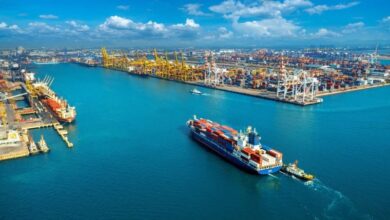
Its geographical proximity to Europe, the development of logistics infrastructure, the expansion of its industrial base, and its potential in renewable energy and green hydrogen are all strong assets for attracting new projects.
The Kingdom also benefits from its position as a gateway between Europe, Africa, and other international markets—particularly important as multinationals seek to diversify their industrial operations and reduce exposure to geopolitical risks and supply chain disruptions.
Simultaneously, investments from Gulf countries and various Asian economies are increasingly prominent in Africa, particularly in the energy, logistics, real estate, and infrastructure sectors.
Strategic Sectors At the Heart of the New Global Investment Map
UNCTAD data also reveals a profound transformation in the geography of global investment. Strategic sectors now represent an increasing share of new projects.
Their proportion in the global value of Greenfield investment projects rose from 16% in 2020 to 44% in 2025. At the same time, the value of projects announced in these sectors increased from about $109 billion to $576 billion.
This growth is notably driven by investments in infrastructure related to artificial intelligence, semiconductors, critical minerals, energy transition technologies, and advanced manufacturing.
This evolution confirms that international competition now extends beyond mere capital to include access to sectors expected to play a crucial role in forthcoming economic and technological transformations.
Intensifying International Competition
Despite the opportunities presented by this dynamic, UNCTAD warns of the ongoing concentration of strategic investments in a limited number of economies.
In 2025, the three leading investing economies accounted for 72% of the total value of strategic projects, while the top three beneficiary economies concentrated 56%.
This concentration reflects the intensifying international competition to attract high-value-added projects, particularly in clean energy, advanced technologies, and industries linked to digital and ecological transitions.
For Morocco, attracting foreign investment is only the first step. The major challenge now lies in transforming these investments into genuine drivers of local industrial and economic development, particularly by strengthening ties between foreign companies operating in the country and the Moroccan entrepreneurial fabric.
Local Production and Technology Transfer at the Heart of the Issues
UNCTAD highlights the importance of bolstering local production, expanding the base of national suppliers, and facilitating the processing of raw materials on-site.
The development of services associated with investment projects should also maximize their economic returns, especially in terms of job creation, technology transfer, productivity enhancement, and industrial skills development.
Continuing to invest in energy and transport networks, developing human capital, improving project readiness, and establishing appropriate risk-sharing mechanisms are also essential levers.
At the continental level, enhancing trade and economic complementarities between African countries—especially within the framework of the African Continental Free Trade Area—appears crucial for promoting the integration of value chains.
A Global Recovery Still Fragile
On a global scale, foreign direct investments grew by 6% in 2025, reaching around $1.6 trillion. Developing economies attracted nearly $901 billion.
However, UNCTAD estimates that this recovery remains fragile and unevenly distributed due to the ongoing concentration of flows in a limited number of markets. The twenty largest beneficiary economies captured over 80% of global investment flows.
These trends suggest an intensification of competition among countries to attract investments in sectors that will shape the economy of tomorrow, including artificial intelligence, clean energy, semiconductors, strategic minerals, and advanced manufacturing.
In this new environment, Morocco has a genuine opportunity to solidify its position as a manufacturing, energy, and logistics hub connecting Africa to global markets.
The Kingdom’s ability to fully capitalize on this dynamic will, however, depend on its capacity to deepen the integration of foreign investments into the national economy, enhance the participation of Moroccan companies, accelerate technology transfer, and transform large projects into added value, jobs, and integrated production chains at both the national and African levels.