
Cement: Deliveries Show Slight Improvement in Morocco in July
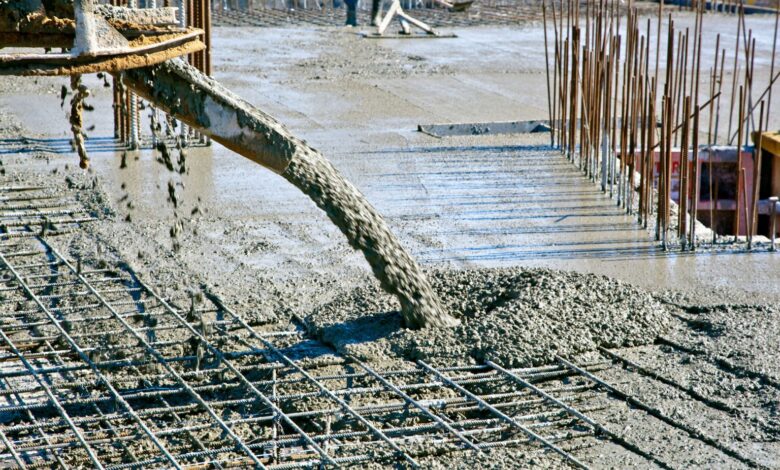
Cement Deliveries in Morocco Show Slight Growth
Cement deliveries in Morocco experienced a modest increase in July 2026, following several months of irregular market trends. Moroccan cement manufacturers sold 1.42 million tons in July, compared to 1.40 million tons in July 2025, reflecting a year-on-year rise of 1.89%.
These figures were sourced from the monthly report by the Ministry of National Land Planning, Urbanism, Housing, and City Policy, based on internal data from members of the Professional Association of Cement Manufacturers (APC).
Market Remains Slightly Behind Compared to Last Year
Despite the growth seen in July, the cement market still lags behind the previous year’s figures.
From January to July 2026, cumulative deliveries reached 8.22 million tons, down from 8.28 million tons during the same period in 2025, marking a decline of 0.75% year-on-year.
This decrease continues the trend observed at the end of the first half of the year, although the annual gap has gradually narrowed due to a recovery in deliveries noted during spring and early summer.
Ready-Mix Concrete Drives Demand
The distribution of deliveries by sector indicates contrasting trends across different market segments.
The distribution sector, which accounts for the largest share with 52.6% of total volumes, saw a decline of 5.39%, resulting in approximately 4.33 million tons over the first seven months of the year.
In contrast, ready-mix concrete (BPE), which represents nearly 27% of total deliveries, reported an increase of 7.94%, totaling 2.21 million tons.
Precast concrete (PREFA) declined by 7.20% to 0.79 million tons, while deliveries of mortar fell by 5.44% to around 35,000 tons.
Infrastructure Boosts Market Performance
The infrastructure sector demonstrated the strongest growth among the primary markets, with deliveries to this sector increasing by 13.79%, reaching 0.61 million tons.
The building sector also exhibited positive results, with a rise of 4.53%, approximately 0.25 million tons.
These developments indicate a multi-speed cement market. Major infrastructure projects and public orders continue to support industrial demand, while distribution—which is more closely linked to self-construction and smaller projects—remains under pressure.
A Particularly Tough Start to the Year
The year 2026 began on a negative note for the Moroccan cement market. Deliveries plummeted by 18.77% in January and fell by 12.63% in February.
This decline was largely attributed to heavy rainfall, as well as the Ramadan period, which lasted from February 19 to March 19 and affected the pace of construction.
By the end of the first two months, the cumulative deficit had reached 15.81%.
The market started to recover in March, with a growth of 2.53%. April marked a significant rebound, with an increase of 31.84%, narrowing the annual gap to just 0.12%.
However, the trend reversed again in May, with a decline of 20.64%, resulting in a cumulative deficit of 5.30%. Performances in June, which rose by 27.72%, and July’s increase of 1.89% helped reduce the gap to 0.75%.
Cement Manufacturers Focus on Energy Transition
The Moroccan market reached 14.82 million tons of cement in 2025, following two consecutive years of recovery. However, this revival still needs to be confirmed and remains distant from the record levels achieved by the sector in 2011.
The Professional Association of Cement Manufacturers comprises Asment Témara, Ciments de l’Atlas, Ciments du Maroc, Holcim Maroc, and Novacim, which became a permanent member of the organization on January 1, 2024.
Beyond the volume fluctuations, Moroccan cement manufacturers continue their efforts to reduce their carbon footprint. According to 2022 baseline data utilized in their climate roadmap, APC members reported an average of 550 kilograms of CO₂ per ton of cement, nearly 15% lower than the global average.
The sector also noted that 80% of its electricity comes from renewable sources, thereby strengthening ongoing efforts to minimize the environmental impact of cement production in Morocco.