Green Hydrogen: Dakhla Announces the Most Competitive Production Cost in Morocco
Here’s the translated article in high-quality English:
Dakhla Ranks First in Study for Future Green Hydrogen Projects Due to Solar and Wind Potential
A study conducted by Moroccan researchers places Dakhla at the forefront among four cities analyzed, thanks to its significant solar and wind potential. Dakhla is well-positioned to become one of Morocco’s most competitive territories for hosting future green hydrogen projects. According to a techno-economic and environmental study dedicated to autonomous hybrid energy systems, the city boasts the lowest levelized cost of hydrogen (LCOH) among the four sites analyzed, at $10.62 per kilogram.
In contrast, Tangier presents the highest cost, at $15.63 per kilogram, nearly 50% more than Dakhla. Benguérir and El Jadida fall in between, with performance linked to their climatic conditions and the availability of renewable resources.
Dakhla Benefits from Its Solar and Wind Potential
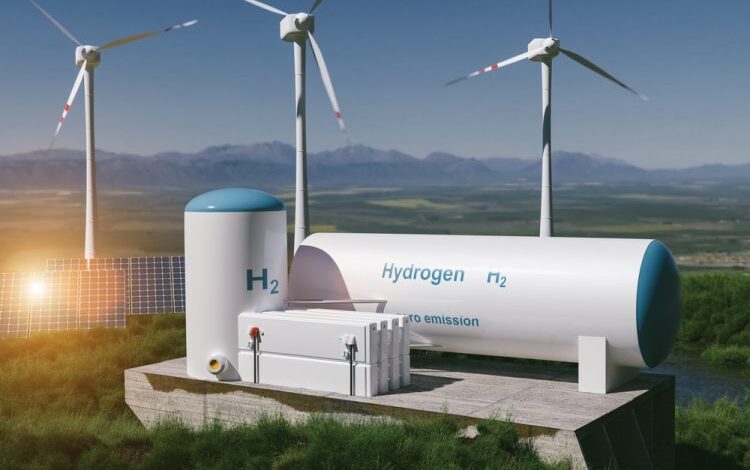
The study focuses on autonomous systems combining photovoltaic panels, wind turbines, batteries, and alkaline electrolyzers. The aim was to determine which configurations allow for the production of green hydrogen at the lowest cost while meeting strict reliability criteria.
The results clearly highlight the decisive role of location. Dakhla enjoys particularly favorable solar and wind potential, with relatively stable solar irradiation throughout the year. This combination of renewable resources is a significant advantage for hydrogen production via electrolysis and largely explains the observed disparity with the other studied cities.
Three Algorithms to Compare Configurations
To optimize the sizing of energy systems, researchers employed three so-called metaheuristic optimization methods: Particle Swarm Optimization (PSO), Ant Colony Optimization (ACO), and Gray Wolf Optimization (GWO).
These various methods were applied to enhance the reliability of the results. The studied configurations had to meet two key conditions: maintaining the probability of power loss below 1% and limiting the curtailment rate of renewable production to less than 50%.
The selected system is based on a 20 kW alkaline electrolyzer (AWE) and operates entirely autonomously, without connection to the national electrical grid.
The Cost of Financing Plays a Determining Role
The sensitivity analysis conducted by the researchers also highlighted two major factors for the economic competitiveness of projects: the discount rate and the characteristics of the batteries.
Storage capacity, battery prices, and their lifespan can have a significant impact on the final cost of the produced hydrogen. These findings underscore the importance of capital costs and financing conditions for the success of future Moroccan green hydrogen projects, indicating that technological choices are just one part of the economic equation.
A 94.4% Reduction in CO₂ Emissions
The study did not limit itself to economic dimensions; it also assessed the environmental impact of hydrogen production. According to the presented results, one kilogram of hydrogen produced from the current Moroccan electricity mix generates 41.12 kg of CO₂. With the modeled autonomous hybrid system for Dakhla, emissions are reduced to just 2.27 kg of CO₂ per kilogram of hydrogen. This represents a 94.4% reduction in emissions.
This difference emphasizes the importance of producing hydrogen from dedicated renewable sources, especially in the context of decarbonizing heavily polluting industrial sectors.
Green Hydrogen: A Strategic Challenge for Morocco
For the Kingdom, the development of green hydrogen also addresses the issue of energy sovereignty. Morocco remains heavily dependent on energy imports, while its solar and wind resources offer considerable potential for developing a national renewable production capacity.
The country has also committed, under the Paris Agreement, to reduce its greenhouse gas emissions by 45.5% by 2030. In this context, the Moroccan Offer for Green Hydrogen represents one of the main frameworks designed to support investors and facilitate project development within the Kingdom.
Global Demand for Hydrogen Remains Largely Carbon-Intensive
Morocco’s interest in this sector comes at a time when global demand for hydrogen continues to rise, increasing from 62.4 million tonnes in 2010 to nearly 100 million tonnes in 2024. However, more than 99% of this production still relies on highly carbon-emitting processes, particularly methane steam reforming and coal gasification. These processes are projected to generate around 980 million tonnes of CO₂ in 2024.
Simultaneously, announcements of low-carbon hydrogen projects have accelerated significantly. Between 2020 and 2024, announced global investments in this sector have surged from approximately $90 to $680 billion.
Dakhla Confirms Its Interest Despite Different Estimates
Research on Morocco’s green hydrogen potential leads to differing cost estimates based on the technologies, assumptions, and methods employed. Some studies have estimated the cost of hydrogen produced by wind systems with batteries between $2.23 and $24.75 per kg, depending on the sites studied. Another study focusing on Dakhla, based on a photovoltaic-wind combination with a PEM electrolyzer, concluded with a cost of $2.54 per kg.
Other research has assessed production costs at around $5.80 per kg for an autonomous photovoltaic system, while a regional study focusing on the MENA region estimated Morocco’s potential between $6.20 and $6.50 per kg for solar and between $8 and $13 per kg for wind. These discrepancies can be attributed to various economic assumptions, the technologies used, and the modeling methods selected.
An Integrated Approach to Guide Future Investments
The authors of the new study advocate for an integrated approach that simultaneously considers renewable production, storage, electrolysis, and environmental performance.
By combining several optimization algorithms, sensitivity analysis, and uncertainty evaluation—especially through a Monte Carlo method—the aim is to enhance the robustness of the results. By comparing four Moroccan cities with different climatic profiles, the study proposes a framework to objectively evaluate territories that could host future projects.
For Morocco, which aims to become a major player in low-carbon hydrogen and position itself in international markets, the choice of site locations could be as crucial as the technologies employed.
This translation maintains the original article’s informative and professional tone while ensuring clarity and fluency for English-speaking readers.