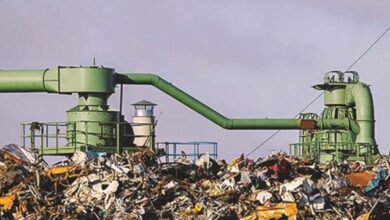
The Nareva consortium, Kanadevia Inova, and Itochu Corporation have entrusted BUTEC with an EPC contract for the flagship Waste-to-Energy project in Casablanca.
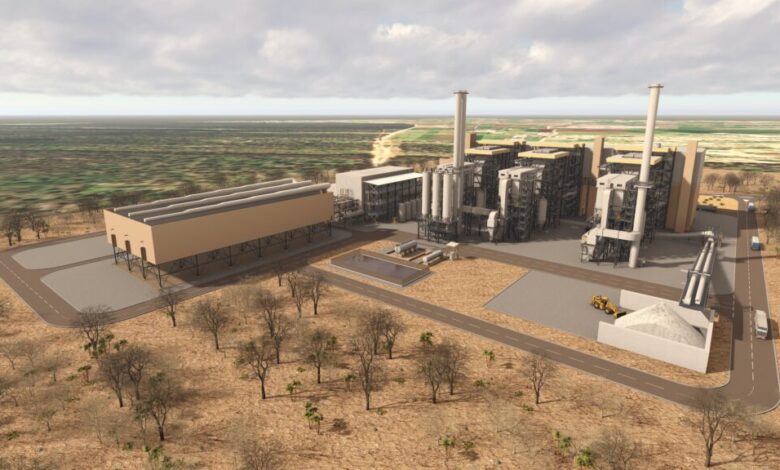
Casablanca is poised to take a significant step toward modernizing its waste management system. A major Waste-to-Energy project aims to convert a portion of the city’s non-recyclable waste into energy while gradually reducing reliance on landfills.
Under a 33.5-year concession contract with the Municipality of Casablanca, a consortium made up of Nareva, Kanadevia Inova, and Itochu Corporation has entrusted BUTEC with an EPC contract for the realization of this strategic facility.
The project is designed to support Casablanca’s transition to a more sustainable and circular waste management model.
### Processing 1.5 Million Tons of Waste Annually
The future facility will be constructed northwest of the Médiouna landfill in the Casablanca-Settat region. It is intended to process approximately 1.5 million tons of non-recyclable solid waste each year. The goal is to divert this waste from landfills and utilize it as an energy source.
With such capacity, the project represents one of the major infrastructures aimed at addressing the needs of an urban agglomeration that serves more than 4.2 million residents in Greater Casablanca. This approach is also expected to help alleviate pressure on waste storage capacities and improve the management of household and similar waste.
### Electrical Output of 126 MWe
Beyond waste processing, the facility will serve an energy purpose. The process will enable the generation of a base power output reaching up to 126 MWe, thereby transforming a portion of non-recyclable waste into an energy source.
The project thus fits into a framework that combines sustainable waste management with energy transition, aiming to repurpose a resource that has primarily been destined for landfilling until now.
### Up to One Ton of CO₂ Avoided per Ton of Waste
The environmental impact is also one of the primary concerns of the project. By diverting waste from landfills and converting it into energy, the facility is expected to avoid up to one ton of CO₂ equivalent for every ton of waste processed. This reduction in emissions should contribute to Morocco’s decarbonization goals while promoting a more circular economy approach.
The project aims to bring Casablanca closer to international standards in waste treatment and valorization.
### BUTEC Takes on a Major Part of the Work
As part of the contract, Kanadevia Inova, a Swiss specialist in energy recovery from waste and renewable gas solutions, will be responsible for the EPC of the technological scope and the processing segment of the facility. The company will also provide long-term support for operations and maintenance, as well as financing for the installation.
On its part, BUTEC will manage all civil engineering works for the project, along with the EPC for associated buildings and installations. Its scope includes civil, structural, architectural, mechanical, electrical, and plumbing (MEP) works, as well as the external infrastructure necessary for the site’s operation.
### International Expertise Supported by Local Skills
For BUTEC, this contract represents a new milestone in its development in Morocco and in the field of environmental and energy infrastructure. The company intends to leverage the historical presence of its specialized subsidiaries in the kingdom and its expertise in electromechanical solutions and engineering.
Raymond Daou, SVP of Strategy & Business Development at BUTEC, emphasizes the group’s desire to strengthen its contribution to Morocco’s sustainable development ambitions. According to him, successfully executing several successive projects in this field also enables BUTEC to solidify its positioning as a general EPC contractor in a strategic sector.
### Casablanca Accelerates Its Transition to Circular Waste Management
With this new infrastructure, Casablanca is looking to evolve its waste management model by prioritizing recovery over mere landfill disposal. The project combines several challenges: reducing the volume of buried waste, producing electricity, decreasing greenhouse gas emissions, and improving environmental infrastructure.
For the Casablanca-Settat region, the goal is also to have an infrastructure capable of supporting the urban and demographic growth of the metropolis. Ultimately, transforming 1.5 million tons of non-recyclable waste per year into energy could represent a major turning point in Casablanca’s waste management policy and contribute to Morocco’s objectives for energy transition and decarbonization.