Dangote Launches Historic IPO Open to Small Investors
Dangote Group Launches Ambitious IPO to Fund Oil Refinery Development
The Nigerian conglomerate Dangote is pursuing an ambitious strategy to finance the development of its oil refinery by going public and allowing retail investors to participate in one of the largest stock offerings ever launched in Africa. Dubbed "IPO for the People," the initial public offering (IPO) of Dangote Petroleum Refinery & Petrochemicals aims to raise approximately $1.6 billion, with subscriptions open until October 13, 2026.
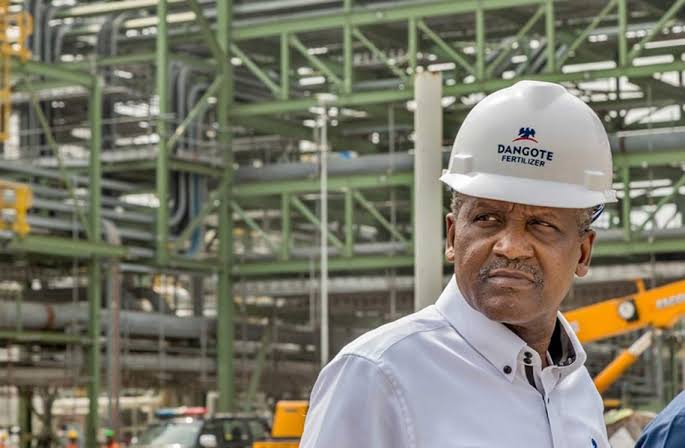
Behind this initiative is Aliko Dangote, the founder of the group and recognized as the richest man in Africa. His ambition is to mobilize a broad base of individual investors, beyond large financial institutions, while reinforcing the capabilities of an industrial group that has become a key player in Africa’s energy sector.
A Fundraising Target of $1.6 Billion
The offering includes 4.1 billion ordinary shares, priced at 525 naira each. If fully subscribed, the operation could generate around 2.15 trillion naira, nearly equivalent to $1.6 billion.
The subscription period, which commenced on September 14, will end on October 13, 2026. The first listing is anticipated in November, contingent upon the completion of the necessary procedures for the distribution of shares and required approvals.
What distinguishes this project is its ambition to broaden access to stock market investments. The group aims for a target of ten million individual shareholders, surpassing the 4.5 million retail investors who participated in the 2019 IPO of Saudi Aramco.
The announced minimum investment is set at 5,250 naira for ten shares. This structure allows savers with limited resources to participate in the offering, although actual access will depend on eligibility criteria and the processes of authorized intermediaries.
The Refinery: A Cornerstone of Dangote’s Strategy
At the heart of this initiative is the Dangote refinery, an industrial complex built in Nigeria after several years of investment. Valued at approximately $20 billion during its construction, the site boasts a declared processing capacity of 700,000 barrels of oil per day.
The facility produces various fuels, specifically targeting African markets, including gasoline, diesel, and kerosene. Its development addresses a significant challenge for several economies on the continent: reducing reliance on imported refined petroleum products and enhancing local supply capabilities.
Funds raised from the IPO are intended to finance a new phase of expansion, with the announced goal of increasing the refinery’s capacity to 1.4 million barrels per day over the next three years.
For Aliko Dangote, this capital raising represents a way to support the growth of a strategic industrial asset while further involving the public in its development.
A Nigerian Stock Exchange at the Center of the Operation
Unlike major international IPOs that often favor American or European financial markets, Dangote’s operation relies on the Nigerian Exchange.
This choice gives the initiative a symbolic significance: mobilizing African savings to finance an industrial project located on the continent. It aligns with efforts to strengthen local financial markets and demonstrates their ability to support large-scale investments.
However, the ambition extends beyond Nigeria’s borders. Investors from other African countries are also eager to participate, provided they comply with the regulatory requirements applicable in their respective markets. Ongoing efforts in Kenya and Uganda illustrate this regional interest, as well as the persistent obstacles to facilitating cross-border investments in Africa.
Indeed, the fragmentation of African financial markets remains a barrier to capital mobility. Despite initiatives for economic integration, national regulations, access procedures, and the limited number of eligible intermediaries complicate the participation of investors from one country in a transaction organized in another.
Aliko Dangote: A Symbol of African Industrial Ambition
Aliko Dangote’s journey exemplifies the rise of an African industrial capitalism built around major projects in cement, agro-industry, and energy. Starting from trading and gradually expanding into industrial activities, the Nigerian entrepreneur has transformed the Dangote Group into one of the continent’s leading conglomerates.
Today, the refinery stands as one of the pillars of this strategy. By developing local oil processing capacities, the group aims to meet a portion of regional demand while strengthening its presence in international markets.
However, this ambition raises questions regarding the environmental impacts of oil infrastructure. The group’s development projects, particularly those concerning a new mega-refinery planned in Kenya, have sparked concerns from environmental organizations and some local communities.
Thus, the challenge lies in reconciling the goals of industrial development, energy security, and economic growth with environmental and social requirements.
An Investment Opportunity with Risks
Although marketed as a public IPO accessible to a wide audience, the Dangote operation is not without risks. Share prices may rise or fall after the listing, influenced by the company’s performance, oil market outlook, and financial market conditions.
Investors must also consider the conditions for share allocation, any potential fees, and, if subscribing from another country, the risks associated with currency exchange and regulatory constraints.
The significance of this IPO is twofold. For Dangote, it’s about financing the expansion of a strategic industrial asset. For African markets, it represents a test of their ability to mobilize popular savings for large economic projects.
If the target of ten million shareholders is achieved, the initiative could mark a significant milestone in the democratization of investing in Africa. However, its long-term success will ultimately depend on the refinery’s performance, the evolution of its stock price post-listing, and the level of confidence investors have in the group.