Shangshui Smart entrusts its African markets to a subsidiary based in Casablanca.
The Chinese battery equipment manufacturer Shangshui Smart is leveraging its subsidiary established in Casablanca to expand its operations in Africa. This move comes as the group accelerates its international expansion, particularly in the sector of equipment for electrode manufacturing.
Shangshui Smart is enhancing its international presence by relying on S&Z Smartech Africa, a subsidiary set up in Casablanca that is wholly owned by its Hong Kong parent company.
With a declared capital of 100,000 dirhams, this subsidiary serves a commercial role for the group’s African markets, as Shangshui Smart gradually seeks to reduce its dependence on the Chinese market.
However, the manufacturer’s semi-annual accounts indicate that international activities remain limited compared to its domestic market.
Casablanca at the Heart of the African Business Network
In the first half of the year, Shangshui Smart reported a revenue of 629.9 million yuan, equivalent to nearly 867 million dirhams.
Of this amount, 619.4 million yuan was generated in China, meaning that revenues from markets outside China amounted to approximately 10.5 million yuan or nearly 14.5 million dirhams, accounting for only 1.7% of the group’s total revenue.
Casablanca is among the international locations of Shangshui Smart, which includes Hong Kong, Japan, and the United States. These entities primarily serve a commercial purpose, unlike the company’s two main industrial sites located in Suzhou and Nantong, China.
Thus, the Moroccan presence appears to be a foothold for the manufacturer’s development activities across the African continent.
International Expansion Still in Its Infancy
Shangshui Smart states that it has been gradually evolving its international business model, shifting from merely servicing Chinese clients abroad to efforts aimed at directly securing orders from local firms and multinationals.
The group cites Samsung SDI and LG Energy Solution (LGES) as prominent foreign clients.
This strategy is also accompanied by an enhancement of its intellectual property portfolio. By the end of 2025, the manufacturer claimed to have obtained 14 patents outside China.
Sales abroad surged from just 723,439 yuan in 2024 to 10.8 million yuan in 2025. However, their contribution to overall revenue remains modest, rising from 0.1% to 1.3% during this period.
Available data do not provide a precise breakdown of revenue attributable to Africa or Morocco.
Battery Equipment Constitutes Core Business
Shangshui Smart’s primary business focus remains the manufacturing of equipment for the production of battery electrodes.
This segment generated 531.2 million yuan in the first half of the year, which is nearly 731 million dirhams—approximately 84.3% of the total revenue.
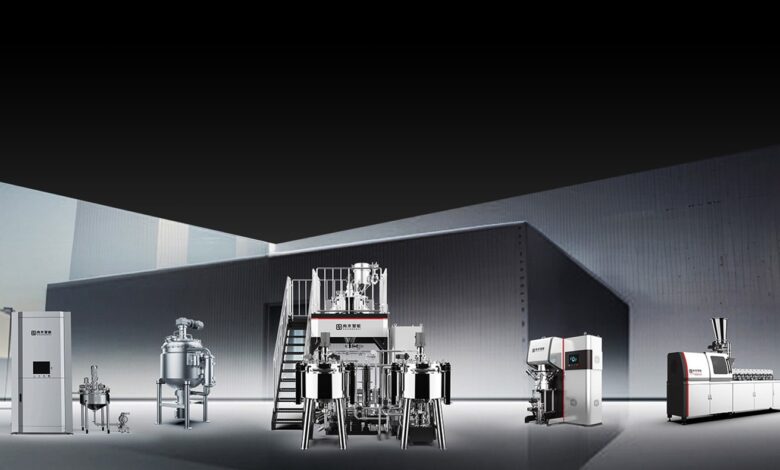
The machines developed by the group are involved at various stages of the industrial process: powder dosing, paste preparation and mixing, dispersion, coating, calendaring, and electrode cutting.
These pieces of equipment can be utilized in various manufacturing processes, including wet, semi-dry, and dry technologies for liquid batteries and new generations of solid-state batteries.
Technology Claimed to Be Exceptionally Efficient
Shangshui Smart prominently highlights its cyclic paste preparation system.
According to the manufacturer, this technology boasts a production speed three to five times higher while reducing energy consumption by 40% to 80% and significantly decreasing the required footprint by over half.
In 2024, the group estimated that it held approximately 60% of the Chinese market for this specific technology.
For all paste preparation equipment intended for lithium batteries, its market share was estimated at 12.8%, placing Shangshui Smart in third position nationally.
Strong Growth Pressureing Margins
However, the growth in volumes has come with significant pressure on margins.
Revenues from the paste preparation equipment division rose by 37.9%, while costs surged by 139.2%.
This evolution led to a dramatic decline in gross margin, dropping from 54.3% to 20.8%.
The group attributes this degradation primarily to falling selling prices and a mismatch between commercial rates and the evolution of manufacturing costs.
Order Book Approaching 3 Billion Dirhams
Despite the margin pressure, Shangshui Smart boasts a substantial order book.
As of the end of October 2025, it reached 2.2 billion yuan, or nearly 3 billion dirhams, including markets awarded but not yet officially signed.
As of June 30, 2026, advances received on orders totaled 931.7 million yuan, about 1.3 billion dirhams, which is an increase of 15.8% since December.
BYD Accounts for Over a Third of Revenue
The concentration of business around major battery and electric vehicle manufacturers is also reflected in the group’s accounts.
BYD alone accounted for 232.6 million yuan in revenue in the first half, or nearly 320 million dirhams, representing 36.9% of Shangshui Smart’s revenue.
The Chinese manufacturer also recorded 278 million yuan in contract advances, approximately 29.8% of the total.
This heavy reliance on a limited number of large clients serves as both a driver of growth and a risk concentration factor for the manufacturer.
Revenue Soaring, Profit Plummeting
The financial situation of the group illustrates the contrast between rising sales and profitability.
Shangshui Smart’s revenue increased by 58.4% year-on-year. However, its net profit plummeted by 76.2%, amounting to 22.3 million yuan, or nearly 31 million dirhams.
At the same time, the overall gross margin fell from 53.7% to 21.6%.
The group attributes this trend to the increase in deliveries coupled with a drop in prices, without a corresponding reduction in production costs.
Additionally, it faced 40.3 million yuan in impairments related primarily to receivables, inventory, and contracts.
Research Remains a Priority
Despite the pressure on its margins, Shangshui Smart continues to invest in innovation.
Research and development expenditures rose by 11.1%, reaching 32.5 million yuan.
The group also accounted for 14.2 million yuan in public subsidies, amounting to approximately 63.5% of its semi-annual net profit.
In this context, the Casablanca establishment could gain further significance as Shangshui Smart seeks to expand its operations outside China.
For Morocco, the arrival of a specialist in battery equipment also represents an interesting signal in an industrial sector poised to grow with the development of electric mobility, energy storage, and battery-related value chains in Africa.