Morocco-South Korea: Seoul Aims to Expedite Future Trade Agreement
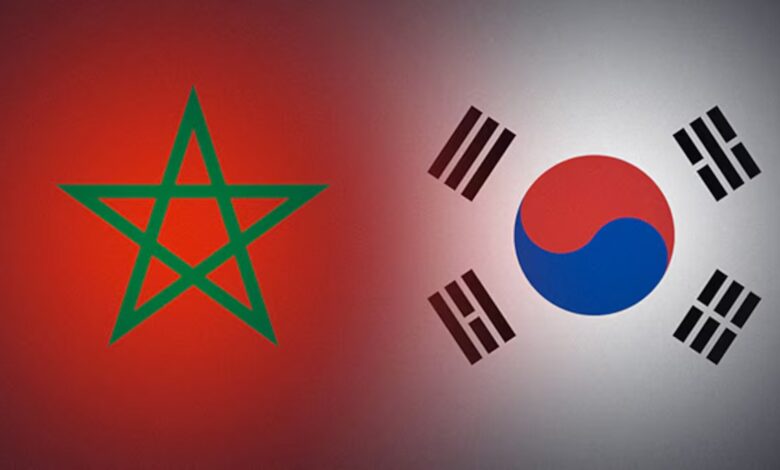
Morocco Emerges as a Strategic Partner for South Korea
Morocco is gradually establishing itself as a strategic partner for South Korea. Seoul has included the Kingdom among the seven countries and regional blocs with which it aims to initiate or revive trade negotiations in 2026, as part of its strategy to diversify opportunities against the backdrop of global trade tensions.
The list compiled by the South Korean Ministry of Trade, Industry and Resources also includes Egypt, Argentina, Uruguay, Mercosur, Mexico, and Tanzania.
In total, South Korea is currently engaged in trade negotiations or discussions concerning 22 countries or groups, including agreements that have already been negotiated but not yet implemented, as well as existing agreements that are currently under review for improvements.
Morocco: A Bridge Connecting Europe, Africa, and the Middle East
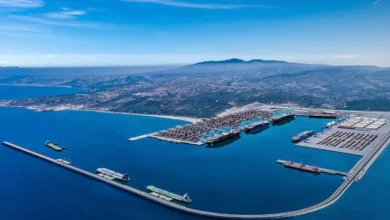
For Seoul, Morocco holds particular interest due to its geographical location and extensive network of trade agreements. The Kingdom has agreements that provide access to several international markets, including the European Union and the United States. South Korea believes this configuration enables its industrial companies based in Morocco to produce locally while supplying various major markets from a single base.
The South Korean Minister of Trade, Yeo Han-koo, previously described Morocco in May as a "bridge connecting Europe, the Middle East, and Africa." This strategic positioning is one of the key arguments presented by Seoul to expedite its economic rapprochement with Rabat.
A Comprehensive Economic Partnership Agreement (CEPA) to Enhance Trade and Investment
The two countries are currently working on a Comprehensive Economic Partnership Agreement (CEPA). This type of agreement goes beyond a simple free trade agreement; it can encompass market opening, investments, and various sectors of industrial cooperation.
In June, the Moroccan and South Korean governments agreed to establish a working group led by directors-general to prepare for the scope of future negotiations and to enable their launch as soon as possible. This decision followed a meeting on May 6 between Yeo Han-koo and Omar Hejira, Morocco’s Secretary of State for Foreign Trade. During this meeting, the South Korean official presented the forthcoming CEPA as a framework aimed at strengthening trade and investment exchanges between the two countries.
Seoul Aims for Swift Progress Towards an Agreement
The matter has advanced during Yeo Han-koo’s visit to Morocco on June 11 and 12. The South Korean Minister and Omar Hejira confirmed the establishment of the working group responsible for preparing the negotiations. Yeo Han-koo also met with Ryad Mezzour, Morocco’s Minister of Industry and Commerce, to discuss developing trade, investments, and projects driven by South Korean companies in Morocco.
Seoul now seeks to move rapidly from the preparatory phase to genuine negotiations. This acceleration is also a response to the international context marked by trade tensions and shifts in tariff policies, particularly in the United States. For South Korea, the proliferation of trade agreements is intended to allow its companies to diversify their export markets and reduce reliance on a few major destinations.
Railway and Battery Projects Strengthen Korean Interest
Seoul’s desire to bolster its economic ties with Rabat is already underpinned by several industrial investments. The South Korean Ministry notably cites Hyundai Rotem’s railway project and LG Energy Solution’s investment in lithium refining for batteries. These projects are viewed by Seoul as examples of the increasing integration of Korean companies into Morocco’s industrial fabric.
During his June visit, Yeo Han-koo also discussed opportunities in shipbuilding and defense with Moroccan interlocutors. He furthermore met with several South Korean companies operating in Morocco to address the business and administrative challenges they face.
Morocco Seen as a Gateway to Africa
For Seoul, the interest in Morocco extends beyond the national market. The Kingdom’s geographical location and its various trade agreements make it a potential platform for Korean companies looking to expand their operations in Africa. Yeo Han-koo presented Morocco as an "important gateway" for South Korean firms seeking access to the African market. The combination of Morocco’s trade agreements with Europe and the United States and its industrial presence could also give the future CEPA a dimension that goes far beyond bilateral exchanges.
South Korean groups could use their Moroccan presence as an industrial base intended to serve multiple international markets.
Moroccan Exports Dominated by Minerals and Phosphates
However, trade exchanges between the two countries remain characterized by a strong concentration of certain product categories. According to data from the United Nations Comtrade system compiled for 2025, Moroccan exports to South Korea amounted to $264.2 million, equivalent to approximately 2.4 billion dirhams. Minerals, inorganic chemicals, and phosphates are among the main exported goods. Minerals, slags, and ashes alone accounted for about $146.2 million, or nearly 1.4 billion dirhams.
The upcoming CEPA could, therefore, facilitate a gradual broadening of the trade structure and promote more industrial products and new value chains.
Morocco Joins Seoul’s Trade Priorities
The inclusion of Morocco among the seven partners with which South Korea aims to initiate or revive trade negotiations in 2026 marks a new milestone in the economic relations between Rabat and Seoul. The CEPA dossier is no longer limited to exploratory discussions that began in the spring.
With the upcoming establishment of the working group and Seoul’s demonstrated willingness to move swiftly, both countries are looking to build an economic framework capable of supporting the increasing influx of South Korean investments in Morocco. Ultimately, this agreement could reinforce the Kingdom’s position as an industrial and commercial hub between Europe, Africa, and the Middle East, while providing South Korean companies with new opportunities for establishment and export.