The Port of Nador West Med Moves Closer to Becoming Operational with the Launch of Its First Regular Container Line
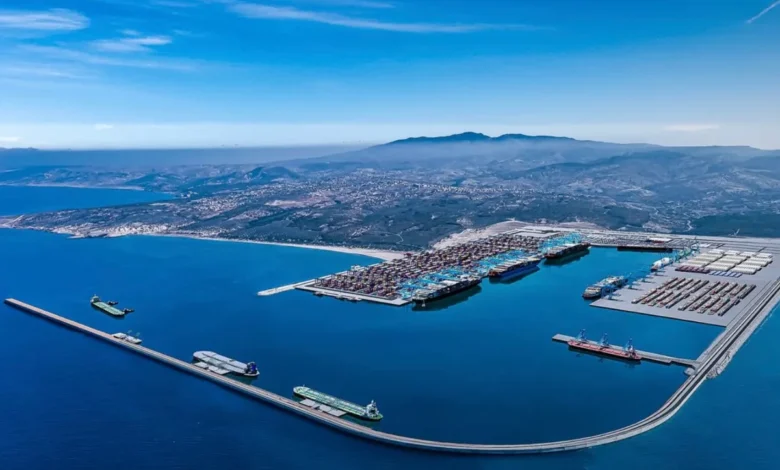
The port of Nador West Med has reached a new milestone in its journey towards becoming fully operational. The Dutch shipping company WEC Lines has recently announced the integration of the Moroccan port into its regular container transport service network, confirming the steady advancement of the project and its readiness for international maritime trade.
Named ISS-PT, this new route is set to commence operations on September 10, 2026. It will connect Nador West Med to several strategic ports in Spain and Portugal, thus providing the region with new direct links to various European markets.
The service will notably serve the Spanish ports of Valencia, Alicante, Cartagena, Almeria, Malaga, Gibraltar, Huelva, and Cádiz, as well as the Portuguese ports of Setúbal and Sines.
Beyond the Iberian Peninsula, this connection also facilitates access to a broader network of port and logistics platforms in Northern Europe. Setúbal port, in particular, allows connections to several major hubs, including Antwerp, Rotterdam, Hamburg, Liverpool, and Dublin.
The new service is expected to operate weekly with two vessels, each capable of carrying up to 868 TEU (twenty-foot equivalent units). The estimated travel time is approximately 14 days.
The launch of this line coincides with the accelerating preparations for the operational start of Nador West Med. The port infrastructure has gradually been equipped with cranes and equipment for port operations, and the necessary arrangements for mobilizing human resources are also being established.
These advancements bolster the prospects of entering a new phase by the fourth quarter of 2026, in line with the previously announced timeline. The project is thus gradually transitioning from the infrastructure development phase to operational and logistical readiness.
In parallel with technical preparations, the port is already beginning to host logistical operations related to the industrial activities located in its vicinity. Its infrastructure is notably being utilized for the transportation of winds turbine blades manufactured by a Chinese company based in the industrial zone associated with the project.
This initial activity illustrates the commitment to developing an integrated ecosystem around Nador West Med that combines industrial production, exports, logistics, and maritime transport. The ambition thus extends beyond merely receiving ships and handling containers.
As it approaches its operational launch, the integration of Nador West Med into a regular container shipping line serves as a tangible signal of its gradual entry into the international maritime trade networks.
Ultimately, this new infrastructure could enhance the logistical appeal of the Oriental region and strengthen Nador’s position as a strategic platform for commercial exchanges between Morocco, Europe, and African markets.