OCP and Quadrise Revive Fuel Trial
Quadrise Takes a Significant Step Forward with OCP Partnership
On October 26, 2026, British company Quadrise announced a vital advancement in its partnership with the Moroccan group OCP. The specialist in emulsion fuels has obtained the manufacturer’s approval for a new configuration of its commercial trial set to take place over 30 days at the Jorf Lasfar industrial complex. Moving forward, a formal agreement with OCP will be necessary before the operations can commence, which could pave the way for a future fuel supply contract.
Technical Green Light to Resume Testing at OCP
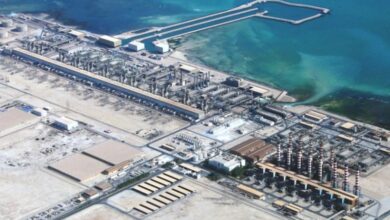
The approval pertains to a revised setup for the trial, now transferred to another production line and furnace within the Jorf Lasfar phosphate complex, located on Morocco’s Atlantic coast. This shift follows OCP’s decision in the first quarter of 2025 to relocate the program to a more modern facility, necessitating consent and technical support from the concerned manufacturer.
Quadrise stated that its equipment is already onsite, but the British company must finalize the framework agreement with OCP to govern the trial before any commissioning can occur.
This validation effectively removes a technical bottleneck that had delayed the project’s progress. The timeline now hinges on finalizing the agreement between the two partners and completing the necessary preparations for launching the industrial trial.
A Partnership Established Since 2022
The collaboration between Quadrise and OCP began in June 2022 with the signing of a material transfer and cooperation agreement. By November 2023, it led to an industrial demonstration of the MSAR and bioMSAR fuels developed by the British company.
During this initial testing, the burner installed at OCP’s facility operated at various load levels, reaching a maximum output of 33 megawatts. Quadrise presented this operation as the first demonstration of its bioMSAR fuel in a commercial industrial setting.
The partnership progressed further on May 28, 2024, with the signing of a commercial framework agreement, which included a paid 30-day trial on a furnace at Jorf Lasfar, an update to the techno-economic study conducted in 2022, and the identification of suppliers capable of ensuring sustainable fuel production for the Moroccan group.
The initial program was based on setting up an MSAR production unit with a capacity of five tons per hour, designed to emulsify locally available heavy fuel oil. The aim is to assess the fuel’s performance over an extended period under real operating conditions at the phosphate complex.
MSAR and bioMSAR: Alternative Fuels to Conventional Oil
The MSAR technology leverages an emulsion of petroleum residues, water, and additives, primarily aimed at reducing reliance on certain more expensive distillates used to adjust the viscosity of heavy fuel oil.
The bioMSAR variant incorporates biological materials in place of a portion of fossil hydrocarbons. These solutions target several sectors, including industrial facilities, electricity generation, and maritime transport.
Quadrise estimates that MSAR could be approximately 10% cheaper than conventional fuel oil while also helping to lower certain polluting emissions. However, these estimates pertain specifically to the markets targeted by the company and do not represent a definitive assessment of the savings or environmental benefits that might be achieved at OCP’s facilities.
For the Moroccan group, the trial is intended to determine the technical and economic viability of this solution within a demanding industrial environment before making any decisions regarding regular supply.
A Supply Contract Still Up for Negotiation
Successful completion of the 30-day trial is a critical step, but it does not automatically guarantee a commercial contract. The 2024 framework agreement included the search for partners among refiners, terminal operators, and oil product traders to establish a suitable supply chain.
OCP has expressed its willingness to eventually conclude a purchase agreement with a supplier licensed in Quadrise technology, as stated in a letter of intent. However, this commitment remains separate from a firm supply contract.
In September 2025, Quadrise revealed it had already received payment related to the commercial trial, though the amount was not disclosed. By that time, equipment was also present onsite, but the launch was contingent on obtaining authorization from the original manufacturer.
After considering the use of an alternative installation in March 2026, the company reported ongoing negotiations regarding the program in July. The announcement on October 26 thus marks progress in validating the new technical configuration, although it does not indicate that the trial has commenced.
In the long term, Quadrise aims to make OCP’s potential demand a primary outlet for regular MSAR production in Morocco. The company is also exploring other industrial markets within the Kingdom and, eventually, access to the Mediterranean marine fuel market.
Quadrise Reports a Net Loss of £4.2 Million
The update regarding the project’s advancement coincides with the release of Quadrise’s annual results for the fiscal year ending June 30, 2026. The company recorded a net loss of £4.2 million (approximately 55.11 million dirhams), compared to £3.1 million (around 40.68 million dirhams) a year earlier.
Its cash reserves also saw a decline, dropping from £5.9 million (nearly 77.41 million dirhams) to £2.1 million (about 27.55 million dirhams) during the same period. A capital increase carried out in July 2026 allowed the company to raise £1.6 million in gross proceeds, or about 20.99 million dirhams.
Quadrise believes its resources are sufficient to cover needs until September 30, 2027, provided its projects and expenses align with forecasts. Nonetheless, its accounts indicate significant uncertainty regarding the continuity of operations, given the necessity to secure additional funding before achieving sustainably positive cash flow.
The Company Explores Various Funding Options
Alongside the development of its industrial projects, Quadrise’s board is exploring several financial and commercial options. Potential avenues include granting technology licenses, forming joint ventures, inviting a minority investor into the capital, or merging with other companies in the sector.
The company plans to communicate the findings of this review by mid-February 2027 at the latest. It also clarified that no acquisition offers targeting it are currently underway.
Thus, for Quadrise, the next decisive step remains the finalization of the agreement with OCP, followed by the industrial trial and the evaluation of its results. Beyond the technical validation of MSAR, the challenge will be to convert this partnership into a sustainable commercial opportunity while securing the necessary funding to continue operations.