
Morocco Invests in a Direct Electric Link with Germany through an Ambitious Undersea Project
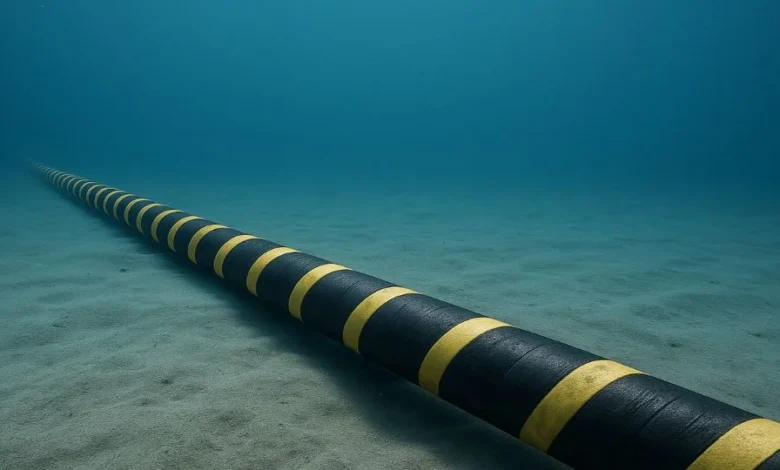
Morocco is continuing to diversify its outlets for exporting renewable electricity to Europe. The Kingdom is considering a direct electrical connection project with Germany, which would involve two underwater cables spanning several thousand kilometers, an infrastructure that could strengthen its position as a future supplier of green electricity to the European market.
According to the Spanish media outlet The Objective, the project, named “Sila Atlantic”, aims to establish two underwater links designed to transport a portion of Morocco’s electricity production to Germany. Each cable is expected to stretch approximately 4,800 kilometers, positioning this initiative among the longest and most ambitious electrical interconnections proposed in Europe.
A capacity of 3.6 GW
The project relies on harnessing Morocco’s growing potential in solar and wind energy, with the aim of directly delivering some of this production to the German market.
The total capacity envisioned for this interconnection would reach 3.6 gigawatts (GW), equally distributed between the two cables, or 1.8 GW each.
According to the information reported by the Spanish media, the infrastructure could transport up to 26 terawatt-hours (TWh) of electricity per year, equivalent to about 5% of Germany’s electricity demand, based on estimates associated with the project.
An investment that could reach 40 billion euros
However, the scale of the project comes with a particularly high cost. The total investment is estimated to be between 30 and 40 billion euros, which would require significant funding and complex coordination among multiple stakeholders and countries.
In addition, there are considerable technical and regulatory challenges, particularly due to the exceptional length of the cables and the need to obtain various permits before any construction work can commence.
A route that bypasses the Spanish network
One of the most strategic aspects of the project lies in the planned route. Unlike the existing interconnections between Morocco and Europe through the Strait of Gibraltar, the cables of Sila Atlantic are not expected to be connected to the Spanish electrical grid.
The proposed maritime route would run along the waters off the coasts of Portugal, Spain, France, Belgium, and the Netherlands, before reaching Germany via the North Sea.
This configuration would allow Moroccan electricity to reach the German market directly without passing through the Spanish electrical network. The project thus takes on a strategic dimension, potentially fitting into a new framework for the flow of renewable electricity between North Africa and Europe.
A strategic issue for Spain
This prospect is generating particular interest in Spain, given its geographic proximity to Morocco and its current role as the main gateway for energy exchanges between North Africa and Europe.
Establishing direct connections between Morocco and other European markets could, in the long run, reduce dependence on the Spanish network for transporting electricity to Northern and Central European markets.
Furthermore, the project comes against a growing European backdrop of interest in developing electrical interconnections with neighboring countries, to diversify supply sources, integrate more renewable energy, and reduce reliance on fossil fuels.
Morocco diversifies its interconnections with Europe
Morocco is currently connected to Spain via two electrical interconnections through the Strait of Gibraltar. Projects are also being considered to enhance this capacity.
At the same time, the “Xlinks Morocco-UK Power Project” aims to establish an underwater electrical link between Morocco and the United Kingdom, while other initiatives are exploring the development of new connections with various European markets.
This diversification strategy would enable Morocco to have several outlets for its renewable electricity and better leverage the growing European demand for low-carbon energy.
Implementation still a long way off
Despite its potential, the Sila Atlantic project faces significant challenges before it can materialize. Securing financing, obtaining permits, and coordinating technical and regulatory aspects with the various involved countries will be among the main obstacles to overcome.
The exceptional length of the cables also presents a major challenge in terms of engineering and underwater installation.
According to estimates reported by the Spanish media, an initial part of the project could be put into operation as early as 2033 or 2034, while achieving the full intended capacity would require more time, potentially extending into the 2040s.
If realized, this infrastructure could serve as a new lever for Morocco to enhance its renewable energy potential and strengthen its energy integration with European markets.