Morocco is moving closer to launching its first offshore wind farm on the Atlantic coast.
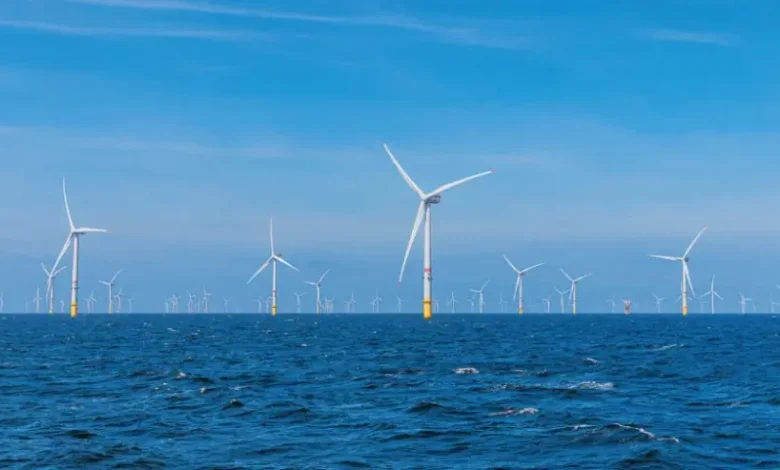
Morocco takes a significant step forward in renewable energy development with the preparation of a feasibility study for its first offshore wind farm project, which could be situated off the Atlantic coast near Essaouira.
The company OWC, specialized in renewable energy consulting, is expected to launch this initiative soon after being commissioned by the European Investment Bank (EIB) to lead a consortium responsible for conducting an in-depth feasibility study for the project’s development.
The project also has the support of Masen, the Moroccan Agency for Sustainable Energy, as part of efforts to diversify electricity production sources and bolster the use of clean energy.
A Two-Year Feasibility Study Planned
The study is projected to last approximately two years and will cover all necessary parameters for the development of Morocco’s first offshore wind energy installation.
Work will begin with identifying the most suitable area for the project’s implementation, followed by evaluations of its technical, environmental, and economic dimensions. The goal is to determine the conditions needed to transition from the study phase to subsequent development and implementation stages.
The study will also include an analysis of the Moroccan offshore wind market and an assessment of the supply chains related to this new sector. Experts will particularly investigate the available resources regarding wind speed and direction.
Weather measurement campaigns and data collection will be conducted to obtain accurate information that can assess the site’s potential and its possible electricity production capacity.
Major Logistical and Industrial Challenges
Beyond available natural resources, the study will focus on the logistical and industrial aspects necessary for developing an offshore wind farm.
An initial outline of the installation will be developed alongside the identification of the needs for ports and logistical infrastructures essential for transporting, installing, and maintaining equipment.
Experts will also need to identify the main risks that could affect the project and analyze the regulatory and legal framework that will ultimately govern the development of offshore wind energy in Morocco.
These aspects are particularly crucial for offshore wind projects, which require suitable port infrastructure, specific logistical capacities, and technical skills capable of managing large-scale equipment in complex maritime conditions.
A Consortium Bringing Together Moroccan and International Expertise
OWC will lead a consortium composed of various Moroccan and international companies and expertise for conducting the study.
The group includes PHENIXA, Gaïa Terre Bleue, NOVEC, and SOFECO, along with specialized teams from OWC based in France, the United Kingdom, and Germany.
Specialized skills in maritime and port sectors will also be mobilized through ABL, a sister company of OWC. The aim is to bring together expertise covering the technical, environmental, engineering, and logistical aspects of the project.
Funding Supported by European Funds
The feasibility study is financed by the Euro-Mediterranean Investment and Partnership Facility (FEMIP) trust fund under a contract established with the European Investment Bank.
This support illustrates European interest in the development of renewable energy projects in the southern Mediterranean and initiatives that could enhance clean electricity production and infrastructure related to the energy transition.
Essaouira: A New Potential for Moroccan Offshore Wind
Should the project successfully move past the study phase into implementation, the wind farm off Essaouira would mark a new milestone in Morocco’s strategy to diversify its renewable energy sources and further tap into the potential of its maritime front.
The development of this sector could also foster the emergence of a new industrial and logistical chain around offshore wind, particularly in the fields of port operations, engineering, maintenance, and equipment.
In the long run, this dynamic could pave the way for new investments and economic opportunities surrounding a sector poised to take on an increasingly significant role in the Kingdom’s energy transition.