Agriculture in Morocco: After the Elections, Small Farmers Await Answers to Water Stress Challenges
As the upcoming electoral deadlines approach, agriculture once again stands out as one of the most sensitive issues within the Moroccan economy. Behind the impressive figures of export performance and major agricultural projects lies another reality: small farmers are facing water shortages, rising costs, climate unpredictability, and the fragility of their incomes. The next government team, particularly the future Minister of Agriculture, will be scrutinized for their ability to transform public policies into concrete solutions in rural areas.
Agriculture: a pressing issue
In Morocco, agriculture is not just about production figures, fruit and vegetable exports, or major investments. It is also an essential source of income and employment in rural territories.
However, for several years, the sector has evolved in a profoundly disrupted environment. A succession of dry years has placed water issues at the forefront of all concerns. The rainfall deficit is no longer just a cyclical phenomenon; it necessitates a rethinking of production models, crop choices, and water resource management.
In this context, farmers will closely watch the upcoming elections and the government’s subsequent directives.
Small farmers on the front lines
For large farms with financial resources, effective irrigation systems, or easier access to financing, adaptation remains challenging yet feasible.
In contrast, small farmers have significantly less room for maneuver.
A poor agricultural season can immediately translate into reduced family income. The costs of seeds, fertilizers, pesticides, fuel, and electricity weigh heavily on finances. When water becomes scarce, the situation becomes even more complicated.
Thus, the question posed to the next government will be less about whether to support agriculture and more about how to better target that support.
Small farmers are particularly seeking easier access to financing, enhanced technical support, better protection against climate risks, and mechanisms to reduce their vulnerability to price fluctuations.
The next Minister of Agriculture facing the water challenge
The weightiest issue on the future minister’s desk will likely be that of water.
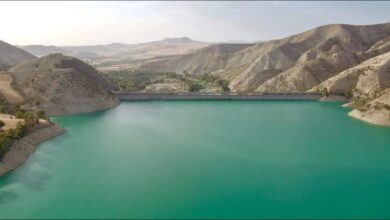
For several years, Morocco has made significant investments in dams, irrigation, seawater desalination, and the reuse of treated wastewater. However, the sheer number of these infrastructures does not, by themselves, resolve the issues of resource distribution and use.
The crucial equation will be determining what kind of agriculture Morocco can sustainably maintain in a country increasingly constrained by water availability.
The debate might thus progressively shift from a focus on yield to one centered on yield per cubic meter of water consumed.
In other words: produce more, but with less water.
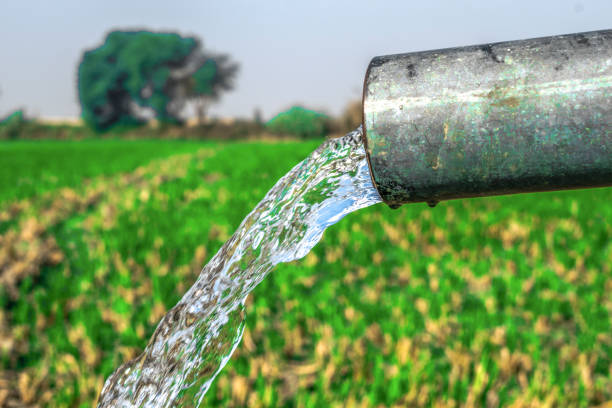
This transformation will require investments in localized irrigation, digital management of irrigation, the selection of crops suitable for climatic conditions, and, above all, support for farmers who may need to alter their practices.
Should certain crops be reconsidered?
This is one of the most sensitive topics.
Certain agricultural productions aimed at national and international markets represent significant economic value. However, in some areas, their water consumption is becoming an increasingly debated issue.
For the next government, the challenge will be to strike a balance between several imperatives: preserving agricultural incomes, maintaining exports, ensuring domestic market supply, and safeguarding a limited water resource.
The question thus will not be solely about producing more, but about determining where to produce, what to produce, and with how much water.
Food sovereignty at the heart of the debate
The years of drought have also revived a strategic issue: that of food sovereignty.
Morocco remains dependent on imports for several agricultural products, including cereals, whose national production is heavily reliant on rainfall conditions.
The next government will thus have to navigate a dilemma: should it favor water-intensive crops that create value and jobs, or redirect resources toward productions essential for feeding the population?
There is no simple answer to this equation. However, this debate should play a significant role in the agricultural policies of the upcoming legislature.
Between “Green Generation” and a new phase
The upcoming government team will also inherit the results of the “Green Generation 2020-2030” strategy, launched to further transform the agricultural sector.
This strategy notably prioritized human elements, the emergence of a new generation of farmers, and the modernization of value chains.
However, the next phase must be evaluated in light of a context that has significantly changed: climate change, water stress, rising input costs, shifts in international markets, and pressure on purchasing power.
The key question will be whether existing measures should simply be continued, reinforced, or redirected.
The issue of intermediaries and marketing
Alongside water, another issue frequently arises in agricultural discussions: marketing.
Between the producer and the consumer, the supply chain can include several intermediaries. When prices rise in markets, the producer does not necessarily benefit from that increase.
For small farmers, improving marketing could be as crucial as increasing production.
Cooperatives, organized markets, marketing platforms, agro-food transformation, and contracts with distributors could provide avenues for better valorizing production at its source.
Land, financing, and generational renewal
The next minister will also need to manage less publicized but vital issues: agricultural land, access to credit, agricultural insurance, mechanization, and generational renewal.
The departure of young people from rural areas poses a fundamental question: who will farm the land tomorrow?
Moroccan agriculture will need a new generation of agricultural entrepreneurs skilled in new technologies, water management, transformation, and marketing channels.
However, attracting youth to agriculture requires that it offers sufficiently robust economic prospects.
A roadmap to be written post-elections
As elections near, farmers expect precise answers rather than grand declarations.
What price should be set for agricultural water?
What crops should be prioritized in the most drought-affected areas?
How can we protect small farmers from poor harvests?
How can we facilitate access to financing?
How can we reduce the burden of intermediaries?
How can we ensure a more stable agricultural income?
And, ultimately, how do we build an agricultural system capable of operating within a sustainably limited water resource?
These are the questions to which the next government will need to provide answers.
For the true challenge of Moroccan agriculture is no longer solely about producing more. It is about constructing a model capable of sustainable production with less water, while ensuring that small farmers can live with dignity from their work.
It is likely in this realm, rather than through electoral slogans, that Morocco’s next agricultural policy will be observed.