Natural Gas: Spanish Deliveries to Morocco Declining
Decline in Spanish Natural Gas Exports to Morocco Between January and September 2026
The volumes of natural gas transported from Spain to Morocco via the Tarifa interconnection decreased by 12.8% between January and September 2026, according to the latest data released by Enagás GTS, the technical manager of the Spanish gas system. In total, 6,665 gigawatt-hours (GWh) were transferred to the Kingdom during the first nine months of the year, compared to 7,643 GWh during the same period in 2025.
This drop represents a decline of 978 GWh year-on-year and follows a 6.3% increase recorded between January and September 2025 compared to the first nine months of 2024.
Monthly data, however, indicates a slight recovery in September, with deliveries reaching 925 GWh, up from 912 GWh a year earlier, marking an increase of 1.4%. This development brings the average flow to approximately 30.83 GWh per day, close to the maximum technical capacity of the interconnection.
Tarifa Operating at Over 96% Capacity in September
According to Enagás, the technical export capacity of the Tarifa interconnection is set at 32 GWh per day. On the basis of thirty days, the maximum theoretical volume that could be transported in September thus amounts to 960 GWh.
With 925 GWh actually transferred, the connection utilized about 96.4% of this theoretical monthly capacity. This rate reflects a high utilization of the infrastructure during the month, though it does not provide information on daily flow variations or commercial supply conditions.
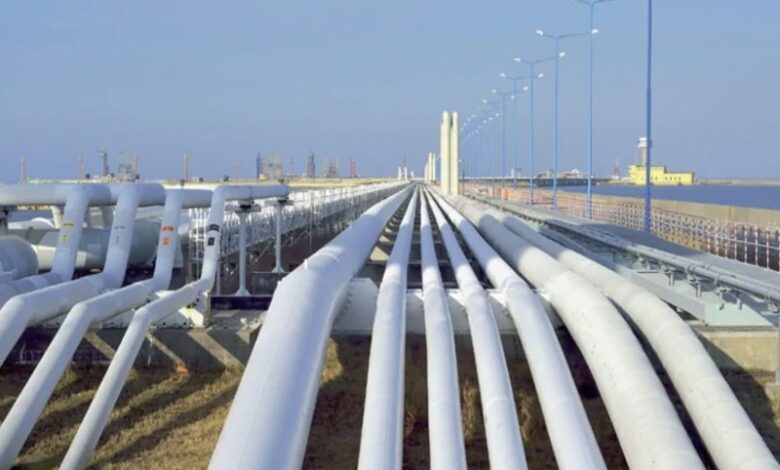
This interconnection utilizes the Maghreb-Europe gas pipeline, which was previously used to transport Algerian gas to Spain by crossing Moroccan territory. Flows in this direction ceased on November 1, 2021, upon the expiration of the related supply contracts.
Reverse transport, from Spain to Morocco, began on June 28, 2022. During the second half of that year, the volumes transported amounted to 1,882 GWh.
Morocco Sourcing through the International Market
The arrangement allows Morocco to access the international gas market by utilizing Spanish gas infrastructures. These include terminals capable of receiving liquefied natural gas (LNG), regasifying it, and then transporting it to the Moroccan border.
In its gas risk prevention plan covering the period from 2023 to 2026, the Spanish Ministry for Ecological Transition specifies that the gas transported to Morocco in the reverse direction comes from the international market and is subject to a certification of origin aimed at excluding gas from Algeria.
This procedure governs the origin of gas intended for the Moroccan market within this supply mechanism. It represents a shift in the energy configuration from that which prevailed prior to November 2021, when the pipeline transported Algerian gas to Spain via Morocco.
Volume Decline Does Not Indicate Gas Bill Reduction
The statistics published by Enagás pertain to the physical quantities transferred through the Tarifa interconnection. They do not specify the prices paid by Moroccan buyers, the identities of the suppliers, or the duration of the supply contracts.
As a result, the 12.8% decline observed in the first nine months of 2026 does not necessarily indicate a decrease in Morocco’s gas bill. The evolution of costs also depends on purchase prices, contractual conditions, and costs related to transportation and infrastructure usage.
Nonetheless, the volumes transferred serve as an indicator of the Kingdom’s reliance on this supply route, without fully measuring all its gas imports or determining the distribution of its energy sources.
United States and Algeria Among Spain’s Major Suppliers
Enagás data also highlights the diversity of supply sources for the Spanish gas system. In September 2026, the United States provided 13,461 GWh of liquefied natural gas, making up 48.2% of the month’s supplies.
Algeria followed with 8,172 GWh transported directly via the Medgaz pipeline, representing 29.3%, while Nigeria supplied 3,047 GWh, equivalent to 10.9% of the total.
In the first nine months of the year, Algeria remained Spain’s top supplier, accounting for 34.2% of the received volumes, ahead of the United States, which represented 30.7%.
These figures concern the gas entering the Spanish system and do not allow for precise determination of the breakdown by country of origin of the gas subsequently transferred to Morocco.