A Majority, Four Programs: How Much Will the Compromise Cost?
Title: Economic Challenges Facing Morocco’s New Coalition Government
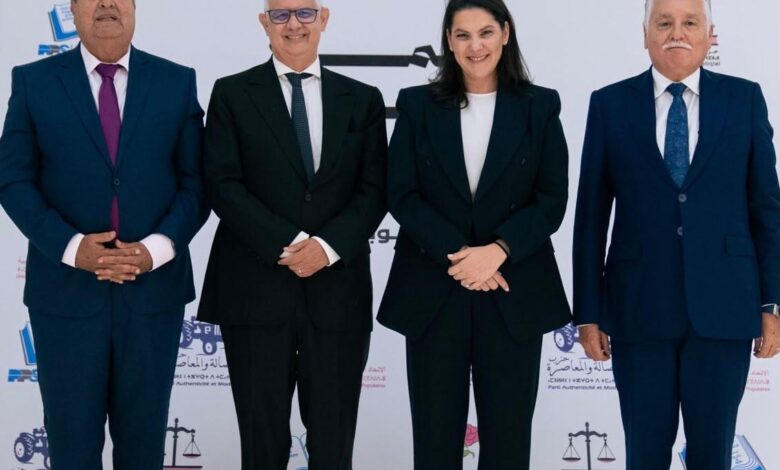
With 207 seats out of 395, the new coalition enjoys a comfortable parliamentary majority. However, translating the electoral promises of the Authenticity and Modernity Party (PAM), the Progress and Socialism Party (PPS), the Istiqlal Party, and the Socialist Union of Popular Forces (USFP) into a sustainable budgetary trajectory poses its first genuine economic challenge.
The electoral programs, from the outset, display significant disparities in scale. The PAM proposes an additional 350 billion dirhams in spending over five years, averaging 70 billion dirhams per year. Their plan primarily hinges on generating 300 billion dirhams in revenue through anticipated growth. Meanwhile, the PPS raises the bar to 575 billion dirhams, which it aims to offset with 622 billion dirhams in revenue via tax reform and sustained economic activity. As for Istiqlal and USFP, while they have put forward multiple proposals aiming to enhance purchasing power, employment, and public services, they have not provided overall budgets that can be directly compared.
The government’s most immediate priority will thus pertain to methodological concerns. The coalition must standardize the cost estimates of their measures, eliminate risks of double counting, and distinguish between genuinely new commitments and funds already allocated in public budgets.
However, this methodological clarification collides with the macroeconomic reality. The financial balance of the future roadmap will largely rely on optimistic activity assumptions. Yet, the current economic climate sets strict limits. While the Ministry of Economy predicts a GDP growth of 4.6% by 2026 after 4.8% in 2025, Bank Al-Maghrib is forecasting a more conservative 4.4%, with expectations of a slowdown beginning in 2027. Relying on a continuous acceleration of tax revenues to finance ongoing expenditures thus presents a significant budgetary risk.
Moreover, wealth creation does not automatically translate into tax revenues. Although the labor market shows signs of improvement—with 279,000 paid jobs created in the second quarter of 2026 and unemployment reduced to 9.5%—the economy still exhibits deep structural vulnerabilities. Youth unemployment remains a critical issue, with 27.2% of those aged 15-24 affected, while the female labor force participation rate stagnates at a concerning 18.1%, compared to 66.5% for men. Without reforms capable of integrating these groups into the labor market, the tax base will remain constrained, casting further uncertainty over the financing of social promises.
Ultimately, the cohesion of the coalition will hinge upon its ability to prioritize its goals over time. A credible governmental program must associate every measure with a cost, an identified resource, and a precise timeline for execution. The four parties will need to be willing to defer or resize certain promises. The cost of compromise will not merely be a simple accounting equation; it will be measured by the coalition’s ability to make political trade-offs without distorting its shared vision.
Written by: F.F