Maersk Launches Rail Connection Between Tangier and Casablanca
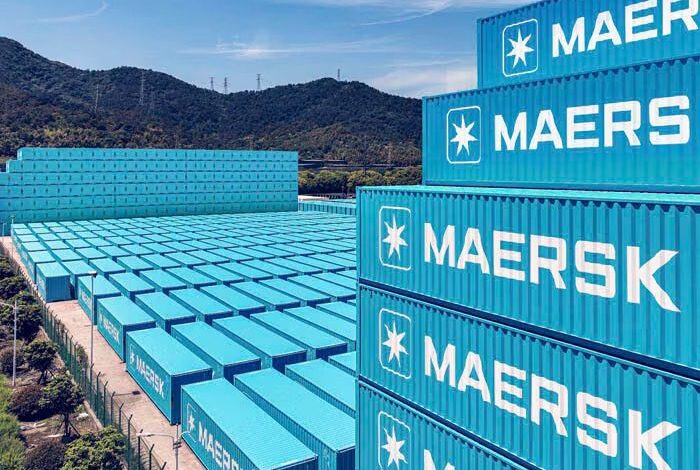
Maersk Expands Its Presence in Morocco with New Rail Link
Danish logistics giant Maersk is amplifying its footprint in Morocco by establishing a regular rail connection between Tangier and Casablanca. This service, now operational, combines maritime and rail transport to enhance the shipment of goods, improve delivery time predictability, and facilitate connections between international trade and the Kingdom’s major economic hubs.
This initiative comes against the backdrop of increasing trade volumes and growing cargo throughput at Morocco’s port infrastructure. To meet the demands of businesses, Maersk is focusing on an integrated logistics chain that links the arrival of goods via sea to their subsequent transport to inland destinations.
The system notably relies on the synergy between Tangier Med, a port platform connected to major international shipping routes, and Casablanca, a significant center for industrial, commercial, and financial activity in Morocco.
A Rail Connection to Streamline Goods Transportation
Thanks to this rail corridor, goods that arrive in the northern part of the Kingdom can be transported by train to Casablanca. The goal is to offer businesses regular departures, greater visibility over transit times, and more efficient organization of their logistics operations.
By combining maritime and rail transport, Maersk aims to provide a solution that better coordinates the various stages of the delivery process. This approach can facilitate supply planning, inventory management, and delivery organization.
According to customer needs, the logistics chain may also include additional services such as customs clearance, inland storage, and road delivery to the final destination.
Increased Demand on Ports Heightens Logistics Challenges
The development of this offering coincides with the need for Moroccan port infrastructures to handle growing volumes of goods.
According to data from the National Ports Agency cited by Maersk, the Port of Casablanca processed 17 million tons of cargo in the first half of 2026. In June alone, traffic reached 3.53 million tons, marking a 32% year-on-year increase.
These figures illustrate the strategic role of ports in the functioning of the Moroccan economy while highlighting the importance of efficient operations, the availability of processing capacity, and coordination among different transport modes.
In this context, integrating rail with maritime services diversifies transport solutions and enhances the organization of goods flow. For importing businesses, improved logistical coordination can simplify supply management and reduce uncertainties regarding delivery timelines.
A Competitive Edge for Moroccan Enterprises
Logistical performance is a critical issue for industrial companies. Supply timelines, delivery reliability, and control of transport costs directly influence production continuity, inventory management, and the ability to meet commercial commitments.
The Tangier-Casablanca rail link thus offers an additional solution for operators whose goods arrive by sea before being transported to the country’s primary economic basin.
It also helps to align port infrastructures with the needs of businesses located in Casablanca and its surrounding areas while promoting better coordination across various transport stages.
However, the tangible benefits of this solution will depend on several factors, including the regularity of departures, actual transit times, overall transport costs, available capacities, and coordination among rail terminals, customs processes, and final delivery.
Intermodality at the Heart of Logistical Strategy
For Maersk, this new rail connection enhances the opportunity to provide clients with an integrated transport solution that spans multiple stages of the supply chain. For Morocco, it underscores the growing importance of intermodality in organizing trade exchanges and pursuing greater logistical efficiency.
By linking the international maritime connectivity of Tangier Med to the industrial and commercial capacities of Casablanca, the Danish group is betting on a more coordinated organization of goods transport.
The challenge now will be to translate this operational integration into measurable gains for businesses, particularly regarding delivery timelines, reliability, and competitiveness. This evolution could enhance the attractiveness of Morocco’s logistics framework and support the needs of an economy increasingly connected to international supply chains.