Moulay Hafid Elalamy Reveals 10 Rules for Success in Business
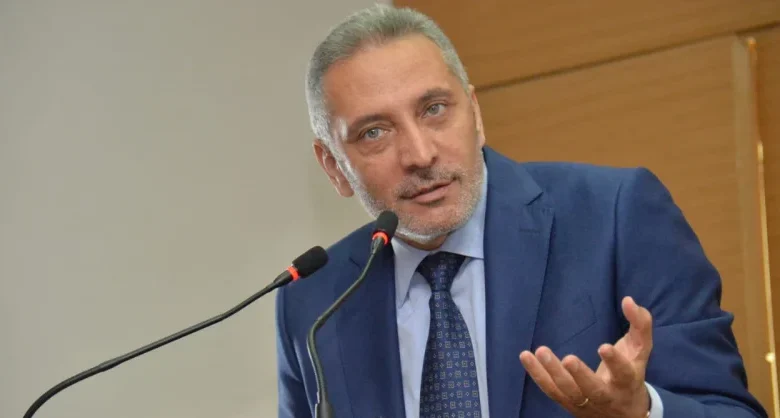
Moulay Hafid Elalamy Advocates for Entrepreneurial Vision Based on Wealth Creation, Ethics, and Boldness
In front of entrepreneurs gathered by the General Confederation of Enterprises of Morocco (CGEM), Moulay Hafid Elalamy, founder and president of Saham Group and former president of CGEM, championed a vision of entrepreneurship grounded in wealth creation, ethics, and audacity. According to him, ambition should never be confused with hasty actions or reckless risk-taking.
Invited to deliver a keynote titled "The Audacity to Think Big" during the forum "Entrepreneurs in Motion: Transforming Priorities into Actions," the businessman shared ten rules he claims to have learned through his journey, encompassing both successes and failures.
Steering clear of theoretical recipes, his presentation took the form of an "anti-manual for entrepreneurs," enriched by concrete experiences and decisions that marked the development of his activities. His central message: succeeding in business requires a clear strategy, adaptability, and the courage to acknowledge one’s mistakes.
Action vs. Agitation
Before detailing his ten recommendations, Moulay Hafid Elalamy wanted to distinguish between action and agitation. In his view, action involves executing a well-considered strategy, while agitation is rushing into implementing an idea without adequately studying the conditions for success.
He also emphasized the difference between audacity and recklessness. Referencing an idea attributed to Jeff Bezos, he explained that an entrepreneur does not necessarily need to gather 90% or 100% of the available information to make a decision. Waiting to have all elements could lead to missed opportunities. However, this ability to make quick decisions necessitates serious preparation.
The former minister further nuanced the idea that passion alone guarantees success. Loving a sector does not always equate to possessing the skills, resources, or conditions necessary to thrive within it. Therefore, passion must be accompanied by expertise, a solid understanding of the market, and genuine execution capability.
1. Be Impeccable: Make Ethics a Priority
The first rule emphasizes strict adherence to legal and regulatory obligations. For Moulay Hafid Elalamy, an entrepreneur must maintain impeccable relations with the tax authorities, customs, the foreign exchange office, the social security agency, and various oversight bodies.
This requirement is not solely about avoiding sanctions. It is also a crucial condition for protecting the business, enhancing its credibility, and preparing for long-term development.
The businessman noted that success can expose entrepreneurs to increased scrutiny and criticism. He referenced the preparations for the IPO of Majorel in Amsterdam in 2021, an operation involving several major international banks, including BNP Paribas, Citi, JPMorgan, UBS, and Goldman Sachs.
According to his account, the checks conducted ahead of this operation were particularly thorough, especially in terms of compliance and reputation. He draws a clear lesson: risk-taking should be based on solid, documented, and defensible cases.
Reflecting on his administrative experience, he recalled that some officials hesitated to sign decisions for fear of having to justify them years later. In his view, responsibility must be assumed based on verifiable elements and rigorous preparation.
2. Stay Close to Customers to Understand the Market
The second rule involves maintaining direct contact with customers, even as the company grows and more responsibilities are delegated to sales teams.
Moulay Hafid Elalamy warns against the risk of leaders gradually distancing themselves from the field, losing touch with market realities. This distance can hinder their ability to detect demand shifts, new opportunities, or early signs of difficulties.
The relationship with customers thus becomes a genuine strategic management tool. It allows for better investment guidance, correcting the company’s trajectory, and, if necessary, deciding to exit a less promising activity.
For the entrepreneur, remaining connected to the market is essential for maintaining control over his operations and anticipating changes.
3. Think Big, but Start Small
"Think big, start small" is one of the central messages of his speech. The idea is to maintain high ambition while gradually testing a business model before committing significant resources.
To illustrate this approach, Moulay Hafid Elalamy revisited several experiences in the IT and healthcare sectors. He acknowledged that some initiatives did not yield the expected results, primarily because the specifics of the Moroccan market were not sufficiently studied.
A model that works in one country cannot always be replicated elsewhere without adjustments. Regulatory, economic, and commercial differences can profoundly alter the conditions for a project’s success.
He also mentioned the launch of an assistance service initially funded by two million dirhams of equity and additional bank financing. The first hires proved unsuitable, prompting the company to restructure and reduce its team from about 70 people to eight, according to his account.
This restructuring allowed them to start anew on more solid bases. The activity subsequently expanded internationally, linked to the IPO of Majorel, valued at approximately 3.3 billion euros, and later to its merger with Teleperformance, a group for which Moulay Hafid Elalamy now chairs the board.
For him, this experience demonstrates that a business established in Casablanca with limited resources can achieve international dimensions, provided it learns from its mistakes and corrects its model in a timely manner.
4. Dare to Confront International Markets
The fourth rule urges Moroccan entrepreneurs to push beyond the confines of the national market and to confront international competition more vigorously.
Moulay Hafid Elalamy believes that companies should compete with foreign players without hesitation, focusing on quality, operational efficiency, and the ability to meet high standards.
This openness also enables the acquisition of new skills, the discovery of different working methods, and the strengthening of activities developed in Morocco.
He noted that the size of the national market can limit the growth of certain businesses. In hindsight, he considers that international expansion in an already mastered field can sometimes represent a better strategy than diversifying into a new activity.
5. Diversification or Dispersion: Progress in Phases
Moulay Hafid Elalamy cautioned against the risks of poorly planned diversification. He distinguishes between developing new activities based on existing skills and dispersion, which involves simultaneously multiplying professions, markets, and partners.
His recommendation is to first consolidate the core business and then consider new activities once the company possesses the necessary skills and resources.
He specifically criticized a mistake he claims to have made: changing countries, professions, and partners all at once. Such a combination of changes significantly increases uncertainties and complicates the identification of potential failure causes.
His preferred approach is to proceed gradually: entering a new market while maintaining a known trade, or developing a new activity within a familiar environment. This method minimizes risks and preserves the company’s capacity to learn.
6. Create Wealth, but Remain Ethical
"I want rich bosses. And I fully stand by that. But ethical." With this statement, Moulay Hafid Elalamy defended an entrepreneurial vision in which enrichment is legitimate when it is based on value creation and respect for social and tax obligations.
According to him, successful companies that pay their taxes, meet their commitments, and care for their employees directly contribute to economic development and public policy financing.
He also stressed the need to give meaning to entrepreneurial actions. Building wealth should not represent an end in itself. Leaders must also consider what they want to construct, the impact of their activities, and how to involve their staff and family in a sustainable vision.
Thus, economic success and collective responsibility are not contradictory but complementary.
7. Selling is Not Betrayal: Knowing When to Exit
The seventh rule encourages entrepreneurs not to cling to a business solely out of emotional or familial attachment. For Moulay Hafid Elalamy, selling a business can be a strategic decision when its market changes or when its business model loses relevance.
He cited Kodak as an example of how technological disruptions can affect once-dominant companies. According to him, an entrepreneur must know when to enter a sector but also when to exit when conditions require it.
This reflection led him to discuss the effects of artificial intelligence and robotics on employment and industry. He believes these transformations could challenge certain competitive advantages based on labor costs, particularly in industrial activities and offshoring services.
Automation may also encourage some companies to bring their production units closer to their consumer markets. In light of these developments, Moulay Hafid Elalamy urges Moroccan industrialists to anticipate changes rather than cling to models that may lose their efficacy.
8. Choose Partners Who Share the Same Values
The eighth rule focuses on partner selection. For the businessman, an association cannot be based solely on a financial opportunity or good personal relationships.
Partners must share fundamental principles regarding ethics, risk-taking, and investment horizons. Divergences can notably arise when one partner prioritizes quick capital gains while another aims to build a long-term enterprise.
Differences in business philosophy and adherence to rules can also become sources of conflict. Moulay Hafid Elalamy believes that shareholder agreements are not always sufficient to resolve disagreements on values or fundamental goals.
Therefore, he recommends dedicating sufficient time to choosing partners before committing to a joint project.
9. Surround Yourself with More Competent People
The ninth rule pertains to recruitment, talent management, and leaders’ ability to accept contradictions.
Moulay Hafid Elalamy introduced the concept of "competence cushion," which he claims to have coined after returning to Morocco in 1988. He describes a mechanism where a leader, fearing being outperformed by a more competent colleague, seeks to eliminate the highest-performing profiles to surround themselves with less competitive individuals.
This behavior, replicated across various hierarchical levels, ultimately weakens the organization’s skills and reduces its capacity to progress.
To counter this logic, the entrepreneur believes that a leader’s value should also be assessed by their ability to attract, nurture, and develop talent. Managers should not be evaluated solely on their personal results but also on the quality of the teams they build.
This requirement also applies to family businesses. Succession should not be automatic: an heir should assume responsibilities based on their skills, motivation, and capacity to fulfill the role.
The same principle applies to the choice of external service providers, whether lawyers, notaries, consultants, tax specialists, or bankers. Competence and service quality should take precedence over familial or relational considerations.
10. Anticipate Succession to Ensure Continuity
The final rule discusses transmission and the continuity of family businesses. Moulay Hafid Elalamy lamented that companies that have created significant value can become fragile due to poorly prepared successions or conflicts among heirs.
The lack of anticipation, unclear distribution of responsibilities, and excessive attachment to historical activities can compromise a company’s survival.
He called on leaders to prepare transitions well in advance, define responsibilities, and allow new generations to evolve the business model.
Preserving a company does not necessarily mean keeping its original activity forever. Its sustainability also depends on its ability to adapt to technological, economic, and competitive changes.
Through these ten rules, Moulay Hafid Elalamy advocates for a conception of entrepreneurship that combines ambition, rigor, ethics, and adaptability. His message to business leaders is clear: success does not hinge solely on a great idea but rather on the quality of its execution, the strength of the teams, the choice of partners, and the capacity to make difficult decisions at the right time.