Moulay Hafid Elalamy on the Government: “We Will Support Him, but Also Challenge Him When Necessary”
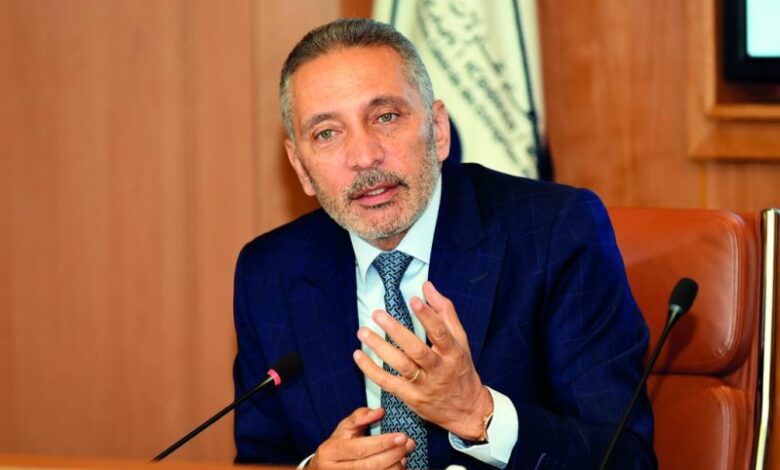
The Former President of CGEM Calls for a Demanding Relationship Between the State and Businesses
In light of technological transformations, administrative blockages, and the approaching deadline of 2030, the former president of the General Confederation of Enterprises of Morocco (CGEM), Moulay Hafid Elalamy, advocates for a collective mobilization around Morocco’s economic priorities.
“We will rally alongside him. We will also challenge him when necessary.” Following the appointment of the new government, Elalamy succinctly outlines his view on the relationship between public authorities and the private sector: supporting government actions while denouncing the dysfunctions that hinder economic activity.
Speaking at the "Entrepreneurs in Motion: Transforming Priorities into Actions" forum on October 17, the founder and president of Saham Group, a former Minister of Industry, and past president of CGEM underscored the interdependence between the Executive’s success and that of businesses.
An Internationally Significant Appointment
Moulay Hafid Elalamy praised the appointment of Fatima Ezzahra El Mansouri as head of government, emphasizing the potential repercussions this change could have on the Kingdom’s image. “This is an important intangible asset,” he noted, highlighting the interest this appointment generated among his stakeholders during a recent trip to Paris.
Beyond this symbolic dimension, the former minister also warned of the complexity of the upcoming years, characterized by international tensions and economic and technological mutations.
Artificial Intelligence: A Strategic Challenge
Artificial intelligence ranks among his primary concerns. “In the past, we strengthened human capabilities. Today, we are replacing humans. This is not science fiction,” he cautioned.
This transformation requires both businesses and public authorities to anticipate changes in work dynamics, competencies, and economic models. For Morocco, the challenge lies in maintaining its competitiveness and preparing its productive fabric for technological disruptions.
In this context, Moulay Hafid Elalamy calls for a strong Executive backed by an engaged private sector. “It is in our interest for the government to succeed,” he emphasized.
Addressing Blockages, Building Solutions
However, this support does not entail relinquishing criticism. Reflecting on his tenure at CGEM, Elalamy recalled developing a white paper addressing the challenges businesses face in their interactions with the administration.
He believes that dialogue between the State and business leaders must identify dysfunctions and provide concrete solutions. “What isn’t working must be called out in a constructive spirit. We are here to build together. This is our country,” he stated.
He conveys a clear expectation to the new ministers: to transform the issues raised by businesses into operational solutions. “Our role is to roll up our sleeves and present them with the problems and the solutions,” he summarized.
2030 as a Horizon
Discussing the deadline of 2030 and the transformations observed in several Moroccan cities, including Casablanca, the entrepreneur urged for the continuation of this development momentum.
The stakes go beyond mere expressions of support: they involve improving the business environment, eliminating administrative hurdles, stimulating investment, and adapting the economy to new international constraints.
His conclusion encapsulates the interdependence between public action and private activity: “If they succeed, we will succeed. If they fail, we all fail.” This is a call to transform dialogue between the State and businesses into a concrete lever for economic transformation.