IMF-World Bank: Over 100 Million Dollars Mobilized to Strengthen Economic Capacities
Over $100 Million in New Capacity Development Commitments Announced at IMF and World Bank Annual Meetings
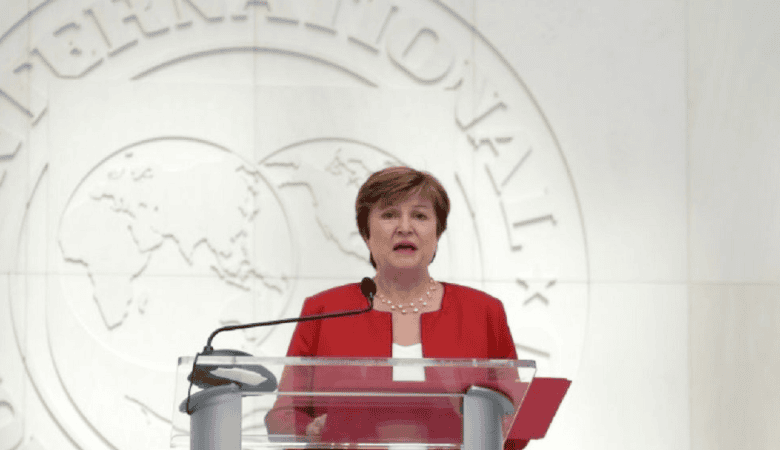
On Friday, October 16, 2026, IMF Managing Director Kristalina Georgieva announced in Bangkok that over $100 million in new commitments for capacity development has been mobilized during the annual meetings of the International Monetary Fund (IMF) and the World Bank.
These commitments represent approximately a quarter of the IMF’s annual expenditure dedicated to this area. Their purpose is to enhance the skills and institutional frameworks of member countries amidst a backdrop of geopolitical tensions, inflationary pressures, rising public debt, and transformations driven by artificial intelligence.
The IMF continues to implement its technical assistance and training programs to enhance financial surveillance and strengthen national banking systems. Each year, the institution undertakes around 300 programs in these fields and conducts about 15 evaluations as part of the Financial Sector Assessment Program (FSAP). This program notably helps identify vulnerabilities to global risks, including cyberattacks.
The Fund’s work also focuses on reducing economic imbalances, whether they are budgetary, trade-related, or connected to disparities between savings and investment. In this regard, major economies are called upon to contribute more significantly to the rebalancing of global growth—specifically through increasing savings in the United States, stimulating consumption in China, and boosting investment in Europe.
From a financial perspective, the IMF’s disbursed lending, along with undisbursed commitments, currently totals $240 billion. Its unused lending capacity is approximately three times that amount. Concessional loans amount to $36 billion, nearly four times their historical average.
The financing of the Trust Fund for poverty reduction and growth also constitutes a crucial issue that will enable the IMF to continue providing loans on favorable terms to countries in need. To date, 39 countries have pledged support for the proposed financing mechanism, covering nearly 48% of the set target. Expected cumulative contributions from European Union countries could raise this proportion to 74%, compared to a global target of 90%.
In light of shifts in the global economy and the rise of artificial intelligence, the IMF underscores the necessity of strengthening international cooperation and adopting economic policies capable of leveraging new technologies while mitigating risks, to support sustainable growth and improve living conditions for populations.