OCP Seeks Investors for its Mzinda Industrial Complex
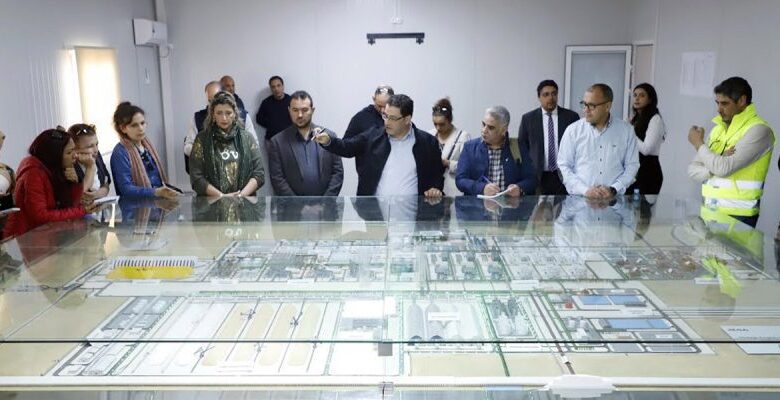
OCP Group Explores Stake Sale in Mzinda Industrial Complex Amid Rising Sulfur Costs and Weak Financial Results
The Moroccan group OCP is considering opening up equity in its future industrial complex in Mzinda to both Moroccan and foreign investors. This initiative comes in response to the rising costs of sulfur and a decline in its financial performance in the first half of 2026. According to Bloomberg, this strategy aims to secure additional funding to support the development of the project, which is set to launch in 2027.
OCP Explores New Financing Sources
The Moroccan phosphate group OCP has initiated discussions with potential investors regarding a possible equity stake in the Mzinda industrial complex, located in the Youssoufia province. This information was reported on Wednesday, October 14, by Bloomberg, citing a source close to the negotiations.
This move comes at a time when rising sulfur prices, a key raw material in the production of phosphate fertilizers, are straining the group’s industrial costs and slowing project progress. OCP is seeking to acquire additional financial resources to meet its commitments to construction companies and suppliers.
At this stage, neither the amount of funding sought nor the share of capital that could be offered has been specified. The identity of the approached investors remains unknown, and no transactions have been officially announced.
The Mzinda Complex at the Heart of OCP’s Industrial Program
The project involves three companies—Mzinda Fertilizers Company I, II, and III—established in December 2025 and wholly owned by OCP Nutricrops. According to a reference document submitted to the Moroccan Capital Market Authority (AMMC) in June 2026, assets valued at 3.2 billion dirhams have been transferred to them.
The potential for partnerships to finance the complex was also outlined in a decree published in August 2025. Therefore, the possible opening of equity is in line with a pre-existing framework intended to support project financing.
The Mzinda-Safi program is one of the key components of the group’s industrial development plan. By 2030, it aims to achieve annual capacities of 15 million tons of phosphate rock, 3 million tons of phosphoric acid, and 8.4 million tons of fertilizers.
The facilities will connect to the Safi industrial and port platform via a corridor of approximately 100 kilometers. According to OCP’s reference document, initial production capacity for mining operations within the program is expected to commence in 2028, while the Mzinda industrial complex is slated to start operations in 2027.
Soaring Sulfur Prices Strain Financial Performance
The discussions with investors come in the wake of a significant downturn in OCP’s financial performance during the first half of 2026. In this period, the group recorded a net loss of 2.84 billion dirhams, compared to a profit of 8.25 billion dirhams in the same timeframe in 2025.
Revenue fell by 7.3%, totaling 48.37 billion dirhams, while gross operating profit (EBITDA) decreased by 28.5% to 13.31 billion dirhams.
This decline is largely attributed to skyrocketing sulfur costs, which reportedly tripled in the first half of the year. Factors such as the ongoing conflict in Iran and disruptions in maritime traffic through the Strait of Hormuz exacerbated this increase by complicating supplies and inflating costs.
In response to these challenges, OCP reduced its production in May and June while accelerating certain maintenance projects originally scheduled for the end of the year.
The group also ramped up production of triple superphosphate (TSP), a fertilizer that requires less sulfur and does not need ammonia for its production. This adaptation aims to limit the business’s exposure to raw material tensions.
OCP Considers Capital Involvement for SPS and Uranext
The discussions regarding new financing sources are not limited to the Mzinda complex. According to Bloomberg, OCP is also exploring the possibility of bringing in investors for its Specialty Products & Solutions (SPS) and Uranext divisions.
SPS specializes in specialty chemicals, including the production of purified phosphoric acid, which is used in electric battery production and the manufacture of fluorine derivatives.
Reports indicate that this subsidiary achieved revenues of approximately one billion dollars in 2025, equivalent to nearly 9.25 billion dirhams. Opening its capital could enable the group to attract resources from investors with expertise in specialty chemical activities.
Uranext, on the other hand, focuses on extracting uranium from phosphates. Considering potential investor participation in this entity would broaden financing options for activities developed around the valorization of phosphatic resources.
As of now, no finalized transactions have been announced concerning these two entities.
New Strategies to Secure Sulfur Supply
In parallel with its financing efforts, OCP is exploring various solutions to diversify its sulfur supply sources. The group is particularly interested in suppliers located in Spain, Canada, Kazakhstan, and the U.S. Gulf Coast.
The company is also considering acquiring Chinese equipment to recover sulfur from pyrites mined in Morocco. According to the source cited by Bloomberg, the anticipated volumes could reach one million tons by 2027 and subsequently four million tons by 2030.
This strategy aims to reduce dependency on traditional supply chains and enhance the availability of this crucial raw material for phosphate fertilizer production.
Maritime transport is also under consideration, as OCP studies long-term freight contracts that could generate savings of up to two billion dirhams annually, according to reports.
OCP Does Not Anticipate New State Capital Infusion
Despite the financing needs linked to its industrial projects, OCP reportedly does not plan to seek a new capital infusion from the Moroccan state, which holds nearly 95% of the group’s shares, according to Bloomberg.
The pursuit of private partners, both domestically and internationally, will likely represent one of the avenues considered to support investments and develop new activities.
However, the ongoing discussions remain in a preliminary stage. The potential equity stakes, their amounts, and timelines have not been disclosed.
The outcomes of these negotiations will be crucial for assessing the financing mechanisms for the Mzinda complex and other related projects, especially in a context where securing raw materials and managing costs are significant challenges for the Moroccan phosphate industry.