CEEC Inspects Its Energy and Railway Projects in Morocco
China Energy Engineering Corporation Conducts Inspection Mission in Morocco
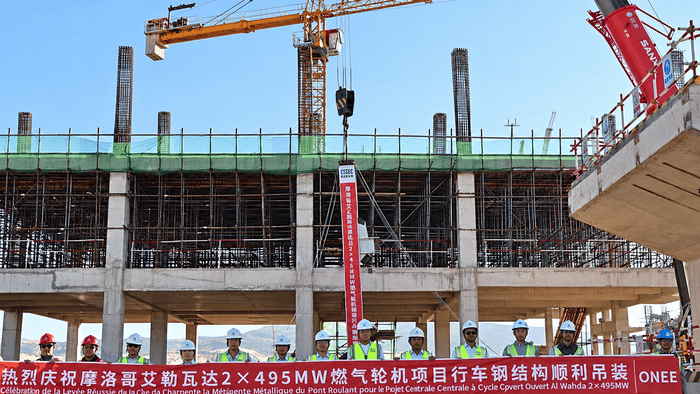
From October 13 to 18, 2026, the Chinese public enterprise China Energy Engineering Corporation (CEEC) undertook an inspection mission at its two major projects in Morocco: the Al Wahda gas power plant, with a capacity of 990 megawatts, and Lot 9 of the Kénitra-Marrakech high-speed rail line. This operation aimed to ensure compliance with activities, project management, and adherence to contractual obligations, underlining the strategic significance of energy and railway investments in the Kingdom.
A Mission Focused on Compliance and Risk Management
The delegation, led by Zhao Jianchang, secretary of the CEEC’s disciplinary committee and a member of the Standing Committee of the Chinese Communist Party within the group, conducted inspections that centered on internal procedures, risk management, integrity practices in international operations, and the implementation of corrective measures determined by management.
The mission involved representatives from the inspection departments of the Party committee, the disciplinary commission, the international affairs department, and the international branch of CEEC.
At both Moroccan sites, Zhao Jianchang evaluated contract compliance, management methods, and business prospects. He urged officials to balance timeliness with work safety, service quality, and strict adherence to ethical standards.
This initiative is part of a broader policy to control the company’s international activities, aiming to enhance compliance and mitigate risks associated with executing contracts abroad.
Al Wahda Power Plant: A 990 MW Energy Project
Located near the Al Wahda dam in the Ouazzane region, the Al Wahda gas power plant represents one of the major energy projects entrusted to CEEC in Morocco. The Chinese group is constructing the facility on behalf of the National Office of Electricity and Drinking Water (ONEE), in partnership with Japanese manufacturer Mitsubishi Power.
The contract encompasses studies, equipment supply, construction, and commissioning of the facility. The project also includes a 400-kilovolt substation intended to connect to the grid.
The main equipment consists of two M701JAC gas turbines provided by Mitsubishi Heavy Industries, each boasting a rated power output of 495 megawatts, paired with Mitsubishi generators. Operating in simple cycle mode, these machines are designed to reach production levels quickly and adjust to fluctuations in electricity demand.
Mitsubishi also designed these turbines to operate on a blend of natural gas and hydrogen, which opens up opportunities for transitioning to lower-carbon fuels, contingent upon the necessary technical conditions and supply.
Upon announcing the contract, Mitsubishi stated that the plant’s output would account for about 7% of the Moroccan electrical grid capacity at that time, with commissioning scheduled for 2027. Additionally, the Japanese group secured a long-term maintenance agreement with ONEE for the supplied equipment.
Significant Milestones Achieved at the Energy Site
Technical publications from the Chinese subsidiaries managing the construction have highlighted several advancements made at the Al Wahda site.
On November 23, 2025, teams completed the foundation slab for the first turbine after nineteen hours of concrete pouring, using a total volume of 1,875 cubic meters. The slab for the second turbine was completed on January 10, 2026, after fifteen hours of work and a total of 1,759 cubic meters of concrete poured.
On August 4, 2026, workers installed the first metal column of the framework intended for lifting equipment. These actions illustrate the progress in civil engineering and the preparation of structures necessary for installing industrial equipment.
Thus, the October inspection occurs during a crucial phase of the project, where coordinating efforts, ensuring safety standards, and adhering to timelines remain essential for the future commissioning.
Kénitra-Marrakech High-Speed Rail: Six Bridges in Lot 9
The second project visited by the Chinese delegation involves Lot 9 of the Kénitra-Marrakech high-speed rail line. The contract was awarded on November 22, 2024, to China Gezhouba Group, a subsidiary of CEEC specializing in public works.
This contract covers a stretch of 6.23 kilometers between Rabat and Casablanca, including the construction of six bridges, with a contractual duration of thirty-three months. The works must meet both French and Moroccan technical standards.
This lot is part of a 430-kilometer railway program designed to enable operating speeds of up to 320 kilometers per hour. Upon the contract’s award, CEEC characterized this project as its first high-speed rail construction operation abroad.
Consequently, this project marks a significant step for the Chinese group in the international railway market while contributing to the development of transport infrastructure in Morocco.
Nfifikh Bridge: A Major Technical Challenge
Among the structures in Lot 9, the Nfifikh bridge poses one of the main technical challenges of the project. Spanning 810 meters, it must traverse a valley with elevations exceeding 71 meters.
According to China Gezhouba, some piers reach a height of 51 meters, with the main span measuring 70 meters. The terrain configuration and geological features impose high requirements regarding foundations, structural stability, and quality control.
On June 19, 2026, teams poured the first foundation footing after fifteen hours of continuous work. At that time, thirteen footings remained to be completed, based on company information.
The construction site also requires monitoring of concrete temperature, geometric checks of reinforcements, and close coordination among Chinese teams, the National Office of Railways (ONCF)—the project owner—and the French project management.
These technical constraints explain the emphasis placed on following procedures, safety, and risk management during the inspection conducted by CEEC.
Enhanced Monitoring of Moroccan Projects
The October mission was not the first oversight visit organized by CEEC’s management at these two sites. From May 20 to 29, 2026, Yin Qiang, the group’s vice president in charge of safety, had already inspected the Al Wahda plant and Lot 9 of the high-speed rail line.
This prior visit focused on technical risks, management procedures, and adherence to commitments made to project owners.
The repetition of these missions reflects the Chinese group’s commitment to its Moroccan projects, which span two strategic sectors: electricity production and high-speed rail infrastructure.
For CEEC, the challenge now lies in continuing the execution of these contracts while ensuring safety, quality, and compliance, all the while managing timelines and operational risks. For Morocco, these projects contribute to expanding energy capacities and modernizing the railway transport network.