OCP and Koch: Brussels Approves a New Alliance in Jorf Lasfar
European Commission Approves Koch’s Acquisition of Jorf Fertilizers Company I
On Friday, October 30, 2026, the European Commission authorized the American company Koch’s acquisition of a 50% stake in Jorf Fertilizers Company I (JFC1), a subsidiary of OCP Nutricrops located in the Jorf Lasfar industrial complex. This decision paves the way for the establishment of a second joint venture between the two companies, with combined industrial capacities expected to reach approximately 2.5 million tons of phosphate fertilizers annually.
Registered under reference M.12624, the European authorization allows KAES Phosphate Holdings, a company owned by Koch Inc., to gain joint control of JFC1 alongside OCP Nutricrops. The transaction outlines an equal distribution of capital and voting rights, with each partner expected to hold 50% of the company upon completion.
European Green Light for a 1.2 Million Ton Facility
The European Commission reviewed the case under its simplified procedure and determined that the merger did not raise significant competitive concerns given the negligible presence of the future joint venture in the European Economic Area.
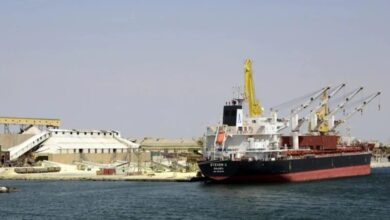
The authorization pertains to an already operational industrial unit at Jorf Lasfar, which boasts an announced annual capacity of 1.2 million tons of phosphate fertilizers. Thus, no increase in production capacity for the plant is anticipated at this stage.
Announced on July 17, 2026, the agreement remained contingent on regulatory approvals and the fulfillment of contractual conditions. The amount of the stake acquired by Koch, the valuation of JFC1, and the financial terms of the transaction have not been disclosed.
The Brussels’ approval marks another step in the merger process but does not in itself confirm that the transfer of shares has been finalized.
JFC1 Sales Experience Significant Growth in 2025
Founded on December 9, 2014, and operational since April 2015, JFC1 features integrated facilities dedicated to producing sulfuric acid, phosphoric acid, and converting the latter into phosphate fertilizers.
The plant primarily produces diammonium phosphate (DAP) and monoammonium phosphate (MAP), two widely used fertilizers in agriculture. OCP’s reference document for the fiscal year 2025 also mentions a capacity of 1.1 million tons of DAP for this category of installations, a figure that pertains to a specific product rather than the total phosphate fertilizers produced by JFC1.
Commercial data reflects the company’s impressive growth. Fertilizer sales reached 857,600 tons in 2025, compared to 291,000 tons in 2024, marking an increase of nearly 195%. In 2023, reported volumes did not exceed 14,000 tons.
These figures represent sales attributed to the company within the group’s financial statements and should not be confused with the actual volumes produced in each fiscal year.
A Second Joint Venture Following Kofert
This operation continues the industrial partnership established between OCP and Koch in 2022. On June 30 of that year, the American group completed the acquisition of 50% of Jorf Fertilizers Company III, another industrial unit in Jorf Lasfar, which has since become Kofert.
This first joint venture has an announced annual capacity of approximately 1.3 million tons of phosphate fertilizers. Its sales reached 1.16 million tons in 2025, up from 950,000 tons in 2024 and 879,000 tons in 2023, according to OCP data.
Combining the reported sales of Kofert and JFC1, the two units marketed just over 2.02 million tons of fertilizers in 2025. Once the new operation is completed, the two joint ventures will represent approximately 2.5 million tons of combined annual capacity.
This alliance integrates Moroccan industrial capacities and phosphate resources with the American group’s commercial and logistical networks, particularly in international markets.
Koch Strengthens Its Position in Phosphate Fertilizers
Through Koch Ag & Energy Solutions, the American group operates in the sectors of fertilizers, energy, chemicals, and raw material trading. Its subsidiary Koch Fertilizer is particularly focused on the production, sourcing, and distribution of fertilizers.
The partnership with OCP also involves commercial relationships concerning fertilizer distribution and sourcing of raw materials necessary for their production, including ammonia and sulfur.
Upon announcing the agreement in July, Scott McGinn, president of Koch Fertilizer, highlighted the cooperation developed with OCP through Kofert and expressed the American group’s desire to expand its phosphate fertilizer offerings.
For his part, Faris Derrij, CEO of OCP Nutricrops, emphasized the partnership’s importance in enhancing market access, particularly in North America, and contributing to the supply needs of farmers.
The American Market at the Center of Commercial Challenges
The development of this collaboration comes amid a unique context for Moroccan phosphate fertilizer exports to the United States.
On June 29, 2026, U.S. President Donald Trump declared a state of emergency concerning the supply of phosphate fertilizers to the American market. This decision paved the way for a temporary suspension of certain countervailing duties applied to imports from Morocco for up to eight months, which could end sooner if the state of emergency is lifted.
The duties established in 2021 have not been eliminated; their collection has merely been suspended as part of this exceptional measure.
The White House justified this decision by citing supply difficulties in the American agricultural market and the limitations of domestic production relative to internal needs. Moroccan phosphate fertilizers were among the products considered capable of contributing to this supply.
This regulatory development in the United States occurred just weeks before the announcement of the new operation between Koch and OCP. Both groups explicitly noted the temporary suspension of countervailing duties as a favorable factor for trade with the United States.
In 2025, OCP marketed approximately 858,000 tons of fertilizers in North America, compared to 1.02 million tons in 2024. At that time, the region accounted for 6.6% of the group’s fertilizer sales, down from 8.3% the previous year.
A preliminary illustration of the resumption of shipments to the American market was announced on August 17 by OCP North America, with the arrival at the Port of New Orleans of a shipment of approximately 54,000 tons of triple superphosphate from Morocco.
Regulatory Approvals Continue to Roll In
The operation has also undergone scrutiny by competition authorities in other jurisdictions. The Antimonopoly Committee of Ukraine authorized the merger on October 29, after reviewing a request submitted on September 18 under reference 15-01/790-ЕКк.
This decision came just one day before the European authorization. It adds to the necessary regulatory steps needed to finalize the operation.
The Ukrainian review was also marked by a distinct procedure regarding Koch’s initial acquisition in the Jorf Lasfar complex. On October 20, the Ukrainian authority imposed two fines of 51,000 hryvnias each on KAES Phosphate Holdings and Koch Ag & Energy Solutions for a concentration operation related to Kofert completed without the required authorization. This penalty pertains to the prior transaction from 2022 and not the planned acquisition of JFC1.
With Brussels’ green light, OCP and Koch take another step toward strengthening their industrial cooperation. Finalizing this second joint venture would consolidate their presence in the phosphate fertilizer sector and enhance the Moroccan group’s commercial prospects in international markets, particularly in North America.