Morocco-South Korea: An Economic Mission Opens New Perspectives
The Growing Interest of South Korean Companies in the Moroccan Market
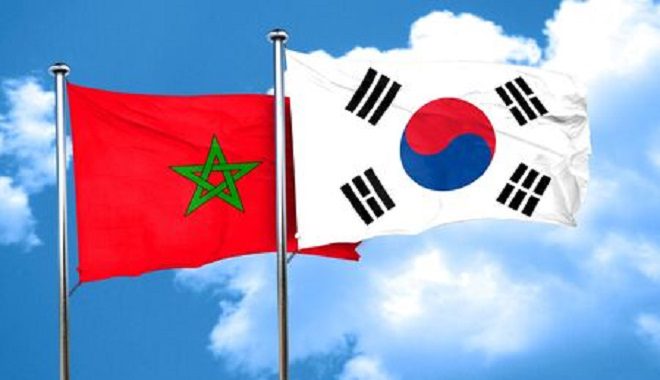
The interest of South Korean companies in the Moroccan market is becoming increasingly evident. An economic mission organized from October 26 to 29, 2026, led by the Korea International Trade Association (KITA), explored new business and industrial opportunities between the two countries, with the ambition of establishing Morocco as a gateway to African and European markets.
This initiative, which also included a stop in the United Arab Emirates, brought together eight South Korean companies operating in various sectors, including cosmetics, hair products, medical devices, and agri-food.
Eight Korean Companies Meet Moroccan Operators
On October 28 in Casablanca, the South Korean delegation participated in a series of professional meetings organized in collaboration with the Korea Trade-Investment Promotion Agency (KOTRA).
These exchanges connected participating companies with 21 Moroccan buyers, including representatives from major retail chains such as Carrefour. The goal was to identify new market opportunities, establish business relationships, and facilitate the entry of South Korean products into the national market.
Beyond these initial contacts, the mission aimed to forge sustainable partnerships with Moroccan importers, distributors, and other economic players.
Morocco: A Strategic Platform for Africa and Europe
However, Seoul’s ambitions extend beyond merely exporting finished products. Morocco is also seen as a potential regional development base, thanks to its geographical position and trade agreements with several international markets.
In this context, the delegation engaged in discussions with the General Confederation of Moroccan Enterprises (CGEM) and various representatives of the national economic ecosystem.
These discussions arise amid ongoing considerations of a possible comprehensive economic partnership agreement between the two countries. Such a framework could deepen trade exchanges and expand avenues for cooperation in productive sectors.
Opportunities in Industry and Technological Transfer
For Morocco, the relationship with South Korea presents advantages that go beyond diversifying imports. Seoul is recognized for its industrial expertise in several strategic areas, including automotive, electronics, batteries, medical technologies, and production equipment.
Developing partnerships with Korean companies could thus promote skills transfer, integration of new technologies, and the emergence of higher value-added manufacturing activities.
Moroccan industrial zones could also serve as an asset to attract investors wanting to bring their production units closer to European and African markets. This prospect would enhance the Kingdom’s position in international supply chains.
Turning Business Contacts into Sustainable Investments
The realization of these prospects, however, will depend on the ability of both parties to transform professional meetings into commercial contracts, investments, and effective industrial projects.
For Moroccan companies, the challenge is to progressively move beyond their roles as importers and distributors to engage in manufacturing, assembly, and technological development activities.
Such an evolution would strengthen local integration, develop national skills, and diversify the Kingdom’s industrial supply chains.
Thus, the South Korean economic mission underscores Seoul’s increasing interest in Morocco. It also highlights a central challenge for the national economy: transforming its commercial and geographical attractiveness into productive partnerships and sustainable industrial capabilities.