The Green March, 51 Years Later: Morocco Transitions from Consolidating Achievements to Building Solutions
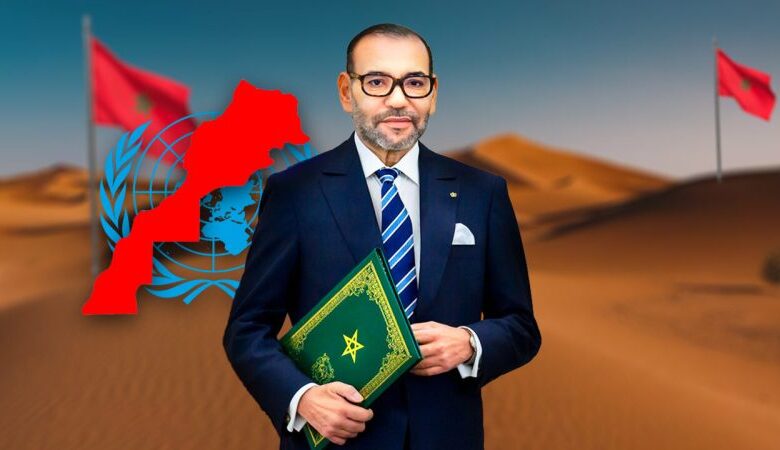
Morocco Celebrates the 51st Anniversary of the Green March Amidst an Exceptional Diplomatic Context
Morocco commemorates the 51st anniversary of the Green March in a remarkable diplomatic context, lending this anniversary significance that extends far beyond merely recalling a national saga that has deeply influenced the contemporary history of the Kingdom. Fifty-one years after the 1975 March, which symbolized a popular mobilization centered on the Moroccan Sahara cause, Morocco is entering a new phase: transitioning from managing the dispute to seeking a political resolution based on the autonomy initiative under Moroccan sovereignty.
The developments that took place at the Security Council on October 30, 2026, revealed the extent of the changes in the international debate regarding the Sahara. Despite Russia’s veto of the American resolution proposal, which had garnered eleven favorable votes, the discussions confirmed the central role now occupied by the Moroccan autonomy initiative in potential resolutions. France reiterated its position in favor of Morocco’s sovereignty, while the United Kingdom deemed the Moroccan initiative the most credible, pragmatic, and sustainable foundation for reaching a political solution.
These changes are inextricably linked to Resolution 2797, adopted in 2025, which established the Moroccan autonomy initiative as the basis for negotiations, as well as the intense diplomatic activity that characterized the issue throughout 2026. The debate is gradually evolving: beyond the exchange of political positions, it now extends to the institutional and operational dimensions of autonomy, including competencies, representation, resources, guarantees, and transitional modalities.
This evolution reflects a diplomatic strategy that has been built over several years, grounded in the expansion of Morocco’s international partnerships, the strengthening of its African ties, and the promotion of an initiative portrayed as a realistic solution to the dispute. Significant achievements must, however, translate into a sustainable political agreement accepted by the parties involved.
The non-extension of the MINURSO mandate, following the failure of American and Russian resolution proposals, also opens a new chapter, raising questions about the future of the UN framework and ceasefire monitoring mechanisms. Following these developments, Morocco reaffirmed its commitment to stability, respect for the ceasefire, and the continuation of the diplomatic process.
This commemoration gains an additional national dimension with the Unity Day, instituted by His Majesty King Mohammed VI on October 31. It has now become a moment to celebrate the Kingdom’s unity and to remind everyone of the collective responsibility to continue the work of construction and development.
While the 1975 Green March embodied unified popular will, the current period presents Morocco with a new challenge: to solidify this unity through institutions, development, and territorial justice.
The Southern provinces are no longer seen solely in the context of the dispute in national and international debates. They have also become a space for substantial projects in infrastructure, renewable energy, port facilities, and economic connectivity with the broader African landscape.
The priority now lies in amplifying the tangible benefits of this momentum, through job creation, youth integration, enhanced services, and increased local participation in development project management.
As Morocco continues to advocate for its position within international bodies, the challenges of negotiation persist. The next phase thus demands a balance between consistency in national principles and diplomatic flexibility, while presenting a clear institutional framework for autonomy capable of converting international support into a concrete, applicable, and sustainable solution.
Fifty-one years on, the Green March renews its significance. In 1975, Moroccans expressed their unity through a peaceful popular mobilization. Today, the Kingdom pursues its path across multiple fronts: diplomatic, economic, and strategic, relying on international partnerships.
From the late King Hassan II to His Majesty King Mohammed VI, a common thread runs through this historical continuity: the defense of territorial integrity and the safeguarding of the Kingdom’s higher interests.
The real significance of the Green March today lies not only in celebrating the glories of the past but in the ability to transform this historical legacy and the accumulated diplomatic achievements into a stable and prosperous future.
Morocco, which has turned unity into a collective epic more than half a century ago, now aims to leverage it as a driver for development and stability, transitioning from consolidating its position to building a solution.