Southern Provinces: Industry and Energy Accelerate Economic Diversification
The Southern Provinces of Morocco: Diversifying the Economy through Industrial and Energy Development
The southern provinces of Morocco are continuing to diversify their economy by developing high-value-added industrial and energy sectors. From the processing of seafood to phosphate mining and renewable energies, these activities are helping to strengthen the regional productive fabric and create new economic synergies.
Beyond major infrastructure projects and structural investments, a new dimension of territorial development is emerging: the transformation of local resources, industrial integration, and the rise of specialized services. This shift aligns with the objectives of the New Development Model for the Southern Provinces, initiated in 2015.
Fishing: An Industrial Sector Generating Nearly 32,000 Jobs
The fishing sector is one of the main drivers of industrial activity in the southern provinces. Its economic significance extends beyond fishing operations and landings; it also relies on a network of units specializing in freezing, canning, packaging, and exploiting marine by-products.
According to 2023 data from the Ministry of Maritime Fisheries, the three southern regions had 178 industrial units dedicated to the processing and enhancement of marine products. These establishments generated 31,859 direct jobs, including 10,274 in fish canneries.
This industrial organization also mobilizes several complementary activities, such as refrigerated transport, packaging, maintenance, health inspection, and marketing. Collectively, these roles contribute to increasing the value added by the sector and expanding its economic impact.
Dakhla Faces a Decline in Landings
Despite the development of its industrial capacities, the sector remains heavily dependent on the availability of fishery resources and fluctuations in catch levels.
On a national scale, the quantities of coastal and artisanal fish marketed reached 965,832 tons by the end of September 2026, a 19% increase compared to the same period the previous year. Their value rose by 6%, nearing 8.7 billion dirhams.
However, the situation in Dakhla contrasts sharply. Coastal and artisanal landings there fell by 43% during the first nine months of 2026, reaching just 43,141 tons. Their value also declined by 28%, amounting to 498.37 million dirhams.
These trends highlight the need to diversify processing activities and commercial outlets while safeguarding the resources that support the entire production chain.
Boujdour and Dakhla Focus on Processing Small Pelagic Fish
The development of new industrial capabilities is a key focus for the Ministry of Maritime Fisheries. Initiatives have been launched to encourage projects aimed at exploiting and enhancing small pelagic fish in the ports of Boujdour and Dakhla.
This strategy also includes the development of canning units in port industrial zones, aiming to strengthen downstream fishing activities by enhancing preservation, processing, and marketing capabilities.
The growth of these facilities could facilitate the emergence of new industrial and logistics jobs while reinforcing local economic benefits.
Phosboucraa: An Investment Program Worth 23 Billion Dirhams
The phosphate sector is another major axis of industrial diversification in the southern provinces. Through its subsidiary Phosboucraa, the OCP Group is looking to enhance the integration of mining, processing, and logistical infrastructure.
In November 2025, the company announced a financing mobilization of 2 billion dirhams from the Caisse de dépôt et de gestion (CDG) as part of a comprehensive investment program totaling 23 billion dirhams by 2030.
This program includes plans to expand the production capacity of the Phosboucraa mine, build a new phosphate port to facilitate exports, and develop a production unit for Triple Super Phosphate (TSP) fertilizers.
This orientation aims to go beyond the traditional model, primarily focused on raw ore extraction, by developing industrial processing activities further. It is expected to harness specialized skills and services in maintenance, engineering, transportation, storage, and technical services.
However, it’s important to distinguish between planned investments and already operational facilities. The entire integrated industrial hub represents a development target for 2030 and is not yet fully realized.
Renewable Energies: Several Wind Farms Already Operational
The southern provinces also have significant wind energy potential, which has gradually been realized through the commissioning of several power generation facilities.
In Tarfaya, a 300 MW wind farm became commercially operational in 2014. Near Laâyoune, the Foum El Oued facility, with an installed capacity of 50 MW, has been operational since September 2013. Another 300 MW wind farm in Boujdour also contributes to renewable electricity production.
The Aftissat complex, located in the Boujdour region, has a cumulative installed capacity of 550 MW, according to information from the operator Nareva.
These infrastructures reflect the growing place of wind energy in the regional economic landscape. Their operation requires technical expertise, maintenance operations, and specialized services, thus contributing to the diversification of local activities.
However, the installed capacity does not automatically correlate with the amount of electricity produced, which depends on factors like weather conditions, equipment availability, and the specific characteristics of each facility.
Green Hydrogen and Desalination: New Industrial Perspectives
The development of renewable energies also opens up new avenues for sectors like green hydrogen. However, this activity requires several complementary conditions, including sufficient renewable electricity production, water resources, industrial infrastructure, and commercial outlets.
Projects related to this sector are at varying stages of development and should not be conflated with the wind capacities already operational.
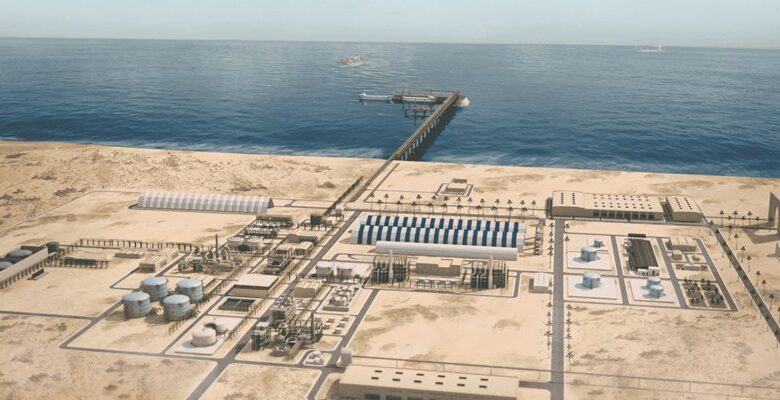
Water issues are also a significant challenge for supporting economic diversification in the southern provinces. In Dakhla, a project that combines wind energy production with seawater desalination illustrates this integrated approach.
According to information published by Nareva, the project includes a desalination facility with a planned capacity of 37 million cubic meters annually and a wind component of 60 MW. While the wind farm is already in operation, the desalination facility is still under construction.
The synergy between energy and water resources could thus meet the needs of populations, agriculture, and future industrial activities.
Value Chains That Go Beyond Natural Resources
The economic transformation of the southern provinces increasingly relies on the synergies between different sectors. Fishing, phosphate, and energy activities mobilize infrastructure, equipment, skills, and services that share several commonalities.
Transport, logistics, industrial maintenance, engineering, and technical services are all sectors that could benefit from this dynamic. The development of large industrial units can create opportunities for local specialized businesses and foster a more diversified economic environment.
However, the benefits of this evolution will depend on the ability of regional companies to meet the needs of large operators and to integrate sustainably into their supply chains.
Through these various sectors, the southern provinces are initiating a transformation that goes beyond the exploitation of their natural resources. Industrial processing, energy production, and the development of associated services are gradually deepening their economy, continuing the momentum of the New Development Model launched in 2015.