Gotion High-Tech and Volkswagen Plan €480 Million Investment in Battery Materials in Kénitra
Chinese Company Gotion High-Tech and Volkswagen Plan Industrial Joint Venture in Kenitra for Electric Battery Materials
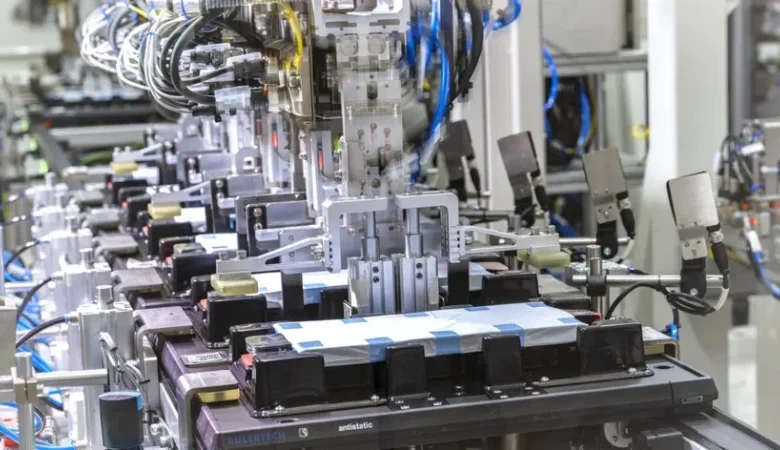
Chinese firm Gotion High-Tech and Volkswagen are set to establish an industrial joint venture in Kenitra, Morocco, aimed at producing active materials for electric batteries. With a planned investment of €480 million and an annual production capacity of 100,000 tons, this project is designed to supply two future European battery cell manufacturing plants.
The project has taken an initial regulatory step in Morocco, with Gotion High-Tech and Volkswagen notifying the Competition Council of their plan to create joint ventures in Morocco, Spain, and Slovakia. This initiative is part of an industrial strategy to enhance their presence within the electric battery value chain.
In Kenitra, the upcoming facility will focus on manufacturing a crucial component for battery cells: lithium iron phosphate (LFP) cathode active material. According to the announced terms, Gotion will hold a 51% stake in the Moroccan joint venture, while Volkswagen’s battery subsidiary, PowerCo, will control the remaining 49%.
The forecasted investment for the Moroccan site amounts to €480 million, excluding costs for land and industrial buildings, and aims to achieve a production capacity of 100,000 tons per year.
Kenitra: A Strategic Link in the European Battery Chain
The future Moroccan factory is part of an integrated industrial organization that includes additional components planned for Spain and Slovakia. The production from Kenitra will primarily supply the battery cell manufacturing units that the partners intend to establish in Valencia, Spain, and Šurany, Slovakia.
These two European facilities are expected to achieve a combined production capacity of 37.5 gigawatt-hours per year. Overall, this industrial strategy represents a substantial investment package of approximately €3.22 billion.
This synergy among the three sites grants Morocco a specific role: to provide a strategic component that will subsequently be integrated into battery cells produced in Europe, particularly for the European electric vehicle market.
Opportunities for Moroccan Businesses
Beyond the industrial investment, the project could generate significant benefits for the local economic ecosystem. Activities related to maintenance, industrial logistics, and quality control are among the sectors likely to offer opportunities for Moroccan service providers.
However, the effective participation of local companies will depend on the technical and industrial requirements set by the partners, as well as their ability to meet the anticipated standards within this sector.
The notification to the Competition Council marks a step in the regulatory process. The timeline for implementation remains closely tied to the progress of the three facilities, which are designed to be interdependent components of a single industrial framework.
Thus, the initiation of production in Kenitra must be coordinated with the commissioning of the two European units to ensure a cohesive supply chain within this new electric battery value chain.