Morocco-Israel: The Establishment of a Permanent Defense Attaché in Rabat Marks a New Milestone in Military Cooperation
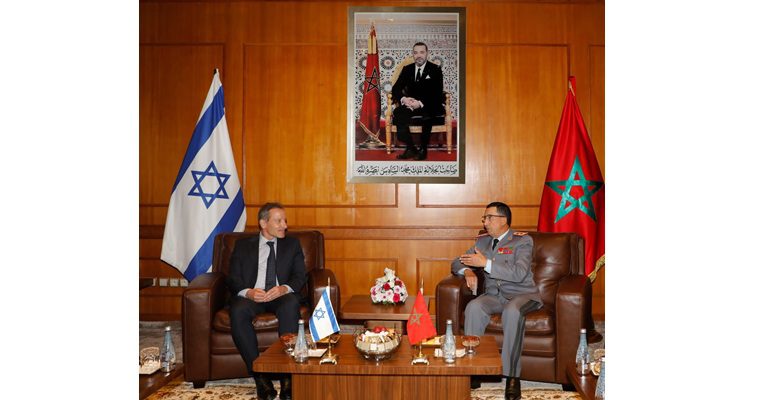
The Inauguration of a Permanent Office for the Israeli Defense Attaché in Rabat: A Symbol of Strengthening Military Partnership Between Morocco and Israel
The inauguration of a permanent office for the Israeli defense attaché in Rabat exemplifies the institutional strengthening of military cooperation between Morocco and Israel. Beyond the acquisition of military equipment, this collaboration now encompasses defense industry development, technology transfers, cybersecurity, and training, with a significant goal of cultivating autonomous national capabilities.
Military cooperation between Morocco and Israel has reached a new milestone with the announced establishment of the permanent Israeli defense attaché’s office in Rabat. This development reflects both nations’ intent to embed their military exchanges within a sustainable institutional framework, especially as issues related to defense, technology, and industrial sovereignty have become increasingly central to their relationship since the resumption of bilateral ties in 2020.
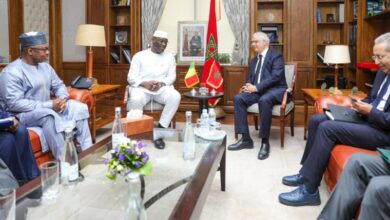
This advancement coincides with the official visit of Amir Baram, Director General of the Israeli Ministry of Defense, who led a delegation that included representatives from the Israeli military. Representing Israeli Defense Minister Israel Katz, Baram was received on Monday, November 9, 2026, in Rabat by Abdeltif Loudyi, the Minister Delegate in charge of National Defense Administration, and General Mohammed Berrid, Inspector General of the Royal Armed Forces (FAR) and Commander of the Southern Region.
One of the key highlights of this visit was the inauguration of the permanent Israeli defense attaché’s office, overseen by Colonel Sharon Itach, the first permanent holder of this position in Morocco. This office aims to enhance coordination and continuity in exchanges between the two defense establishments.
Strengthening Morocco’s Defense Industry Aspirations
Beyond its diplomatic significance, this development holds strategic importance for Morocco, which seeks to bolster the operational capabilities of its Royal Armed Forces and expedite the growth of a national defense industry.
Discussions between Abdeltif Loudyi and Amir Baram focused on the prospects of establishing and developing a defense industrial base, the acquisition of military technologies, and enhancing cooperation in cybersecurity.
According to official communications, this partnership is anchored in a legal framework that notably includes the protection of classified military information and equipment, personnel training, and the exchange of expertise.
Both parties reported advancements in military equipment and defense technologies. From the Israeli side, it was clarified that the majority of contracts signed with Morocco result from direct agreements between governments, under the supervision of the relevant agencies within the Ministry of Defense.
Technology Transfers and Industrial Sovereignty
A critical aspect of this cooperation is the support for the development of Morocco’s military industry, particularly through joint ventures and industrial compensation mechanisms.
For Rabat, the stakes extend beyond merely acquiring defense materials and systems; it also involves generating national added value through local skills development, progressive mastery of technologies, and the integration of Moroccan companies into the value chains of this industry.
This approach aligns with a strategy to reduce external dependency, in a sector where technological mastery and securing supplies are crucial elements of sovereignty.
The tangible outcomes of these partnerships will thus depend on their capacity to foster industrial investments, knowledge transfers, the creation of skilled jobs, and the development of specialized competencies in Morocco.
Structured Cooperation Since the Resumption of Relations in 2020
The current dynamic traces its origins to the resumption of diplomatic relations between Rabat and Tel Aviv in December 2020, followed by the signing of a memorandum of understanding in November 2021 regarding defense cooperation.
Since then, exchanges have gradually expanded across various domains, including military training, joint exercises, enhancement of operational capabilities, and technical cooperation.
During his meeting with Amir Baram, General Mohammed Berrid underscored the progress made in terms of expertise exchange and training. The two leaders also reaffirmed their commitment to continue implementing the action plans defined by the Joint Military Commission, which serves as the primary mechanism for coordinating and tracking this cooperation.
Complementary Strategic and Industrial Interests
The partnership also features a significant economic dimension for Israel. Its Ministry of Defense integrates international cooperation development into a strategy designed to support military exports and strengthen the market opportunities for its defense industries.
The priorities of both partners thus align on several aspects while addressing distinct objectives. For Israel, the aim is to consolidate its international markets and expand its technological exports. For Morocco, the priority is to translate acquisitions and partnerships into sustainable industrial and technological capacities.
In a regional environment characterized by persistent geopolitical tensions, this evolution further underscores the importance of security as a component of the relationship between the two countries.
The challenge ahead is to assess the concrete results of this cooperation, particularly in terms of skills transfers, industrial investments, and technological autonomy. Beyond the institutional significance of establishing a permanent defense attaché in Rabat, the true measure of this partnership’s strategic value will be its ability to enhance Moroccan industrial sovereignty.