Alstom: The ONCF High-Speed Train Program Supports the Group’s Regional Growth
Morocco as a Key Driver for Alstom’s Growth in Africa, the Middle East, and Central Asia
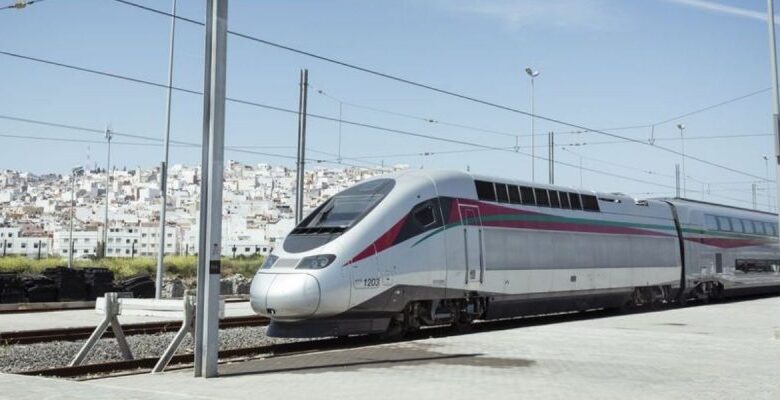
Morocco stands out as a significant player in boosting Alstom’s activities within the Africa, Middle East, and Central Asia region. The Avelia high-speed train program for the National Office of Railways (ONCF) contributes to this positive momentum, as the French manufacturer reports a 16% increase in its regional revenue for the first half of the 2026-2027 fiscal year, despite a substantial decline in global profitability.
The Moroccan high-speed train program underscores its importance to Alstom’s operations. The French train manufacturer is heavily reliant on the advancement of the Avelia contract signed with ONCF to enhance its performance in the Africa, Middle East, and Central Asia region.
According to financial results published on November 17, Alstom’s revenue in this area reached €894 million in the first half of its 2026-2027 fiscal year, ending September 30, compared to €769 million during the same period last year. This translates to a 16% increase in published figures and an 11% increase at constant scope and exchange rates.
The Moroccan project is among the key contracts that contributed to this growth, alongside railway systems like Tel Aviv’s Green Line, X’Trapolis Mega suburban trains in South Africa, and Prima locomotives for Kazakhstan.
Morocco Among the Engines of Regional Growth
The Africa, Middle East, and Central Asia region now accounts for 10% of Alstom’s semi-annual revenue. This region also stands out for a significant increase in order intake, which soared to €3.254 billion, compared to €228 million a year earlier.
This commercial success is primarily driven by several contracts won in South Africa, Saudi Arabia, and Egypt, as well as the completion of financing for a rail project in Israel.
In South Africa, Alstom secured a contract worth approximately €800 million focused on modernizing and maintaining the Gautrain. In Saudi Arabia, a €400 million order is for the provision of additional trainsets for the Riyadh metro.
The company also signed four agreements with Egyptian railways, totaling €700 million, of which approximately €300 million pertains to Alstom’s own share.
Global Revenue Growth Amid Pressure on Profitability
On a global scale, Alstom reported a revenue of €9.33 billion for the first half of the 2026-2027 fiscal year, compared to €9.06 billion a year earlier, marking a 3% increase. Organic growth settled at 2%.
Meanwhile, order intake reached nearly €11 billion, up 5%. The company’s order book stood at €111 billion as of September 30, 2026, representing a 6% increase since the end of March.
However, this commercial dynamism contrasts sharply with a notable decline in operational results. Adjusted operating income reported a loss of €396 million, whereas Alstom had recorded a profit of €580 million in the same period of the previous fiscal year.
The adjusted operational margin thus fell from 6.4% to -4.2%. The net result attributable to the group also fell into a loss of €954 million, compared to a profit of €220 million one year prior.
Challenges with the Coradia Max Program Impact Financial Results
This underperformance is primarily attributed to execution challenges faced on several rail programs in Germany, particularly regarding the Coradia Max platform.
Technical issues related to its industrialization and prolonged certification procedures led to revisions in production and delivery schedules, adversely affecting the financial performance of the group.
In light of these difficulties, Alstom has initiated several measures since April 2026 aimed at improving project tracking and enhancing cost management. The manufacturer is working specifically on simplifying its procedures, reorganizing certain activities, and improving its purchasing practices.
A broader review of its industrial and operational organization is also underway, with decisions anticipated before the year’s end.
Alstom Aims for €2 Billion Debt Reduction
Alstom’s CEO, Martin Sion, acknowledged the operational difficulties weighing on the semi-annual results while reaffirming that improving industrial execution and financial circumstances remain the group’s top priorities.
The manufacturer plans to reduce its debt by approximately €2 billion by September 2027, aiming to maintain its credit rating in the investment-grade category.
Within this context, the Moroccan Avelia high-speed train program continues to play a crucial role in the company’s commercial dynamics. Its advancement contributes to the growth of Alstom’s regional activities, while the manufacturer must concurrently ensure the execution of its extensive order book and sustainably restore its profitability.