Dakhla Inaugurates International Hospital-University Complex Spanning 470,000 m² Dedicated to Healthcare and Training
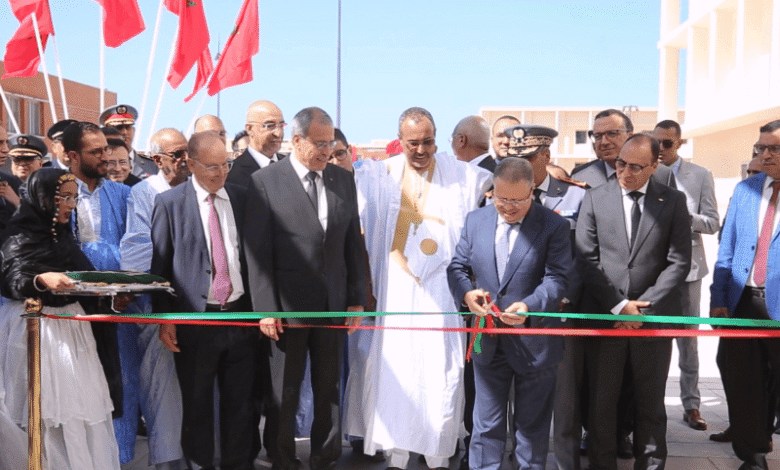
Dakhla Takes a Major Step Forward in Health and University Infrastructure Development with the Inauguration of the International Mohammed VI Hospital-University Complex
Dakhla is advancing its healthcare and educational infrastructure with the inauguration of the International Mohammed VI Hospital-University Complex. Following the High Instructions of King Mohammed VI, Youns Bjijou, the Minister of Health and Social Protection, officiated the opening of this integrated facility on Wednesday, designed to merge medical treatment, healthcare professional training, and scientific research.
Developed by the Mohammed VI Foundation of Science and Health (FM6SS), the complex spans a total area of 470,000 square meters, with 112,500 square meters constructed. Its aim is to enhance access to specialized care in the southern provinces while bolstering national training capacity in health professions.
This inauguration coincides with the 71st anniversary of Independence Day and aligns with the ongoing modernization of the national healthcare system and the development of medical infrastructure that meets evolving scientific and technological advancements.
A 259-Bed Hospital Featuring 28 Medical and Surgical Specialties
The hospital wing is one of the core components of the complex. Built over an area of 43,950 square meters, the International Mohammed VI University Hospital of Dakhla has a capacity of 259 beds, including 51 dedicated to critical care.
The facility encompasses 28 medical and surgical specialties and is expected to serve up to 226,000 patients annually for consultations and outpatient care.
Its technical platform features 15 operating and intervention rooms, distributed among ten operating rooms in the central surgical block, two catheterization labs, two endoscopy rooms, and an emergency room.
Additionally, the hospital houses eleven centers of excellence across multiple specialized disciplines, including interventional cardiology, orthopedic and trauma surgery, nuclear medicine, adult and pediatric oncology-hematology, radiotherapy, neurosurgery, neuro-interventional procedures, and endourology.
Complementing these infrastructures are a 24/7 medical imaging service, a state-of-the-art automated medical biology laboratory, and facilities dedicated to hyperbaric oxygen therapy.
A University Designed to Accommodate 3,000 Students
The academic component is provided by the Mohammed VI University of Science and Health (UM6SS), which encompasses a built area of 70,000 square meters and can accommodate up to 3,000 students.
Its educational facilities include seven amphitheaters with a total of 1,300 seats, 88 classrooms, and 88 practical and directed study rooms, all equipped with modern audiovisual technologies.
The training offerings include a faculty of medicine, a graduate school of engineering in health sciences, and a faculty of nursing and health professions.
The campus also features an 1,800 square meter simulation center, allowing students and professionals to develop their skills in conditions closely resembling real medical practice, as well as an African Academy and a conference center with a capacity of 600 seats.
Supporting Infrastructure and Integrated Facilities
Beyond hospital and university spaces, the complex includes several amenities designed to support the daily lives of students and professionals.
These facilities include a university residence with 600 beds and a residential area featuring 300 collective housing units. Sports facilities, a mosque, a daycare center, and commercial spaces enhance the complex’s offerings.
The infrastructure is also equipped with a centralized energy hub designed to ensure continuity of hospital and university operations while optimizing energy resource management.
Competency Training at the Heart of the Project
In a statement to the press, Ahmed Bennana, the deputy director of the Mohammed VI Foundation of Science and Health, stated that this inauguration aligns with the implementation of the Royal Vision aimed at strengthening the efficiency, equity, and sustainability of the national healthcare system.
He highlighted the synergy between the hospital wing, with its 259 beds covering more than 28 specialties, and the academic wing focused on training healthcare professionals.
Bennana particularly emphasized the role of the simulation center in developing the skills of students and practitioners, with the goal of enhancing the quality of medical practices and patient safety.
He also reminded attendees that the complex houses the African Academy of Health Sciences, which will participate in organizing the Dakhla Global Summit scheduled for November 20 and 21.
Dakhla Aiming to Become an African Health and University Hub
Through its various components, the International Mohammed VI Hospital-University Complex of Dakhla aspires to address several challenges: improving access to specialized care, training the human resources necessary for the sector’s development, and contributing to scientific research.
Its location in the southern provinces is also intended to enhance Dakhla’s standing as a health and university hub with connections to the African continent.
The inauguration ceremony was attended by Ali Khalil, the wali of the Dakhla-Oued Eddahab region and governor of the Oued Eddahab province, as well as elected officials, institutional leaders, and civilian and military dignitaries.