Mines in Morocco: An Australian Report Identifies Opportunities for Equipment and Technology Suppliers
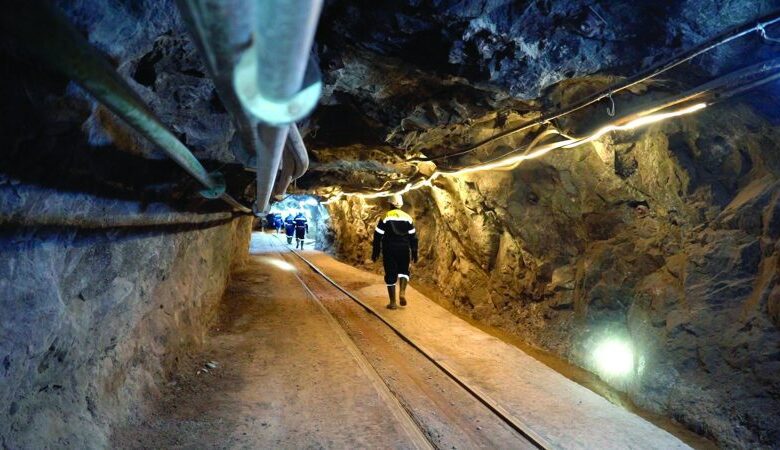
Morocco cannot simply be viewed as an extension of Gulf markets. This is one of the key takeaways from the report “Australian METS Opportunities in the Middle East, North Africa and Türkiye”, prepared by Austmine, the Australian association for mining equipment, technologies, and service providers, with the support of Austrade, the Australian agency for trade and investment promotion.
The document identifies the Kingdom as an emerging destination for companies in the sector. The outlook is mainly based on OCP’s $13 billion investment program for the period 2023-2027, as well as the activities of Managem, Aya Gold & Silver, and several junior companies listed in Canada.
However, this potential has yet to translate into immediate commercial interest from Australian companies. A survey conducted by Austmine among 29 companies reveals that none regard Morocco as a priority market in the short term, within a one- to three-year timeframe.
A Promising Market but Difficult to Enter
In this survey, Saudi Arabia ranks as the top priority market for the short term, with 37.9% of responses. Morocco is seen more as a medium- to long-term opportunity, cited by 6.9% of the surveyed companies for a timeframe of five to ten years.
Two primary obstacles explain this caution. According to the report, 66% of respondents have difficulty identifying the right client or decision-maker, while 59% emphasize the need to find a local partner.
These challenges stem from the structure of the Moroccan market, characterized by a relatively limited number of large contractors, surrounded by established suppliers and engineering offices.
OCP holds a central position but its purchasing procedures do not rely on a single point of contact. Some equipment and components can be acquired through formal online procedures, while large projects necessitate ongoing business relationships, engineering partners, and locally built implementation setups.
In this context, the report mentions Jesa, the joint venture between OCP and Worley, as a possible entry point for foreign suppliers. This structure could also facilitate access to other markets, as it is involved in the Phosphate 3 expansion project of Maaden in Saudi Arabia.
Local Presence: A Key Determinant
Testimonials gathered by Austmine underscore the importance of a sustainable presence. A representative from Austrade believes that OCP prioritizes partners who can create long-term value rather than suppliers providing one-off services.
Meanwhile, a sales manager at Jord, an Australian company specializing in ore processing and modular plants, asserts that a strong local representative is indispensable. He notes that remote business proposals rarely come to fruition.
Jord is working on improving the operational systems of a plant owned by a major Moroccan phosphate producer, whose name is not specified in the report. To move forward, the company had to present local and international operational references and rely on a representative based in Morocco.
Trade discussions have also raised questions regarding exchange rates and withholding taxes. However, the report does not indicate any contracts concluded as part of this endeavor.
For Australian companies looking to access the Moroccan market, Austmine recommends prioritizing a local agent, establishing a joint venture, or setting up on-site service arrangements. The goal is to master business practices, ensure post-installation support, and provide tailored training.
The proposed strategy is to target a limited number of contractors, notably OCP, Managem, and several project developers, and gradually build business relationships. Companies are also encouraged not to wait for final project financing to establish their presence, as credibility with major operators takes years to develop.
Additionally, the report recommends participating in the International Mining Congress in Rabat and reaching out to the Austrade office in Paris for advice and facilitating connections.
Mining Code, Taxation, and ESG Requirements: An Evolving Environment
The Moroccan regulatory environment is another factor to consider. While the Kingdom has not imposed a general local content requirement, a draft reform of the mining code aims to regulate the transfer and leasing of operating permits, oversee subcontracting, and promote local employment and training, particularly through a mining professional card.
Customs duties and benefits related to installation zones vary according to the nature of products, locations, and activities. Suppliers must therefore verify the applicable conditions before setting their prices and submitting their bids.
The report also highlights the strengthening of sustainability requirements. The Moroccan mining sector is gradually aligning its practices with European standards, particularly in terms of carbon footprint, health and safety at work, and environmental, social, and governance (ESG) criteria.
The presence of European supply chains and the arrival of Canadian operators have already facilitated the establishment of suppliers and technical solutions from these two regions. Therefore, new entrants must consider this competition and the already established commercial relationships.
OCP: The Main Outlet for Mining Equipment
According to the report, phosphate presents the most immediate opportunity for foreign suppliers. Morocco holds approximately 70% of the world’s known phosphate reserves and extracted 36 million tons of rock in 2025.
OCP produced 12 million tons of fertilizers in 2024, aiming for an annual production capacity of 20 million tons by 2027.
The Khouribga site alone accounts for nearly 70% of the group’s production. The ore is extracted through open-pit mining, then washed and enriched before being transported to Jorf Lasfar via a 235-kilometer pipeline.
For technology and equipment suppliers, two main areas concentrate the group’s needs: water management and energy transition.
In July 2025, OCP announced that it had achieved self-sufficiency in conventional water at its sites, two years ahead of its initial schedule. The group is also continuing to develop its desalination and water transfer capabilities.
On the energy and climate front, its objectives include a 100% renewable energy usage by 2027, carbon neutrality by 2030 for emissions from scopes 1 and 2, and then by 2040 for scope 3 emissions.
These directions open up prospects for suppliers of slurry pumps, hydrocyclones, and separation equipment, as well as for specialists in water recycling, recovery of water from mining waste, and installation automation.
Managem: Expanding Copper and Cobalt Mines
Beyond phosphate, Moroccan mining activity is spread across several regions, notably the High Atlas, Anti-Atlas, and certain districts in the center and east of the country.
As the Kingdom’s leading diversified mining operator, Managem recorded record results and production levels in 2025, according to the report. The group continues to develop its operations across multiple sites, including Tizert, Akka, Bou-Azzer, Bleida, and Guemassa.
The Tizert project, a new copper mine that began production in 2025, exemplifies the growing interest in digital technologies in mining operations. Designed in collaboration with Epiroc, the site incorporates real-time monitoring systems for people and vehicles, as well as safety devices from the outset of its operation.
According to the report’s authors, this approach reflects an early openness to automation and advanced technological solutions.
At Bou-Azzer, a historical cobalt production site in Morocco, market information cited in the document also refers to the commissioning of a cobalt sulfate unit. This facility is expected to partially replace metal cobalt production.
Its announced capacity would reach 6,000 tons of sulfate per year, equivalent to about 1,200 tons of contained cobalt. This evolution of the final product entails new technical requirements and may create additional needs for specialized services.
Aya Gold & Silver: Opportunities from the Exploration Phase
At Aya Gold & Silver, the expansion of the Zgounder silver mine and the preparation of the polymetallic Boumadine project represent two major avenues for development.
On September 9, 2026, the company released an updated preliminary economic assessment for Boumadine. This assessment anticipates a 14-year operational lifespan, combining open-pit and underground extraction, an estimated net present value after taxes of $3.5 billion, and an internal rate of return of 93%.
However, these indicators should be interpreted with caution. They are based on price hypotheses and include resources that do not yet have reserve status. Therefore, they do not guarantee project profitability.
A feasibility study and an environmental and social impact assessment are underway, while a drilling program of 400,000 meters is planned for 2026-2027.
At this stage, the needs mainly pertain to engineering, metallurgical testing, infrastructure design, water management, resource definition, and drilling operations. Equipment for future operations should only be ordered after the completion of feasibility studies, obtaining permits, and securing financing.
Aya Gold & Silver invested approximately $41 million in its Moroccan projects in 2025.
Exploration: A Segment Still Open to Specialized Service Providers
Exploration is another development area for mining service providers. The report notes that major international drilling operators remain relatively underrepresented in Morocco, leaving opportunities for specialized firms.
This dynamic aligns with the directives of the 2021-2030 Mining Plan, which aims to diversify national production and strengthen research and exploration activities beyond phosphate.
In this context, the Ministry of Energy Transition and Sustainable Development launched a public competition in May 2026 for 361 exploration blocks, covering a total area of approximately 13,000 km². This initiative relies on a digital mining cadastre designed to facilitate access to information and the management of permits.
Real Potential But a Long-Term Establishment Strategy Required
Through its analysis, Austmine presents Morocco as a market offering opportunities across several segments of the mining industry, from phosphate to base and precious metals, including exploration and technical services.
However, the presence of significant investment projects does not automatically guarantee market access. The concentration of contractors, the presence of already established suppliers, and the requirements for technical accompaniment necessitate that newcomers build strong local relationships.
For Australian companies, the Moroccan perspective thus relies less on one-off sales and more on a sustainable presence strategy, combining partnerships, service capabilities, and an understanding of mining operators’ needs.