Electricity: SRM-SM Accelerates Network Modernization and Strengthens Service Continuity in Souss-Massa
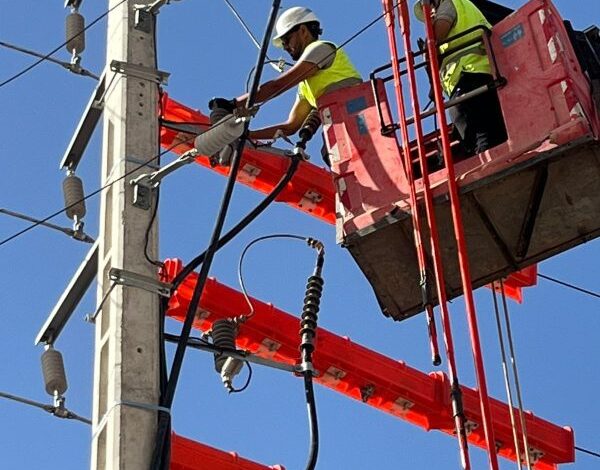
Over 25,800 Maintenance Operations Completed, Over 210 km of Electrical Networks Renewed, and a Significant Improvement in Service Continuity Indicators: The Souss-Massa Regional Multi-Service Corporation Continues to Strengthen Its Electrical Infrastructure and Accelerate Its Operational Transformation
In response to evolving energy needs, urban expansion, and the region’s dynamic economic development, the Souss-Massa Regional Multi-Service Corporation (SRM-SM) is enhancing its efforts to modernize electrical networks and improve the sustainable quality of distribution.
Since the onset of its activities, the company has implemented an intervention program structured around several priorities: strengthening infrastructure, renewing equipment, preventive maintenance, and improving operational capabilities. This proactive approach aims to anticipate needs, reduce the risk of disruptions, and ensure a more reliable and efficient public electricity service for citizens and communities.
An Evolving Electrical Network to Support Regional Development
Modernizing infrastructure is a central focus of the SRM-SM’s action plan. Across the six prefectures and provinces of the Souss-Massa region, technical teams are working on various levels of the network to enhance electrical supply capabilities and improve distribution conditions.
The operations undertaken primarily focus on reinforcing transformer stations, extending medium-voltage lines, rehabilitating low-voltage networks, and replacing outdated or deteriorating equipment.
In Agadir Ida-Outanane, these interventions help secure supply to several localities and improve voltage quality. In the Inezgane Aït Melloul prefecture, efforts particularly emphasize strengthening and modernizing distribution infrastructures to support urban expansion.
In the Chtouka Aït Baha province, projects aimed at enhancing electrical capacity respond to needs arising from economic development and the expansion of residential and business areas. In Taroudant, Tiznit, and Tata, interventions also prioritize rehabilitating facilities, renewing degraded equipment, and improving the reliability of installations, especially in rural areas.
This territorial approach allows for interventions tailored to the specificities of each area, preparing networks for changing demand.
Preventive Maintenance: A Key Lever for Reliability
Beyond investments in infrastructure, the SRM-SM places significant emphasis on preventive maintenance. This strategy serves as a crucial tool to anticipate failures, limit incidents, and sustainably preserve electrical assets.
As of the end of September 2026, more than 25,800 maintenance operations have been completed on various components of the electrical network. These interventions particularly focused on source stations, control-command equipment, medium-voltage lines, HTA/BT substations, and underground cables.
Furthermore, over 210 km of electrical networks were renewed in the 2025 and 2026 fiscal years by the end of September, including 111.5 km of medium-voltage cables and sections and 101.11 km of low-voltage networks.
The initiative also reinforces diagnostic and monitoring capabilities for installations. Thermographic operations and technical inspections help detect abnormal heating, identify fragile points, and target equipment requiring preventive intervention.
By prioritizing anticipation over reactive intervention, the SRM-SM seeks to enhance network resilience, minimize disruptions, and improve installation availability.
Measurable Improvement in Service Continuity Indicators
The actions undertaken are also reflected in the improvement of distribution quality indicators.
By the end of September 2026, the average outage duration per customer improved by 15% compared to the same period in 2025. Meanwhile, the average frequency of interruptions saw an 18% improvement.
These results demonstrate the combined effects of infrastructure renewal, enhanced protection systems, preventive maintenance, and the mobilization of operational teams.
They also highlight the importance of managing incidents and improving response times across the entire regional territory.
For the SRM-SM, the challenge now lies in consolidating this positive evolution and embedding service continuity improvement within a sustainable operational performance framework.
Reducing Energy Losses: Core to Network Performance
Improving network efficiency is another critical aspect of the electrical operation strategy.
In this context, SRM-SM continues to pursue technical and commercial initiatives aimed at optimizing energy distribution management and strengthening metering reliability.
These initiatives primarily focus on modernizing the meter fleet, enhancing control operations, improving data collection conditions, and monitoring installations.
Managing losses thus represents both an economic and operational challenge, contributing to better valuation of distributed energy and enhancing overall service performance.
Towards Multi-Service Oversight and Smarter Operations
The transformation of infrastructures is also accompanied by a gradual evolution of management and network control tools.
In this perspective, the establishment of a Multi-Service Control Center represents a pivotal step in modernizing the SRM-SM’s operational framework.
This infrastructure aims to foster integrated supervision of electricity, drinking water, and wastewater networks, leveraging digital solutions tailored to modern operational requirements.
It will enhance coordination among teams, centralize infrastructure monitoring, and facilitate incident detection and management. This integrated approach also paves the way for better anticipation of malfunctions and progressively optimizing interventions.
A Sustainable Ambition for Citizens and Communities
Through this action program, the SRM-SM is committed to making the modernization of electrical networks a vital lever for territorial development and public service improvement.
The renewal of infrastructures, strengthening preventive maintenance, managing energy losses, and the gradual integration of digital solutions reflect a shared ambition: to develop more robust networks, achieve more efficient operations, and better meet current and future needs.
Beyond technical investments, this dynamic carries a fundamental goal: to ensure the citizens of Souss-Massa a more reliable, resilient electric service, well-suited to the demands of the region’s economic, social, and territorial development.