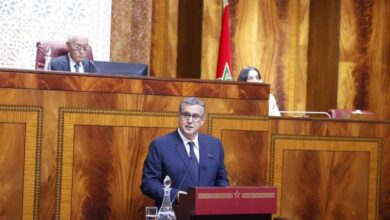
August 15: The Ministry of the Interior thwarts calls for mass crossings to Ceuta and Melilla and strengthens its vigilance.
Moroccan Authorities Take Firm Stance Against Planned Illegal Crossings on Social Media
In light of calls circulating on social media for collective and illegal attempts to cross into Sebta and Melilla on August 15, 2026, the Moroccan Ministry of the Interior has adopted a resolute position. The authorities stated they are closely monitoring the situation and have implemented all necessary measures to prevent any crossing attempts, while ensuring the safety of individuals and adherence to the law.
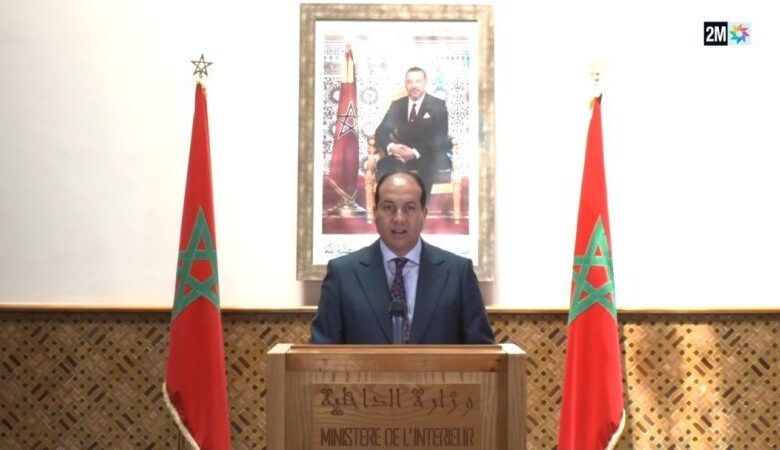
In a statement released on August 12, the spokesperson for the Ministry of the Interior noted that several publications and anonymous messages were identified recently on certain social media platforms. These contents encourage illegal crossings into the two cities. The ministry emphasized that such calls pose a serious risk to the individuals involved and are also intended to exploit the migration issue for provocation and incitement—practices that are subject to legal penalties.
The ministry underscored that authorities are not waiting for August 15 to take action. As soon as these calls emerged, the situation was closely monitored, and necessary measures were enacted. This proactive approach aims to prevent a potentially risky situation from escalading into a collective crossing attempt.
Authorities have assured that any illegal crossing attempts will be thwarted, and individuals involved in illegal activities will face the appropriate legal proceedings. This also applies to those who participate in disseminating and promoting these calls on social media.
Furthermore, the ministry revealed that several individuals suspected of inciting such actions have already been arrested. They are currently under judicial investigation, supervised by the competent prosecutor’s office. This shift marks a move from merely monitoring online content to taking concrete action when potential infractions are identified.
The message from the authorities is clear: social media is not an unregulated space. The dissemination of calls that encourage illegal actions can lead to prosecution when the legal criteria are met.
The ministry also clarified that the mobilization of security forces is not limited to August 15. Vigilance is ongoing, especially in areas close to crossing points into Sebta and Melilla. Security measures are regularly strengthened and adapted based on the evolving situation and identified risks.
This clarification is significant. It indicates that the authorities’ response does not hinge on a single event but relies on continuous surveillance and preparation. The aim is to react swiftly to various forms of irregular migration attempts or the calls that encourage them.
In its statement, the ministry also emphasized the importance of protecting individuals. The fight against irregular migration is presented as an effort that must be conducted within the bounds of the law and with a focus on safeguarding individuals’ security. Calls for collective crossings can indeed expose participants to dangerous situations, in addition to creating public order risks.
In this context, the ministry calls on citizens to be vigilant and responsible and to refrain from following what it deems suspect and misleading calls. It urges individuals not to be swayed by information whose origin and reliability are not clearly established.
However, the ministry’s message extends beyond security concerns. It also underscores the need for shared responsibility in combating irregular migration and human trafficking networks. For Rabat, this phenomenon cannot be addressed by a single country or entity; it requires genuine and balanced cooperation among all stakeholders involved.
In this light, the Moroccan Ministry of the Interior has urged Spanish authorities, within the framework of the existing cooperation between both countries, to expedite the return of unaccompanied minors in Sebta to their families in Morocco. It also calls for overcoming administrative and judicial obstacles delaying these returns, in the best interest of the minors involved.
Morocco reaffirms the importance of immediate return mechanisms. According to the ministry, previous experiences have demonstrated the effectiveness of this system and its role in managing irregular migration attempts and enhancing on-the-ground interventions.
Through this position, the Ministry of the Interior aims to convey that Moroccan authorities are prepared and take preventive measures. The response is not limited to thwarting a possible crossing on August 15; it is based on ongoing surveillance, adapting security protocols, intervening against incitement actions, and collaborating with Spanish authorities.
In conclusion, the ministry’s message is one of continuous vigilance and assertiveness, framed within the law. Moroccan authorities assert their commitment to protecting individuals, maintaining public order, combating irregular migration and human trafficking networks, while coordinating with their partners. The priority now is to prevent anonymous online calls from prompting people to take risks that could endanger their lives.