CIMAF Strengthens Its Industrial Facilities in Gabon and Plans a 100 Billion FCFA Investment
With a production capacity increased to 1.85 million tons per year, the Moroccan group reaches a new milestone in its operations in Gabon. A clinker production project in Ntoum aims to extend this growth and strengthen local integration within the cement sector.
An Industrial Strategy Gaining Momentum
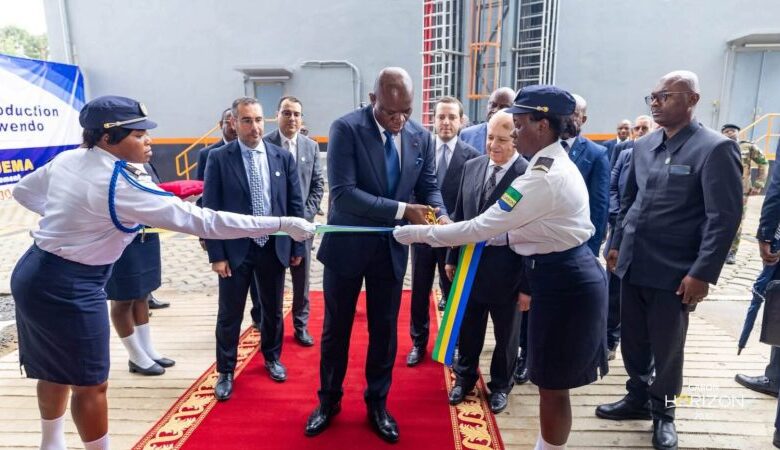
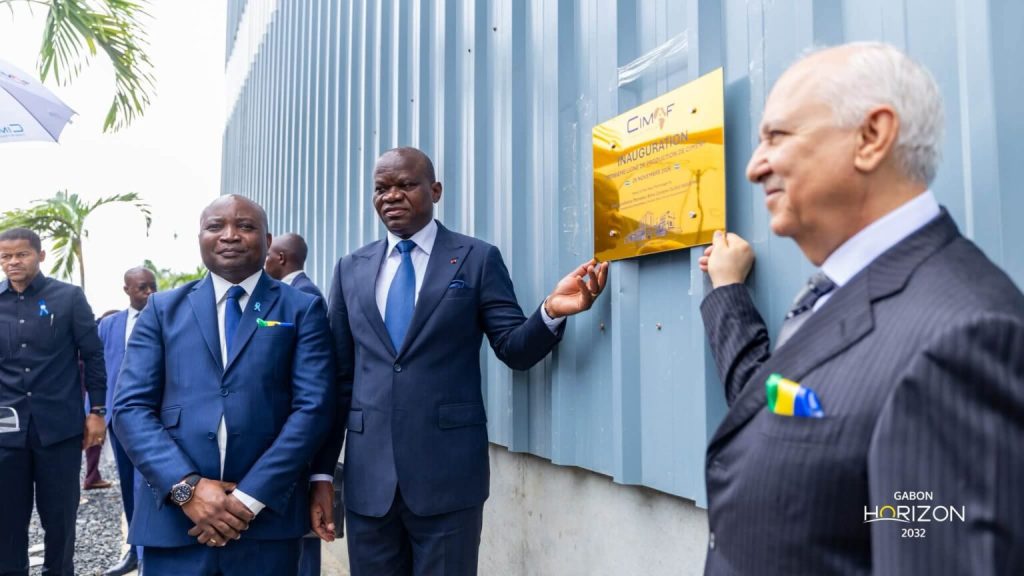
The Gabonese cement market is entering a new phase of investment. In Owendo, near Libreville, CIMAF has just commissioned a third production line, representing a 25 billion CFA francs investment. Inaugurated on November 26 in the presence of the President of the Republic, Brice Clotaire Oligui Nguema, this new facility increases the annual capacity of the site to 1.85 million tons, up from 850,000 tons previously.
This increase, which adds one million tons of additional capacity, addresses a central issue for Gabon’s cement industry: meeting the growing demand while securing market supply. The needs associated with infrastructure, construction programs, and urban development all support cement consumption.
For CIMAF, this investment is part of a strategy to consolidate its industrial setup. The new line, equipped with state-of-the-art grinding technology, aims to boost the volumes available in the local market and enhance the consistency of supply.
However, it is primarily the project announced in Ntoum that gives this expansion its true strategic significance.
Clinker: The Next Link in Industrial Integration
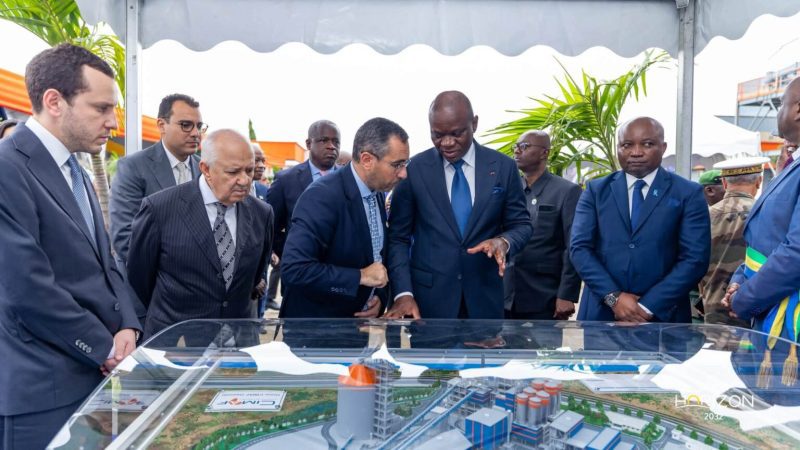
Valued at 100 billion CFA francs, the project to construct a clinker plant in Ntoum represents a significant investment. It aims to enhance local control over a crucial step in cement production, which is still reliant on external supplies.
Gabonese authorities have indicated the goal of increasing the local processing rate from 10% to 95%. This development could significantly change the structure of the sector, by fostering additional industrial capacity within the nation.
The timing of this project is particularly important. Gabon plans to prohibit the importation of clinker starting January 1, 2027. This regulatory direction bestows a critical role on the future facility in the organization of supply and the competitiveness of the local cement industry.
Beyond productive investment, expected benefits also encompass employment and economic development. Nearly 1,400 direct and indirect jobs are projected during the construction phase, with maintenance, transport, logistics, and subcontracting activities likely to benefit from this new infrastructure.
Strengthening Moroccan Presence in African Markets
This latest milestone comes ten years after CIMAF’s entry into Gabon, marking the Moroccan group’s progression in a market where the demand for construction materials is closely linked to public and private investments.
On a continental scale, CIMAF’s development is part of a broader trend of Moroccan industrial groups establishing a presence in Africa. The building materials sector is a significant expansion ground, given the infrastructure needs and many African economies’ ambitions to bolster their local production capacities.
Thus, the investment in Gabon offers dual advantages: consolidating the group’s industrial position while supporting the transformation of a strategic sector for the nation’s economy.
The key challenge going forward will be execution. The commissioning of the third line represents a tangible industrial capacity. The Ntoum project, meanwhile, remains a forthcoming step to be realized. Its successful completion will be essential for achieving the stated ambition regarding local integration.
For CIMAF, the challenge is no longer solely about increasing production, but also about mastering a larger portion of the value chain and sustainably embedding its development within the Gabonese economy.