Foreign Trade: Europe Remains Morocco’s Primary Partner
Trade Between Morocco and Europe Reaches 773.1 Billion Dirhams in 2025
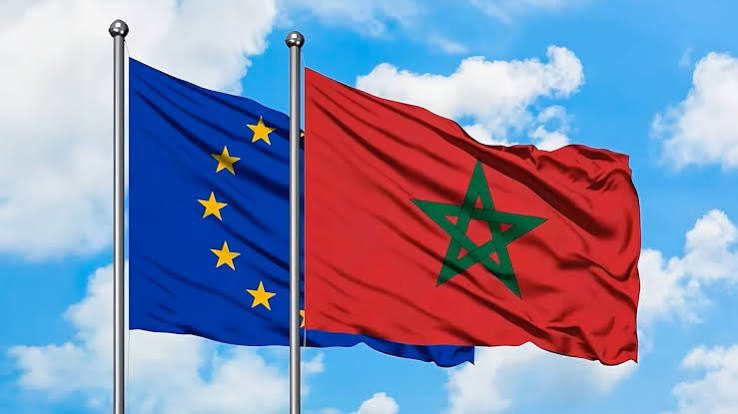
Trade exchanges between Morocco and Europe reached a staggering 773.1 billion dirhams in 2025, reaffirming the European continent’s central role in Morocco’s foreign commerce. According to data attributed to the Exchange Office, Europe accounted for 59.8% of Moroccan trade, down from 62% in 2024.
This trend is accompanied by a notable increase in trade with Asia, which rose by 15.6% during the same period. While Morocco is progressively diversifying its trade relations, Europe remains its primary economic partner.
Europe Represents Nearly 60% of Moroccan Trade
With a trade volume of 773.1 billion dirhams—a 2.4% increase year-on-year—Europe maintains its dominant position in Morocco’s trade relationships. The continent absorbed 69.7% of Moroccan exports in 2025 and represented 54.2% of the Kingdom’s imports. These figures underscore the significance of European markets for Moroccan businesses and the critical role of European suppliers in meeting the needs of the domestic market.
This close commercial proximity is bolstered by the industrial and logistical ties developed over the years between the two regions. Key sectors involved in these exchanges include automotive, textiles, industrial equipment, and agribusiness. For Moroccan companies, the European market remains an essential space for selling their products, integrating into international value chains, and enhancing their export presence.
Spain, France, and Germany Lead European Partnerships
The trade exchanges with Europe largely hinge on relationships with several major economies on the continent. Spain ranks first among the mentioned European partners, holding a share of 27.5%, followed by France with 21.1%. Germany follows with 8.9%, ahead of Turkey at 7.3% and Italy at 7.1%.
This distribution highlights the importance of trade relations with Morocco’s key industrial and economic partners. The exchanges encompass not only manufactured goods and equipment but also products intended for consumption and industrial transformation.
The prominence of these partners also reflects the interconnectedness of economies, especially through investments, supply chains, and logistical flows between Moroccan and European businesses.
Trade with Asia Grows by 15.6%
While Europe’s share of Moroccan foreign trade decreased from 62% in 2024 to 59.8% in 2025, trade with Asia saw a substantial increase of 15.6%. This growth signifies an expansion of Morocco’s trade relations with Asian markets, opening up prospects for diversification for Moroccan companies, whether through developing new export channels or seeking complementary supply sources.
Diversity among partners also offers economic operators more opportunities to adjust their commercial strategies, access new suppliers, and reduce their dependence on specific markets. However, this evolution does not imply a decline in absolute trade volumes with Europe. On the contrary, trade with the continent grew by 2.4% in 2025. Thus, the decline pertains primarily to its relative weight in Morocco’s overall foreign trade.
Morocco Balances European Market Consolidation and Commercial Diversification
The unfolding dynamics of external trade underscore a dual challenge for Morocco’s economy: to maintain its historical ties with Europe while further developing partnerships with other regions globally. The consolidation of European markets remains crucial for national exporters, particularly in sectors integrated into international production chains. Simultaneously, the expanding focus on Asia may help broaden commercial opportunities and diversify supply sources.
For investors and businesses, these trends provide valuable insights for identifying priority markets, preparing export strategies, and assessing cooperation opportunities. In a context of reconfiguring international trade, Morocco’s ability to enhance its competitiveness, diversify its partners, and optimize its export offerings will be vital for solidifying its position in global commerce.