
Industry: Why Does Morocco Still Import So Much to Produce and Export?
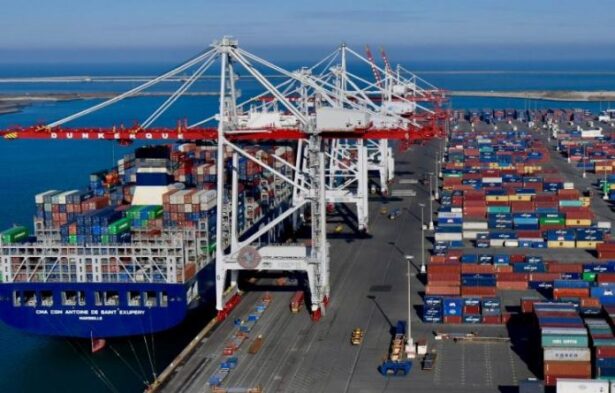
Trade Deficit Widens by 25.4% by the End of September 2026 Despite Export Growth
As of the end of September 2026, Morocco’s trade deficit has increased by 25.4%, even with rising exports. The energy bill alone can no longer explain this imbalance. The country’s reliance on imported inputs and equipment raises concerns about the actual value added within its borders.
Morocco is exporting more vehicles, aerospace parts, and industrial products than it did a decade ago, yet its trade deficit continues to expand. By the end of September 2026, merchandise imports reached 708 billion dirhams, a 17% increase year-on-year, compared to 384 billion dirhams in exports, which rose by 10.7%. Consequently, the trade deficit widened to nearly 324 billion dirhams.
This downturn can no longer be attributed solely to energy shocks. In 2025, the trade deficit also increased by 15.8% (with imports rising by 8% and exports by only 2.8%), even as the energy bill decreased by 5.5%, as noted by the Economic, Social, and Environmental Council (CESE).
When Industrial Growth Drives Foreign Purchases
This trend reflects a complex industrial equation. Purchases of automobiles, aircraft components, semi-finished products, and pharmaceuticals have significantly influenced trade developments in 2025. A substantial portion of these imports supports factory operations, which must often import equipment, components, and raw materials when local supply is insufficient or unsuitable.
The rise of the automotive and aerospace ecosystems demonstrates this paradox. The establishment of manufacturers and suppliers has positioned Morocco among the exporting industrial bases in the region, yet the competitiveness of these sectors still largely depends on imported supply chains. As a result, the growth in export revenues does not automatically translate into an equivalent creation of added value locally.
Sectoral performances remain mixed. In 2025, automotive exports fell by 2%, significantly impacted by a 13.6% drop in the automotive construction segment. Similarly, exports of electronics and electricity decreased by 8.8%, while textiles and leather exports dropped by 4.5%.
Strengthening Local Fabric to Reduce Value Leakage
A widening trade deficit does not necessarily indicate an industrial deadlock; importing capital goods can lay the groundwork for future productive capabilities. However, as long as the expansion of exports does not coincide with a sufficiently robust rise in local suppliers, each growth cycle will continue to fuel imports.
The sustainable transformation of export successes into a trade balance will depend on the capacity to enhance the network of national subcontractors and on forthcoming budgetary and industrial decisions, especially with the upcoming economic policy deadlines in sight.
The Observer