Kénitra: Royal Air Forces and the U.S. Air Force Conduct High-Risk Aerial Logistics Exercises
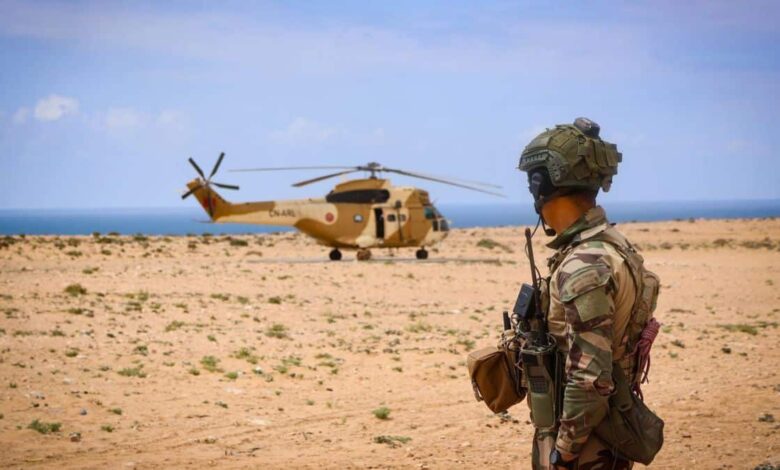
The Royal Air Forces and the United States Air Force conducted loading and unloading maneuvers on the Kénitra military air platform, utilizing live engines – known as Engine Running On/offload (ERO) procedures. These exercises are regarded as some of the most sophisticated in contemporary tactical air logistics.
Surrounding a Lockheed C-130 Hercules with its engines kept running, Moroccan and American teams executed synchronized cargo movements in an environment affected by jet engine turbulence, backwash pulses, and suction risks from the engines. In such configurations, improperly secured loads can shift due to airflows; errors in positioning or faulty manual signal transmission can immediately endanger personnel present in the taxiway area.
Prior to the exercises conducted on the tarmac, American air transit specialists held several safety training sessions in a classroom in Kénitra, focusing on security procedures, hand-signaling methods, and traffic rules around powered aircraft. The theoretical instruction then transitioned to real-time exercises amidst the continuous noise of propellers and turbines, as the teams translated commands into coordinated actions around the aircraft.
Participating military personnel emphasize that “safety is paramount during this type of exercise; numerous incidents can occur,” adding that regular training and participation in such deployments hold “significant value” for units expected to execute these procedures under time constraints and in high-risk environments.
ERO Procedures and Reducing Tactical Projection Times
ERO procedures enable the loading or unloading of an aircraft without prior shutdown of the engines, thereby reducing parking times, fuel consumption, and technical interruptions related to the successive restart of military transport aircraft. In rapid projection scenarios or sensitive equipment delivery, these methods permit the transfer of materials in just a few minutes, avoiding prolonged aircraft immobilization on the runway.
At Kénitra, handling teams guided the cargo with continuous hand signals, maintaining constant vigilance on the dangerous areas around the propellers and exhaust flows. In less than an hour, the aircraft was fully loaded, transforming a training phase into a fully executed joint exercise.
Participants further noted that personnel involved in the exercise learned “the appropriate signals and methods for safely loading equipment,” a skill that can benefit all units likely to employ these procedures during a real deployment.