Renault Tangier Slows Production Pace Due to Decline in European Demand
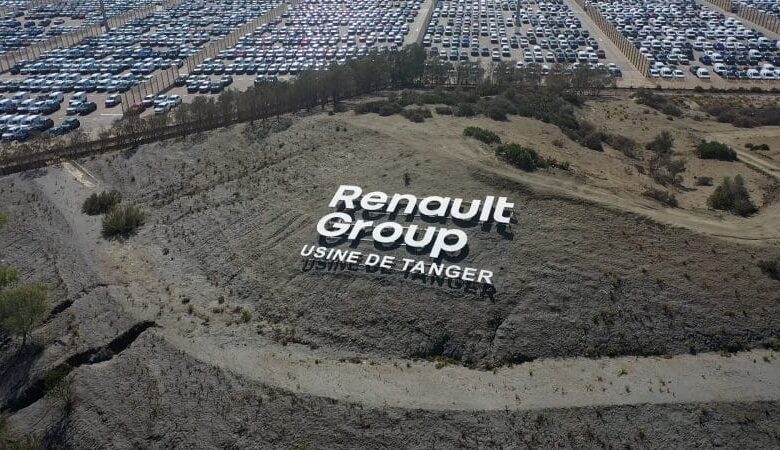
The Moroccan automotive industry is currently navigating a climate marked by increased caution, primarily due to a slowdown in demand in the European market, which remains the main destination for vehicles produced in Morocco. Despite growth in production and exports, certain indicators reveal a gap between available industrial capacities and their actual usage, particularly in factories located in Tangier.
This situation especially affects the Renault factory in Melloussa, near Tangier, which continues to operate below its maximum capacity, according to data from the GMK center, specializing in market analysis for steel. This occurs despite the fact that the Renault group recorded an increase in its production in Morocco during the first half of 2026.
According to GMK, this trend is largely attributed to the persistent weakness of automotive demand in Europe. European markets absorb a significant portion of the vehicles produced in Morocco, making the national industrial activity particularly sensitive to fluctuations in economic conditions and consumption in the Old Continent.
The Renault site in Melloussa is one of the key pillars of the Moroccan automotive industry. It ranks among the major production units of the group in Africa and relies on a vast network of suppliers and subcontractors specialized in manufacturing automotive parts and components, particularly in the northern part of the Kingdom.
Despite a 13.7% increase in production at the Renault plants in Tangier and Casablanca in the first half of 2026 compared to the same period the previous year, the utilization rate of assembly lines remains lower than the available capacities, as reported by GMK.
The repercussions of this situation are not limited to the automotive industry. They also extend to raw materials markets, particularly that of flat steel, which is widely used in manufacturing bodies and numerous automotive components. Rolled sheets and galvanized steel represent a significant portion of the automotive industry’s needs.
Lower utilization of production capacities leads, in turn, to a weaker demand for steel intended for the automotive sector, compared to levels that could be achieved with full capacity operations.
The two Renault plants in Tangier and Casablanca have a combined production capacity estimated at around 440,000 vehicles per year, confirming the strategic importance of the group within the Moroccan automotive ecosystem and its role in energizing a vast network of local suppliers and subcontractors.
Moreover, the sector’s strong export orientation increases its sensitivity to international developments. Nearly 90% of Moroccan automotive production is destined for foreign markets, particularly France, Spain, Germany, and Italy.
In this context, the GMK center estimates that the persistent weakness of economic activity in Europe could continue to weigh on the utilization rates of Moroccan automotive factories in the short term. This situation could also limit the growth of demand for flat steel intended for the automotive industry.
Despite these pressures, external trade in the sector continues to show positive dynamics. Moroccan exports of automobiles and components increased by 15.9% during the first five months of 2026, reaching approximately $8.2 billion. Finished vehicle exports, for their part, rose by 20.7%.
The Moroccan automotive industry also benefits from an expanding industrial base, with over 250 companies active in component manufacturing and subcontracting. The local integration rate stands between 65% and 69%, reinforcing the sector’s role in value creation and stimulating industrial demand in Morocco.
Flat steel also holds a significant place in national steel consumption, representing between 30% and 35% of total consumption, while the construction sector remains the primary outlet for these products.
Therefore, despite the ongoing growth of automotive exports, the evolution of production levels remains closely tied to the state of the European market. The recovery of automotive demand in Europe and the improvement of industrial capacity utilization rates will be crucial factors for the development of the Moroccan automotive industry and, by extension, for the demand for steel intended for this sector.