The Watchmaker of the Sahara: How Morocco Learned to Master Time?
Some diplomatic victories are achieved in just a few days, while others can take decades.
The United Nations Security Council Resolution 2797 should be viewed within this context. Behind a vote that may seem isolated lies a strategy built over the long term, crafted with consistency and patience, but also with decisive actions taken at moments when they could have the most impact.
This is the idea explored by Mr. Abdelhak Bassou in his analysis published by the Policy Center for the New South, titled "Chronos and Kairos in the Management of the Moroccan Sahara Issue: Mastering Time in the Royal Strategy."
Two terms from ancient Greece encapsulate this approach.
Chronos refers to the passage of time, encompassing years and decades.
Kairos, on the other hand, signifies the opportune moment, the point that must be recognized and seized.
The history of the Moroccan Sahara issue provides a clear illustration of how these two dimensions can complement each other.
The Long Game
Since the Green March of 1975, Morocco has experienced particularly tumultuous periods.
The world has changed. The Cold War has ended. Alliances have shifted. Governments in major capitals have changed. New powers have emerged.
Nevertheless, Rabat has maintained a consistent strategic line concerning the Sahara issue.
This continuity has not prevented crises from arising.
There have been hesitations from various U.S. administrations, different UN proposals, the Baker Plan, and more recently, discussions surrounding the evolving role of the United Nations.
At each juncture, Morocco opted to stay the course.
But waiting did not mean standing still.
While negotiations continued, the ground was changing.
Building While the World Debates
Roads, infrastructure, urban development, investments, energy, and economic activities: the southern provinces of Morocco have undergone profound transformation.
Dakhla and Laâyoune have gradually changed their appearance.
The future Atlantic port of Dakhla, expressways, and energy projects reflect this commitment to better connect southern Morocco with its regional environment, particularly with West Africa.
The choice was clear: not to wait for a political solution before beginning to build the future.
Perhaps this is where time becomes a true strategy.
A negotiation might last ten years.
However, infrastructure built during those ten years remains a reality.
Then Comes the Moment to Act
But the long game alone is not enough.
One must also recognize when waiting should give way to action.
Guergarat, in November 2020, serves as a major illustration of this principle.
After several weeks of blockage in this strategic area, Morocco intervened to restore passage.
The intervention was swift.
The message was clear: patience does not mean failing to act when a situation becomes untenable.
This is where Kairos comes into play.
The right moment is not necessarily the very first moment.
It is the point at which action becomes more effective than waiting.
Transforming an Opportunity into Momentum
A few weeks later, in December 2020, the American recognition of Moroccan sovereignty over the Sahara opened a new diplomatic chapter.
Morocco did not merely celebrate this decision.
It sought to transform this recognition into momentum.
African, Arab, and Latin American countries bolstered their diplomatic presence in the southern provinces. Consulates were opened in Laâyoune and Dakhla.
Then Europe began to shift its stance.
Spain in 2022.
France in 2024.
Other capitals subsequently expressed converging or more favorable positions towards Morocco’s autonomy proposal.
Taken individually, each of these changes may seem modest.
However, collectively, they portray a profound evolution.
When Patience Becomes Strength
Diplomacy is not always a sprint.
At times, it resembles a game of chess.
One must know when to advance.
One may sometimes need to retreat.
Most importantly, one must know how to wait.
But waiting never means relinquishing initiative.
Chronos lays the groundwork.
Kairos allows action to be taken.
One builds strength.
The other enables its use.
The Lesson of Time
This is perhaps what gives particular weight to Resolution 2797 today.
It did not emerge out of a void.
It is rooted in a history that began nearly fifty years ago, marked by crises, investments, diplomatic repositioning, and a gradual evolution of power dynamics.
Time, which once seemed an adversary, has gradually become an ally.
Morocco has not simply waited for the years to pass.
It Has Used Them to Build.
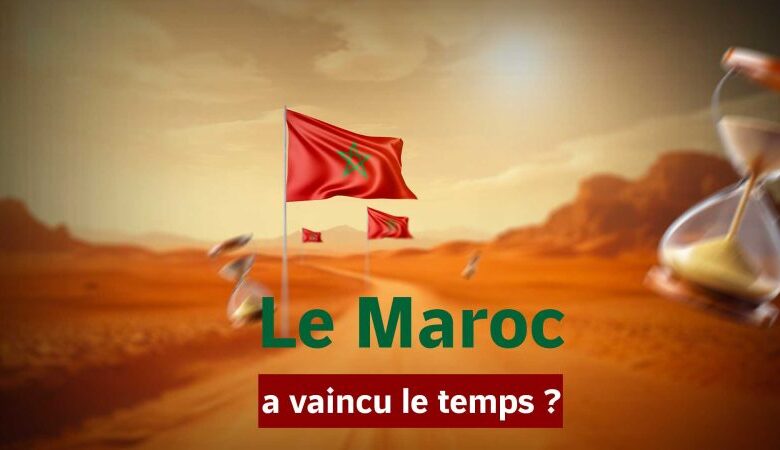
And perhaps that is, in essence, the image of the watchmaker.
He does not command time.
He cannot stop it.
He observes its movement, adjusts its mechanism, and waits for the precise moment when the hand reaches the right position.
Then he acts.
In international relations, power, therefore, does not solely consist of knowing what to do.
It also entails knowing when to do it.
And sometimes, the best way to win a battle is to make time itself an ally.