Atlantic Africa Gas Pipeline: Rabat and Abuja Aim to Take a Major Step Forward
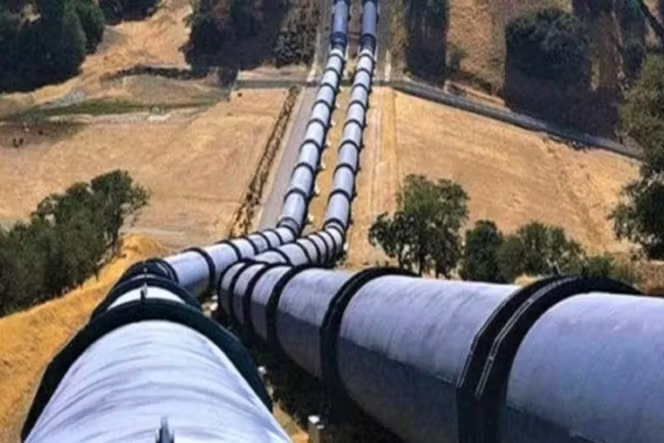
Morocco and Nigeria are accelerating efforts on the Atlantic African Pipeline, a massive energy project aimed at connecting Nigeria’s gas reserves to Morocco and subsequently to the European market. According to information reported by Reuters, both capitals are considering signing an intergovernmental agreement before the end of 2026 to advance the project into a new operational phase.
This topic was recently discussed during a meeting between Moroccan Foreign Minister Nasser Bourita and his Nigerian counterpart Bianca Odumegwu-Ojukwu. Ultimately, the agreement could be finalized under the leadership of King Mohammed VI and Nigerian President Bola Tinubu, as preliminary technical studies have already been conducted.
A 6,900-Kilometer Gas Corridor
Designed as one of the largest energy projects on the continent, the Atlantic African Pipeline is set to run along the west coast of Africa for nearly 6,900 kilometers, alternating between offshore routes and land segments. The infrastructure, estimated at nearly $25 billion, could transport up to 30 billion cubic meters of gas annually.
Beyond Morocco and Nigeria, several West African countries are expected to benefit from this future regional energy backbone. Rabat is particularly counting on the project to secure part of its energy needs and strengthen its role as a hub between Africa and Europe.
According to the National Office of Hydrocarbons and Mines (ONHYM), approximately 15 billion cubic meters could be directed towards the Moroccan market and European exports.
Geopolitical and Economic Ambitions
Behind the pipeline, Rabat and Abuja have broader ambitions: to establish an economic and energy axis in Africa that supports regional integration. Discussions between the two partners now extend beyond the gas sector to include agriculture, fertilizers, and cross-investments.
The two countries also wish to reactivate their Joint Business Council to enhance exchanges within the framework of the African Continental Free Trade Area (AfCFTA).
By consolidating their partnership around the Atlantic African Pipeline, Morocco and Nigeria aim to secure their energy interests while reshaping economic balances in West Africa.