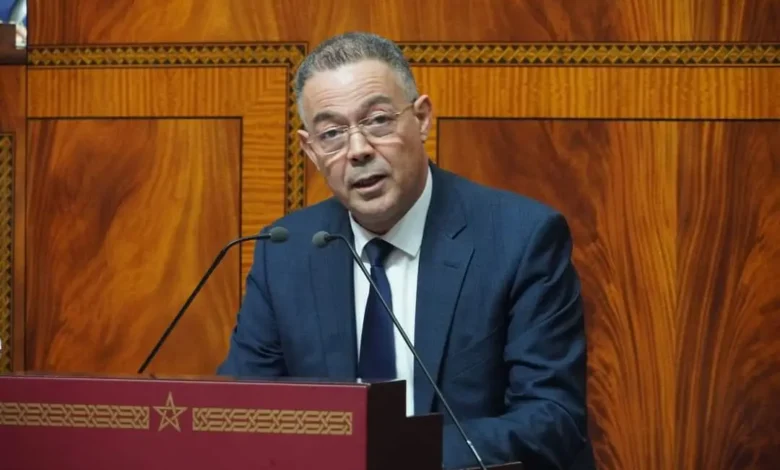
In the face of global upheavals, Fouzi Lekjaa defends the strength of Morocco’s stability.
Sure! Here’s the translated article:
Morocco’s Economic Resilience Amid Global Challenges
In a global landscape marked by geopolitical tensions and soaring energy prices, the Moroccan government seeks to convey a sense of calm. Before the Chamber of Counselors, Budget Delegate Minister Fouzi Lekjaa painted a resolutely optimistic picture of the Kingdom’s economic situation, emphasizing the resilience of major macroeconomic balances despite global turbulence.
A Positive Signal: Growth in Foreign Reserves
The first positive signal highlighted was the increase in foreign reserves. By the end of April 2026, Morocco’s official assets reached 469.8 billion dirhams, reflecting a year-on-year increase of over 23%. This level now allows for coverage of nearly six months’ worth of imports, a threshold often viewed as an indicator of financial stability.
According to Fouzi Lekjaa, this development demonstrates Morocco’s ability to maintain its external balances in a heavily deteriorated global environment. For several months, energy markets have remained under pressure, primarily due to tensions in the Middle East and ongoing disruptions in international supply chains.
An Energy Bill Under Pressure
The minister detailed the extent of rising global prices observed since the start of the year. Oil averaged $102 per barrel over the first four months of 2026, compared to approximately $70 previously, with peaks reaching $119.
A similar trend was noted for diesel, natural gas, industrial fuel, and butane gas, all of which have experienced significant price hikes. For the government, these tensions exert direct pressure on public finances and household purchasing power.
Despite this context, Rabat asserts it has contained inflationary effects. Inflation remained below 1% in the first quarter, reaching 0.9% in March—a particularly low level given the trends in many emerging economies.
Rising Tax Revenues
In terms of budgeting, the government also claims solid performance. Tax revenues increased by 10.4 billion dirhams by the end of April, representing an 8.5% rise compared to the same period in 2025.
This dynamic is primarily driven by corporate tax revenues, which surged by 25%, signifying, according to the ministry, an economic activity that continues to withstand pressures. Revenues from VAT, income tax, and registration fees are also trending upward.
Fouzi Lekjaa believes these indicators reflect a sustained internal consumption and a gradual improvement in public finances.
Massive Support for Purchasing Power
To cushion the impact of rising international prices, the state continues to allocate substantial budgetary resources. Every month, several hundred million dirhams are dedicated to supporting butane gas, transportation, and electricity.
The government also claims to have invested over 11 billion dirhams to support livestock farmers and preserve the national herd, amid rising food price tensions.
Fouzi Lekjaa also sought to downplay criticisms regarding the tax revenues generated from fuel, arguing that the budgetary effect of the price increase is limited compared to the overall cost borne by the state to mitigate the social impacts of the energy crisis.
Rabat Maintains Its Forecast for Growth
Despite cautious forecasts from international institutions, the Moroccan government continues to project growth exceeding 5% in 2026. The Executive is particularly counting on a good agricultural season, with anticipated cereal harvests around 90 million quintals.
At the same time, Rabat highlights favorable signals from financial markets and rating agencies. The IMF confirmed Morocco’s access to its flexible credit line, while Standard & Poor’s maintained the Kingdom’s sovereign rating in the "investment grade" category. Moody’s, in turn, upgraded Morocco’s outlook from "stable" to "positive."
For the government, these indicators reinforce the idea of a Moroccan economy capable of maintaining its balances while absorbing the shocks of an increasingly unstable global environment.
This translation captures the essence and tone of the original article while ensuring fluency and coherence in English.