Morocco Accelerates Its Ambition to Become a Regional Rail Hub by 2030
Certainly! Here’s a fluent and high-quality English translation of the provided French article:
Morocco Advances Its Industrial Development Strategy for the Rail Sector
Morocco is actively pursuing its industrial development strategy with the aim of establishing itself as a key player in the rail sector in Africa and the Mediterranean region. Driven by the National Office of Railways (ONCF), this vision focuses on enhancing local production, fostering technological innovation, and integrating an industrial ecosystem capable of meeting both national and international market demands.
The Kingdom is leveraging its established industrial experience, particularly through the historical activities of the Chérifien Company of Industrial and Railway Equipment (SCIF), which specializes in manufacturing rail components, passenger cars, and wagons for export.
Three Strategic Axes to Develop the Sector
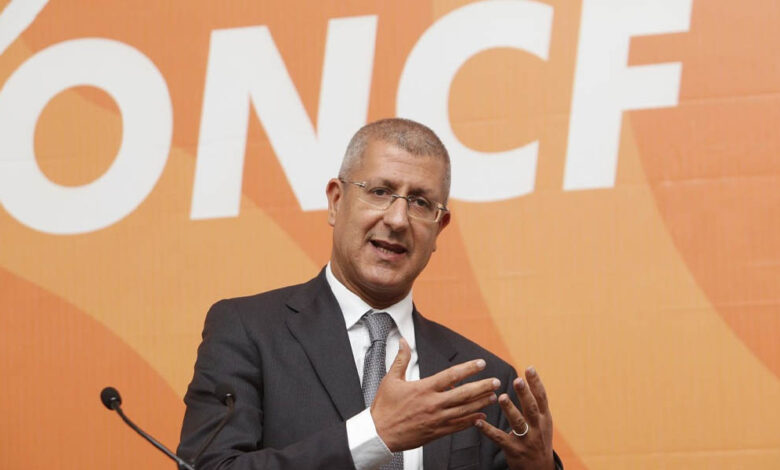
Building on the success of the high-speed train Al Boraq, launched in 2018, ONCF aims to take another leap forward. Under the leadership of General Director Mohamed Rabii Khlie, the strategy is centered on three priorities: increasing the local economic benefits from investments, creating high-value-added jobs, and strengthening the Kingdom’s industrial sovereignty.
To achieve these goals, ONCF is developing national rail engineering through the training of new skills, while structuring the sector around the Morocco Tra Industry (MTI) cluster, which brings together over a hundred industrial, academic, and institutional players. Additionally, ONCF is integrating industrial compensation requirements into its major contracts related to rolling stock and railway systems.
Production of "Made in Morocco" Trains by 2029
The timeline set by ONCF anticipates the launch of train assembly activities in Morocco by 2028. The first train fully assembled locally is expected to roll off production lines in 2029, with complete manufacturing slated for 2030.
By the horizon of 2030-2031, the Kingdom aims to produce between 30% and 40% of the value of a train or a railway signaling system locally while developing export capabilities for international markets.
Strong Financial Performance Expected by 2025
This strategy is backed by promising financial results. By 2025, ONCF has transported over 55.6 million passengers, generating revenue of 2.9 billion dirhams, reflecting an increase of more than 5% compared to the previous year.
The Al Boraq high-speed train has transported 5.6 million passengers, yielding revenues of 848 million dirhams. Freight activities have also progressed, with a revenue of 744 million dirhams, while phosphate transport reached 14.2 million tons, generating 1.245 billion dirhams, a 10% increase.
Major Industrial Players Invest in Morocco
Several international groups are supporting this industrial momentum. South Korea’s Hyundai Rotem plans to establish a manufacturing and assembly plant in Morocco. French company Alstom is developing a new activity dedicated to driving consoles to complete its industrial setup in the Kingdom.
Meanwhile, Spanish firm CAF will assist several Moroccan suppliers in developing railway subsystems, while SCIF aims to surpass a local integration rate of 50% in the manufacturing of specialized wagons.
Ultimately, these investments are expected to create approximately 10,000 sustainable direct jobs and solidify Morocco’s position within the global railway value chain.
This translation maintains the original article’s tone and clarity while ensuring it flows naturally in English.