LG Energy Solution Relaunches Its Lithium Plant Project in Morocco with South Korean Financial Support
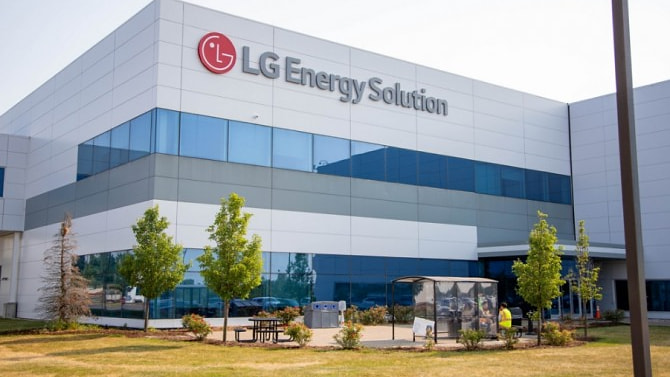
LG Energy Solution, the South Korean giant, has officially requested around $68 million in financial support from the Seoul government to expedite the development of its lithium hydroxide refinery project in Morocco.
This request marks a significant step in the company’s strategy, which aims to establish Morocco as a regional industrial hub for sourcing essential materials needed for manufacturing next-generation electric vehicle batteries.
After several months of slowdown due to a contraction in the global electric vehicle market, this project could gain new momentum.
Public Financing Under Review
According to industry sources, LG Energy Solution has sought a financing package from Korea Eximbank composed of two components. The first involves an equity investment of about $17 million, while the second consists of a concessional loan estimated at $51 million, resulting in a total support close to $68 million. Discussions with South Korean authorities are currently ongoing.
Morocco: A Strategic Choice for Electric Batteries
The project has been under consideration since 2023 as part of a joint venture between LG Energy Solution and the Chinese group Yahua. Morocco’s selection is based on several key advantages, including preferential trade agreements with the United States and the European Union, which provide privileged access to these markets.
The Kingdom also serves as a strategic platform that allows industries to diversify their supply chains for critical raw materials, which are currently predominantly controlled by China. Through this establishment, LG Energy Solution aims to reduce its reliance on Chinese suppliers while bolstering the security of its lithium supply for batteries.
An Essential Material for High-End Batteries
The facility will specialize in refining lithium hydroxide, a crucial component for manufacturing cathodes used in NCM (Nickel-Cobalt-Manganese) lithium-ion batteries. This material is particularly sought after for high-nickel batteries, used in premium electric vehicles and in advanced robotics applications, including humanoid robots. LG Energy Solution aims to strengthen its presence in these high-value segments.
An Investment of Nearly $600 Million
Officially presented in 2025, the project is set to involve an initial investment of 5.5 billion dirhams, or nearly $597 million. The first phase is expected to create over 430 skilled jobs and contribute to the development of Morocco’s electric battery ecosystem. However, the recent decline in global electric vehicle demand has led the group to temporarily slow down its implementation timeline.
American Uncertainties Impacting Timeline
The project has also been affected by changes in U.S. regulations concerning strategic supply chains. New provisions introduced by the U.S. regarding companies with significant Chinese shareholder ownership have prompted LG Energy Solution to reassess the structure of its partnership with Yahua to maintain access to tax incentives granted to the battery sector. This reassessment has resulted in a partial delay of investments.
Support Expected to Revitalize the Project
The funding requested from South Korean authorities could now secure the initial phases of the project and mitigate the financial risks associated with this major industrial investment. This initiative aligns with the South Korean government’s strategy to secure supply chains for critical minerals vital to the battery and electric mobility industries.
In this context, recent discussions between Morocco and South Korea aimed at a Comprehensive Economic Partnership Agreement (CEPA) should further strengthen industrial exchanges between the two countries and provide a favorable environment for future Korean investments in the Kingdom.
With this project, Morocco once again confirms its ambition to become a key player in the global value chain of electric batteries and technologies related to the energy transition.