Morocco Accelerates Its Desalination Program to Strengthen Water Security
Here’s the translated article:
Morocco Aims to Increase Desalination Capacity to 1.7 Billion Cubic Meters Annually by 2030
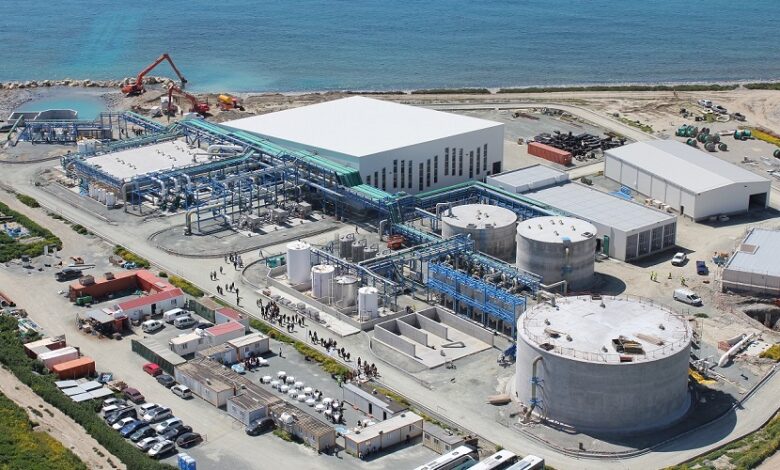
The Kingdom plans to enhance its desalination production capacity to 1.7 billion cubic meters per year by 2030, leveraging large-scale coastal projects, public-private partnerships, and modern technologies.
According to Nizar Baraka, the Minister of Equipment and Water, 11 new projects are currently scheduled across various regions, including the Oriental, Tangier, Rabat, Essaouira, and Guelmim. The studies related to these projects have already been completed.
Currently, Morocco has 17 desalination stations, producing approximately 350 million cubic meters per year, with four additional projects underway.
In the southern part of the Kingdom, the desalination plant in Dakhla is 78% complete and will be associated with a dedicated wind farm. In Casablanca, a major project plans to create what is set to be the largest desalination station in Africa, with an annual capacity of 300 million cubic meters.
The program also benefits from a partnership with the OCP group, particularly for the expansion of facilities in El Jadida and Safi, aimed at meeting the needs for potable and industrial water.
Simultaneously, Morocco is deploying mobile desalination units to enhance water access in areas facing water stress. Currently, 124 units are operational, producing 771 liters per second, while 77 more units are in the process of being commissioned.
Through these investments, Morocco is making desalination a key pillar of its national water strategy, to better cope with drought, climate change, and the continuously increasing demand for water.
This translation captures the original essence and tone while ensuring it reads naturally in English.