Business Tourism: Casablanca Aims to Establish Itself as a MICE Hub in Africa
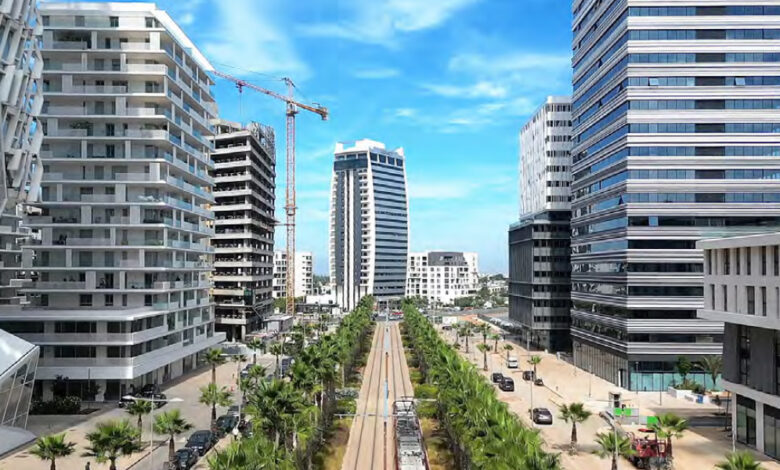
With nearly 2.8 million business overnight stays projected for 2025, Casablanca has significant advantages that position it to become a major destination for MICE tourism in Africa. However, the city still needs to bolster its hotel offerings and specialized infrastructure to effectively compete with hubs like Dubai and Istanbul.
As Morocco’s primary economic region, Casablanca-Settat boasts numerous assets to enhance its standing in the business tourism sector, which is globally valued at nearly $1.4 trillion by 2025.
Thanks to its connectivity with major African cities, a robust economic fabric, and its role as a gateway to the continent, Casablanca possesses the essential elements needed to establish itself as a regional benchmark for the MICE sector (Meetings, Incentives, Conferences and Exhibitions).
Yet, despite these advantages, the Moroccan metropolis is still struggling to fully exploit the potential of this particularly dynamic and profitable market.
The MICE Market Continues to Grow
According to economist and tourism operator Saïd Tahiri, business tourism is now a true engine of development for destinations.
The global MICE market is valued at $1.4 trillion by 2025 and is expected to experience an annual growth rate of 7.54% until 2034.
Expenditures for participants at residential seminars can reach €240 to €300 per person, highlighting the economic potential of this clientele.
While companies are organizing fewer events than before, they are placing greater emphasis on service quality, participant experience, and the added value of the chosen destinations.
Casablanca Sees Strong Progress
In Morocco, this segment, however, remains underutilized. Business tourism accounts for about 10% of overall tourism revenue.
Nonetheless, Casablanca retains its status as the foremost national destination for business travel. The metropolis recorded nearly 2.8 million business overnight stays in 2025, marking a 15% increase compared to 2024.
This growth confirms Casablanca’s appeal to professional travelers, yet the city is still far from matching the performances of some major international hubs specializing in conferences, trade shows, and corporate events.
A Hotel Deficit That Hinders Ambitions
One of the main obstacles lies in the hotel offerings dedicated to MICE.
According to Saïd Tahiri, no Moroccan hotel currently ranks among the top 10 regional hotels for meetings, a ranking overwhelmingly dominated by destinations like Dubai and Istanbul.
This situation reveals a gap between the economic attractiveness of Casablanca and its tourism ecosystem’s ability to meet the demands of large international events.
The competitiveness of a MICE destination depends not only on its infrastructure or tourist appeal but also on the capacity of hotels and various service providers to respond quickly and effectively to international requests.
The “Bid Rate,” a Strategic Indicator
Among the important indicators is the “Bid Rate,” which assesses how well establishments can respond to international bids.
For an organizer wanting to book a large number of rooms for a conference, the speed and quality of responses can directly influence the choice of destination.
A delayed, incomplete, or poorly structured response can lead organizers to favor another city with a more responsive hotel network.
Thus, improving this response capacity is crucial for Casablanca to gain market share in international business tourism.
2030 World Cup Infrastructure as a Catalyst
According to Saïd Tahiri, the development of hotel offerings should be a priority. Casablanca must align multiple establishments capable of simultaneously responding to complex tenders and large-scale events.
The major projects slated for the 2030 World Cup could indeed serve to accelerate this transformation.
The Grand Stadium of Casablanca and the upcoming Convention Centre are expected to play a significant role in developing an integrated MICE offering.
The goal would be to provide modular spaces, effective digital connectivity, especially with 5G, and event services that meet international standards.
Beyond Conferences, Selling a Moroccan Experience
To enhance its appeal, Casablanca must also focus on the entire value chain of business tourism.
Companies increasingly seek experiences that combine business travel, cultural exploration, gastronomy, and wellness.
Establishing an integrated offer could allow conference or seminar participants to extend their stay and explore the various facets of the destination.
In this context, developing a network of professional Destination Management Companies (DMCs) could facilitate the design of packages combining meetings, cultural activities, and tourism experiences.
The aim would be to create a distinctly Moroccan experience, capable of differentiating Casablanca from its international competitors.
Africa: A Strategic Advantage for Casablanca
The metropolis has a significant asset: its African positioning.
According to Saïd Tahiri, Casablanca possesses several benefits seldom found together in a single African metropolis: extensive air connectivity to the continent, mature banking and economic infrastructure, and genuine tourist appeal.
This advantage could be further leveraged among businesses and event organizers, particularly from Europe and Gulf countries, two markets that are particularly active in business tourism.
Casablanca Faces the Challenge of Scaling Up
With the growth of its business overnight stays and the expansion of its infrastructures, Casablanca has a solid foundation to strengthen its position in the MICE market.
However, to truly advance, the metropolis must improve its hotel capacity, strengthen coordination among various stakeholders, and develop more integrated event offerings.
Projects linked to the 2030 World Cup, combined with the development of new infrastructures and the professionalization of business tourism actors, could provide Casablanca a unique opportunity to scale up.
The challenge now will be to transform its numerous economic and geographical advantages into a truly international MICE offering, capable of competing with major African and global hubs.