Agriculture: An American Delegation Expected in Morocco to Enhance Trade Relations
U.S. Agricultural and Port Delegation Set to Visit Morocco
A significant delegation from the United States, representing the agricultural and port sectors, is set to arrive in Morocco starting August 30. This mission aims to bolster trade relations between the U.S. and the Kingdom.
The delegation will be led by the U.S. Identity Preserved Agriculture Alliance (USIP), which advocates for several American agricultural sectors that guarantee the origin and characteristics of products throughout the supply chain. The mission will take place in Morocco before proceeding to Portugal until September 4.
In Morocco, the program includes a seminar and visits to the Casablanca and Tanger Med ports, focusing on exploring business and logistical opportunities for American agricultural products.
U.S. Agricultural and Port Officials in Morocco
The delegation will feature officials from the Minnesota Soybean Research and Promotion Council, farmers from Wisconsin and Ohio, and representatives from the agricultural departments of Minnesota and Wisconsin. Officials from the Great Lakes and St. Lawrence Seaway Development Corporation (GLS) will also participate in the mission.
Morocco marks the first stop on this commercial tour. Discussions will focus on opportunities for forage grains, legumes, rice, breeding animals, poultry, beef, dairy products, and soybeans.
Morocco: A Strategic Agricultural Market for the U.S.
The USIP views Morocco as one of the crucial agricultural markets on the African continent. The organization emphasizes that the Kingdom is a net importer of agricultural and related products, which presents opportunities for U.S. producers and exporters.
Soybeans are among the key products in these exchanges. During the 2024-2025 marketing season, Morocco ranked 10th among U.S. soybean meal markets, with around $180 million in purchases, equivalent to nearly 1.67 billion dirhams.
Moreover, agriculture is a significant component of the Moroccan economy, with the agriculture, fishing, and forestry sectors employing a substantial portion of the country’s workforce.
Free Trade Agreement at the Heart of Discussions
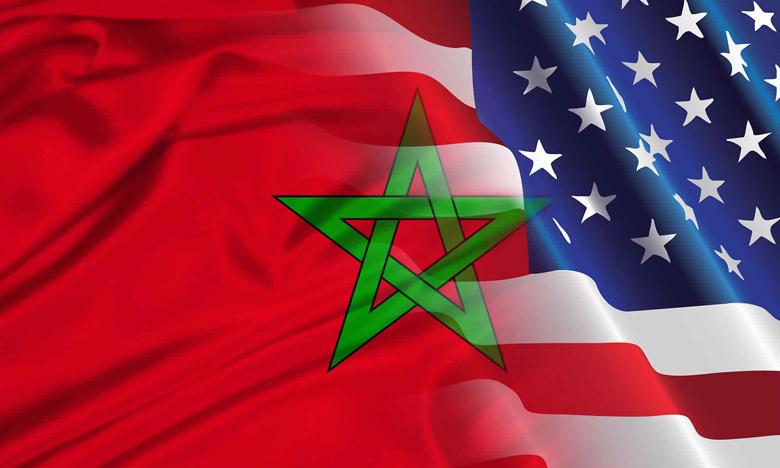
The American mission is also contextualized by the free trade agreement between Morocco and the United States, which took effect in 2006. This is the only free trade agreement that Washington has established with an African country.
The USIP intends to evaluate market access conditions in Morocco, potential high-value-added processing opportunities, and logistical chains for transporting American agricultural products to African, European, and Middle Eastern markets.
Visits to the Casablanca and Tanger Med ports will enable delegation members to better understand Moroccan port infrastructure and its role in international agricultural exchanges.
Moroccan Phosphates Strengthen Agricultural Partnership
This mission arrives as agricultural and industrial relations between Morocco and the U.S. experience new developments surrounding phosphate fertilizers.
On August 17, OCP North America, a subsidiary of the OCP Group, announced the arrival at the Port of New Orleans of about 54,000 tons of triple superphosphate sourced from Morocco.
This shipment follows a temporary reduction in the U.S. countervailing duties imposed on Moroccan phosphate fertilizers. According to the subsidiary, the products are to be distributed to American farmers ahead of the fall spreading season.
Days later, OCP North America and the American agricultural cooperative CHS unveiled a more ambitious project: the establishment of a joint company to build a phosphate fertilizer plant in Waggaman, Louisiana.
OCP and CHS Prepare for a $450 Million Plant
The project represents a potential investment of $450 million, approximately 4.16 billion dirhams, with a production capacity exceeding one million tons of fertilizer annually.
Under this partnership, the OCP Group would supply the necessary phosphoric acid for production, while the fertilizers would be marketed through the networks of CHS and OCP North America.
However, the project is contingent upon securing regulatory approvals and necessary funding decisions. If approved, it could become the first U.S. plant of its kind built since 1984.
CHS estimates that the U.S. currently imports about 40% of the phosphate fertilizers consumed by its farmers. Consequently, the new facility could help reduce American dependence on imports.
After Morocco, Onward to Portugal
Following its visit to Morocco, the American delegation will continue its mission in Portugal. Meetings are scheduled with shipping companies, logistics providers, traders, and buyers.
The Portuguese agenda will also include visits to the ports of Lisbon and Leixões. American producers will showcase their farms and production methods, while GLS representatives will highlight the potential of the Great Lakes and St. Lawrence Seaway to connect producers in the northern U.S. to international markets.
Furthermore, the agricultural departments of Minnesota and Wisconsin will present their export support programs and the various agricultural products available in the Upper Midwest.
According to the USIP, American agricultural exports to Portugal reach approximately $330 million annually, including about $71 million for whole soybeans.
Morocco as a Gateway to Africa
Through this mission, American producers aim to explore two complementary markets.
Morocco is recognized as a strategic trade platform to Africa and the Mediterranean, notably due to its port infrastructure and geographical positioning.
In turn, Portugal represents a stable European market and a gateway to transatlantic exchanges.
The simultaneous presence of U.S. agricultural and port officials in Morocco underscores the growing importance of logistical infrastructure in fostering agricultural exchanges between the two countries.