Europe and Morocco: The Paradoxes of a Strategic Partnership
MCG24, RABAT
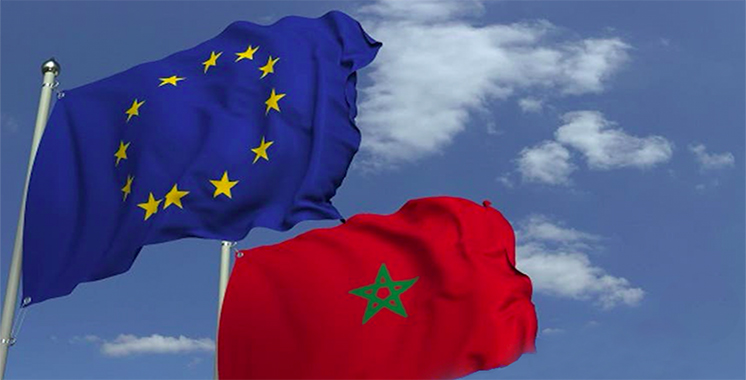
There is something paradoxical about the relationship between Europe and Morocco. As the two partners draw closer on economic, security, and geopolitical issues, certain political tensions continue to resurface.
Yet, the facts illustrate an interdependence that has become difficult to overlook.
The European Union is Morocco’s primary trading partner. Trade between the two reached €62.2 billion in 2025. Cooperation now encompasses a broad range of areas: commerce and investment, migration, security, combating crime, energy transition, and research and development.
This relationship reached a new milestone in 2026. During the Association Council meeting on January 29, Brussels and Rabat reaffirmed the "strategic," "multidimensional," and "privileged" nature of their partnership, while expressing their desire to strengthen a relationship based on "equality." In April, this same ambition was reiterated in Rabat, with expectations for a strategic and comprehensive partnership aimed at elevating their relations to a new level.
The issue of the Moroccan Sahara remains one of the key topics of this relationship. Security Council Resolution 2797 placed the Moroccan autonomy proposal as the basis for negotiations within the framework of the United Nations process. The European Union has acknowledged this development and reiterated its support for the UN-led process.
This does not mean that all divergences have vanished. They still exist, sometimes with intensity, particularly regarding certain political and institutional matters. However, these differences must now be viewed within a broader context: that of a relationship that has become strategic for both sides of the Mediterranean.
Morocco, for its part, advocates for a relationship grounded in sovereignty, mutual respect, and shared responsibility. This demand is not incompatible with close cooperation; in fact, it has become one of its essential conditions.
Thus, the challenge for both Europe and Morocco is to align their rhetoric with the reality of this interdependence.
A relationship as complex as this can no longer be perceived through outdated power dynamics. It calls for a new grammar: one of two partners who cooperate when they share interests, acknowledge their differences when they arise, and, above all, seek to establish a lasting relationship.
The Euro-Moroccan partnership is now too significant to be held captive by momentary tensions. Its future will depend less on controversies and more on the ability of both parties to construct, concretely, a relationship of equals.